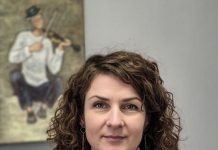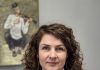



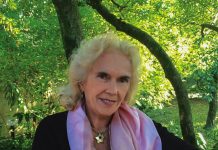



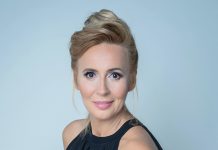



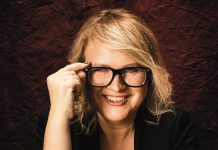
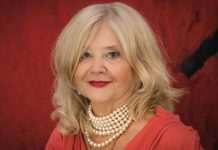
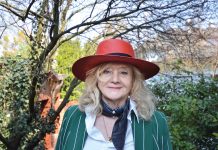



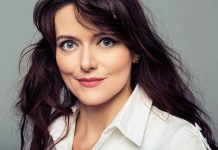

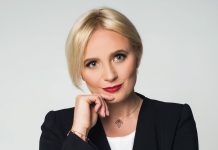

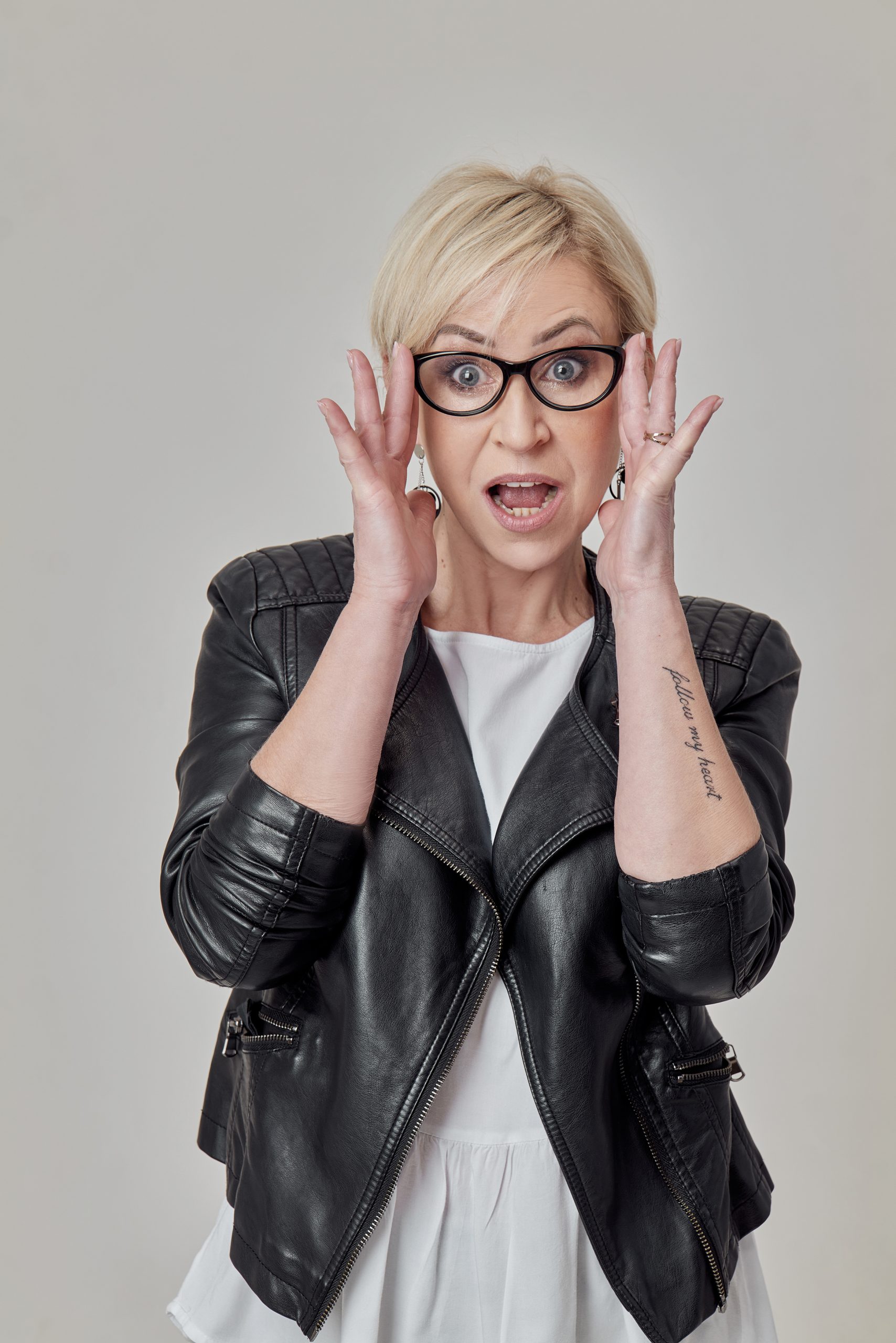
An intrview with Magda Mleczko, a journalist of Antyradio Katowice and Chillizet, about the behind-the-scenes of working at the microphone, her path to a profession that was supposed to be accidental, and why listening to others is paramount in journalism. It’s also a story about the changes that time brings – both at work and in her personal life. She has just been nominated for the Charismatic Woman award.
What are your memories of school time? Were you a straight-A student or rather a rebel?
I had a bit of everything. I was only a straight-A student in the subjects I truly enjoyed, certainly not in science, which had always been my Achilles’ heel. Instead, the humanities and art were my world. I was an artistic soul and excelled in those areas.
Is it more painting or singing?
Definitely painting. After graduating from high school, I planned to study at the Academy of Fine Arts, but ultimately lacked the skills to get in. Looking back, I think it was a good thing.
And you went straight to radio?
No, not yet. I studied and worked at the same time – at McDonald’s, among other places, opening a restaurant in Katowice. It was a part-time job.
What did you study?
I started journalism part-time, and later also advertising. Meanwhile, my mother became seriously ill, and my plans fell apart. Interestingly, I never dreamed of being a journalist – I didn’t see that talent in myself. I absolutely didn’t think I should pursue it, but luckily someone saw it in me.
How did it happen?
Sławomir Herman, who still works as an editor at Radio Katowice, was a very good journalist. He was the husband of my mother’s sister, Ania Herman, who was a trained musician. She wrote sheet music for Jerzy Milian’s orchestra, among other things, but also worked at Radio Katowice. And they told me that Sławek had been asked to found and host Radio Puls in Gliwice’s Wójtowa Wieś district. He suggested I come to an audition. Someone else was supposed to evaluate me – if they thought I was a good fit, they promised to help. That’s what happened. I heard I had talent, and that’s how I began my radio journey. I read my first broadcasts in pairs with Kuba Porada.
Were you commuting from Sosnowiec then?
I was living with my mother’s sister and Sławek at the time. I was just over twenty years old. Gliwice is a city with a soul. It’s alive both because of its history and because it’s a student center. In the summer, all those cafes in the market square are packed. It’s a beautiful city; I have fond memories of it. Although I had to wake up at a very draconian hour, because back then there was no Polish Press Agency (PAP) or cell phones.
What was work like back then?
It was completely different from today. I’d wake up at 3 a.m. and record Radio Katowice’s newscast on cassette so I could keep up with what was happening. Then, with that cassette, I’d take the bus and then the tram to Wójtowa Wieś. I’d pick up newspapers at a small shop. With all that, I’d go to the radio station. There, using a typewriter (because computers didn’t exist back then), we’d write down the information and browse the newspapers. We’d also gather information by phone. We’d call the emergency services, the police – whether something had happened or not. Today, we have systems that organize newscasts and act as prompters. It’s a completely different world.
How did you end up from Radio Puls to Radio Top?
I saw a job posting and joined a huge queue. I met a friend there, Zbyszek Misek, who helped me move a bit, but I had to do the rest myself. Kamil Durczok and Bartek Dąbrowski interviewed me. They offered me newsreading instead of being a reporter – and that was a very good decision.
Later, there was RMF…
Yes, it was a huge opportunity. The late Stanisław Smółka called me and offered me a job at the Katowice branch of RMF. It was a true school of journalism – a nationwide station, high standards, and specific requirements. Initially, I had to spend two weeks in Krakow, where I had classes with a speech therapist and Ewa Drzyzga. They taught me to read in their specific style, because every radio station has its own style, so it was a learning curve. After two weeks, I returned to Katowice and started reading our local news, and on weekends, I did some reporting because we were on call. Those were the golden days of RMF – all the events, the famous „Invasions of Power,” the Olympics, the grand celebrations of RMF’s 10th anniversary in Zakopane… RMF was the best school for news journalism.
And then Antyradio?
After changes in RMF’s structure, I joined Adpoint radio, which eventually became Antyradio. I’ve been here for 18 years now. At the same time, I also run the program „In Pursuit of Culture” on Chillizet.
Was that your idea?
No – I received the offer and accepted it immediately. Today, I combine both worlds: news and culture. At Antyradio, I read newscasts, and I also produce the cultural program „Pełna Kultura.” These air four times a day, one minute at a time. I also conduct interviews for „Śląski Magel,” which airs on Antyradio every weekend. We have a license to cover local news, so we cover Silesian affairs related to the region.
Which of your interviewees made the biggest impression on you?
Definitely Marian Dziędziel and Grażyna Bułka – my conversations with them are etched in my memory for a long time. Meeting Wojciech Siudmak was also very important to me. One of my first interviews was with Jan Kanty Pawluśkiewicz – I was completely stressed out at the time.
What did journalism teach you?
It taught me that an interview isn’t just „questioning” like in school. The most important thing is listening and being genuinely curious about others.
What are you most proud of today?
That I’m doing something I truly love. I enjoy getting up for work and feeling like I’m in my element. Personally, I’m proud of my son Jakub, who is studying English Philology and Geography. He’s an artistic soul, but at the same time, organized, meticulous, and detailed. He’s also smart and intelligent. He graduated from music school with a degree in accordion, but didn’t pursue music further.
What do you do in your free time?
Professionally, I’m simply happy where I am – and I’d like it to last as long as possible. I have everything organized just the way I like it. I love what I do, and I hope it stays that way.
Personally? It’s hard to say what the future holds. My husband passed away in November 2024. That changed my life significantly. Today, I’m learning to draw more from it and live a little „my way.” For now, it’s just the three of us – me, my son, and our Bengal cat.
And what about your dreams?
I’d like to see more of the world, be healthy and peaceful. And for my son to have a good education and build a life for himself.
What advice would you give to young journalists?
Above all: don’t be afraid of people. Talk, be open. Social media and phones have made direct contact increasingly difficult. And without that, there’s no good journalism. You have to be able to listen and be truly curious about other people.
Szymon Pęczalski
Beata Sekuła