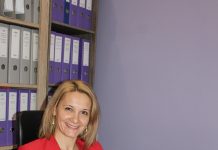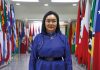




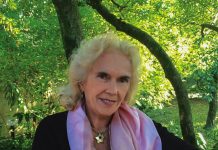



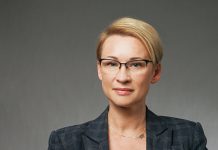


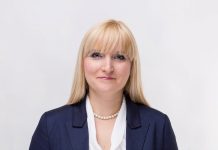



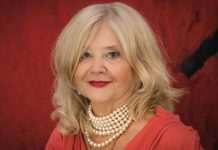
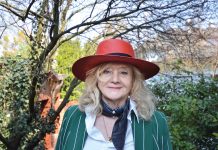



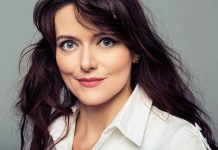

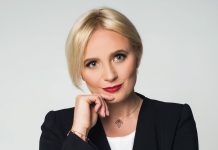

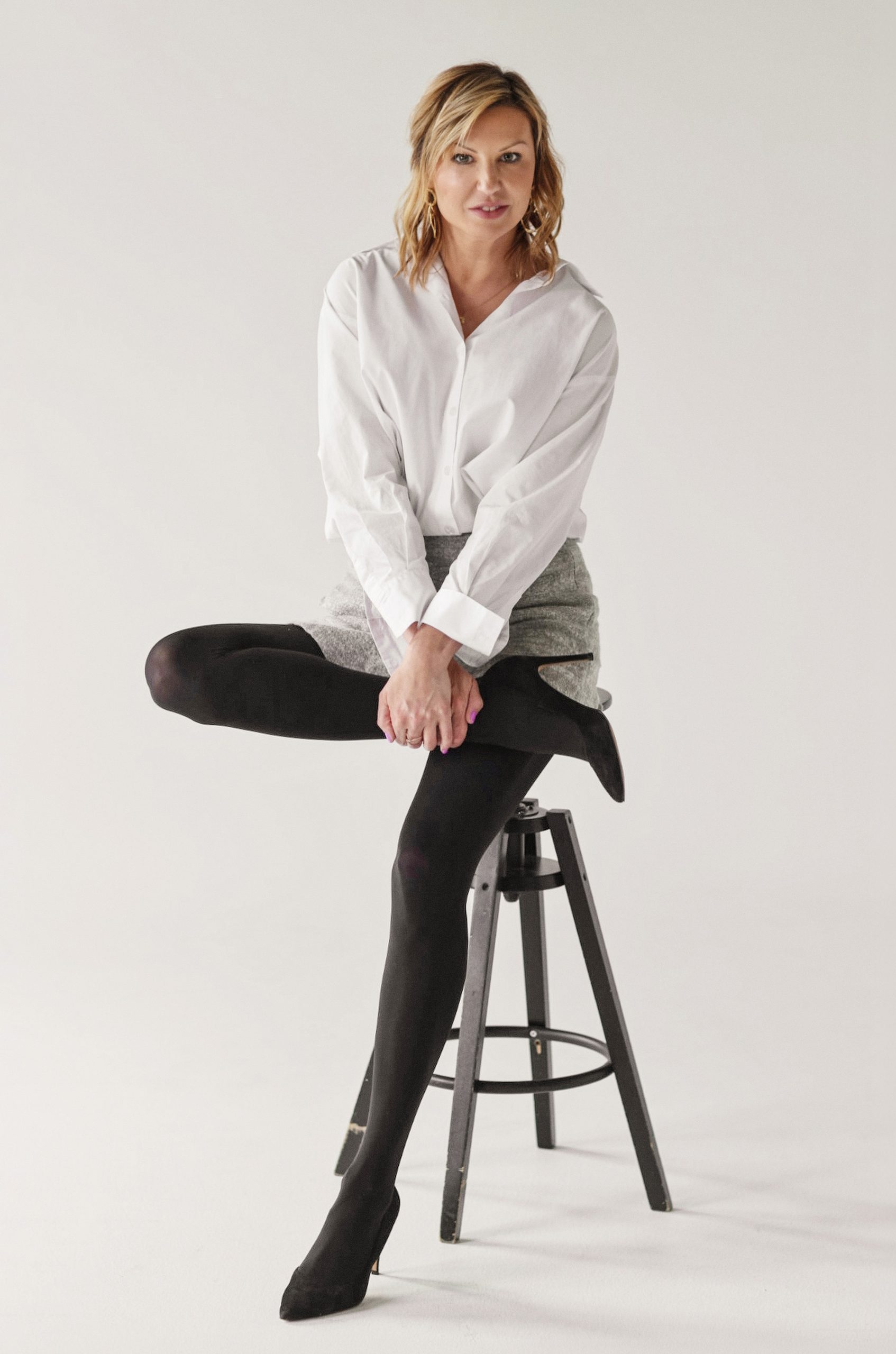
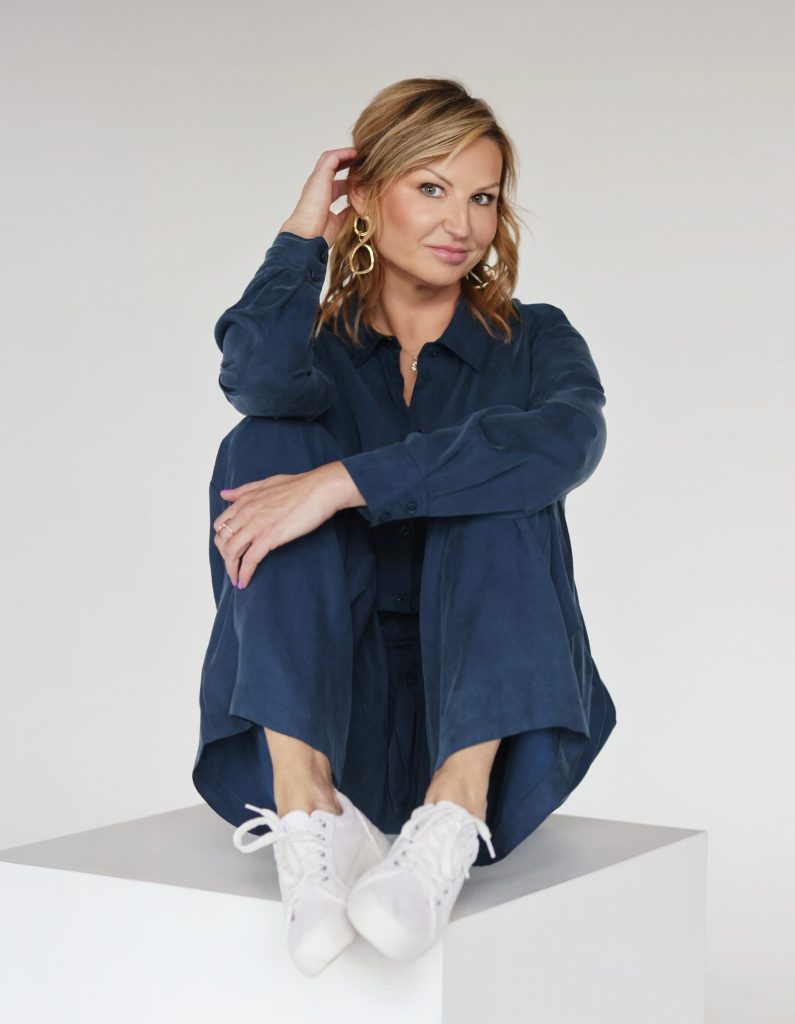
A interview with Monika Wszołek – a lawyer, owner of a law firm, member of the National Center of the Defense of Fathers’ Rights, and legal guardian of people with disabilities and social exclusion – about her professional fulfillment, as well as her role as a mother and partner, and about her extraordinary discoveries and dreams. Właśnie mec. Monika Wszołek became nominated to the title of Leader by Vocation.
When did you realize you were a leader?
Even at home, I showed initiative, stemming from being a „daddy’s girl.” However, I must admit that for a long time, I was shy outside the home. We had no family in Silesia, so my parents took me everywhere, so I’m that child who sat under the table during adult conversations.
You’re writing a book now…
Two books, in fact. The first one I want to mention concerns my family, the war years and beyond. It was during this time that I learned that I have Jewish roots.
How did it happen?
It’s a very strange story. Back in high school, I dreamed of my grandmother. She’d come to me and told me that only I could find out the truth. That’s when I started asking my parents if I was adopted Jewish. It turned out that this stemmed from my father’s story, a victim of the Holocaust, and that my grandparents likely perished during the Warsaw Uprising. I think it’s significant that my uncle was Roman Polański’s friend, and my aunt was Bronisława Horowitz’s friend – the last surviving woman from Schindler’s List. The person who serves Schindler a bread cake in the film is just my aunt. I read a lot, and contemporary history suggests how I should begin writing a book. Recently, when I became interested in my family’s genes, the Ambassador for Infrastructure in South Australia contacted me, telling me that we shared genes and that he had knowledge of my family from Krakow. It’s worth noting that my father came from the largest Jewish family in Krakow.
You have three children: the oldest is twenty-four-year-old Kuba, fourteen-year-old Ania, and the youngest, twelve-year-old Leon. And here’s an interesting fact about your family…
Yes. It turns out that my great-grandparents had nine children, and three of them are Ania, Kuba, and Leon. I didn’t know this, and it was quite by accident that I named my children that.
Are you proud of your children?
Of course. I’m glad they’re here. Not because I have a good relationship with them or they’re doing well in school, but because they are. It makes me feel fulfilled.
Is this empathy that made defend the rights of children and their fathers today?
I defend the rights of children, and fathers because they get hit hard. I am even going to start a foundation soon, but for now I’m working at the National Center for the Defense of Fathers’ Rights and I provide legal advice for charity for two hours a week.
Do you have any siblings?
Yes, an older brother. Things weren’t always ideal between us. We argued and even had childhood fights, but when our father died a few years ago, my brother took on his role and became very protective. He probably saw how I was suffering because of the loss. My father plays a special role in my life; for 20 years we worked side by side. He was very demanding and strict with me. He used to tell me, „You’re my daughter, we work together, so you have to be at work 15 minutes before everyone else and leave 15 minutes after.” Today, my brother plays a special role in my life; I can always count on him, and I love him very much.

You have three children, a partner, and a good job – so you’re fulfilling yourself.
Yes, today I am. I really enjoy my work. I’m also proud that I’ve regained my self-esteem, which was seriously shaken for many years. Two years ago, I became seriously ill, and a year ago, I finally separated from my husband – it was a very difficult time for me. Today, I’m happy. I’ve met someone special, with whom I share common passions and can count on his support. I used to love participating in world car rallies – now we do it together. We travel a lot, explore, shop together, and enjoy life. I have a sense of security I haven’t experienced in many years.
How long have you been an attorney?
I’ve been working as a lawyer for almost thirty years, but as a solicitor for ten now. I always knew I wanted to be a lawyer and do what I do best. I really enjoy my work.
Do you only deal with cases involving children and fathers?
Not only that. We also receive cases assigned by the court. Because I practice family law, I’m also a guardian for children. I also have my own incapacitated wards.
What does your care for them look like?
This should be just a formality-related role, but the law doesn’t specify this, so I often act as a guardian. I currently care for fifteen children and about 40 incapacitated wards. I go to doctor’s appointments with them, talk on the phone, or visit them.
How do you relax when you finally have some time?
My partner and I most enjoy going to his house in the Bieszczady Mountains. There, I go for mountain walks, cook, plant, preserve, and grow plants. It gives me balance in life. There, I’m Monika, not a lawyer.
And why did you also take up psychology and pursue this field of study?
Thanks to these studies, I’m learning how to communicate with my wards. It’s important to remember that these are people who have been battered by life. Besides, I deal with the very demanding legal profession and have three children of my own.
Are you happy with your career path?
Yes. I’m happy and nourished by the fact that for some of my clients, I’m the one, that 28-year-old Pawełek calls me „Mom,” that two 50-year-olds are waiting for me as if I were the person they love most. When I prepare packages for them, I know exactly what’s inside—from handbags to perfume. I know what’s for whom. My children, even the adult ones, always need something, and they know they can count on me.
Wojciech Skowroński
Beata Sekuła