




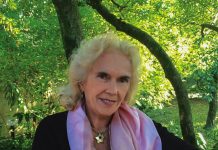













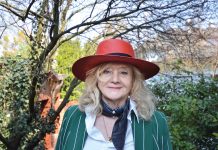












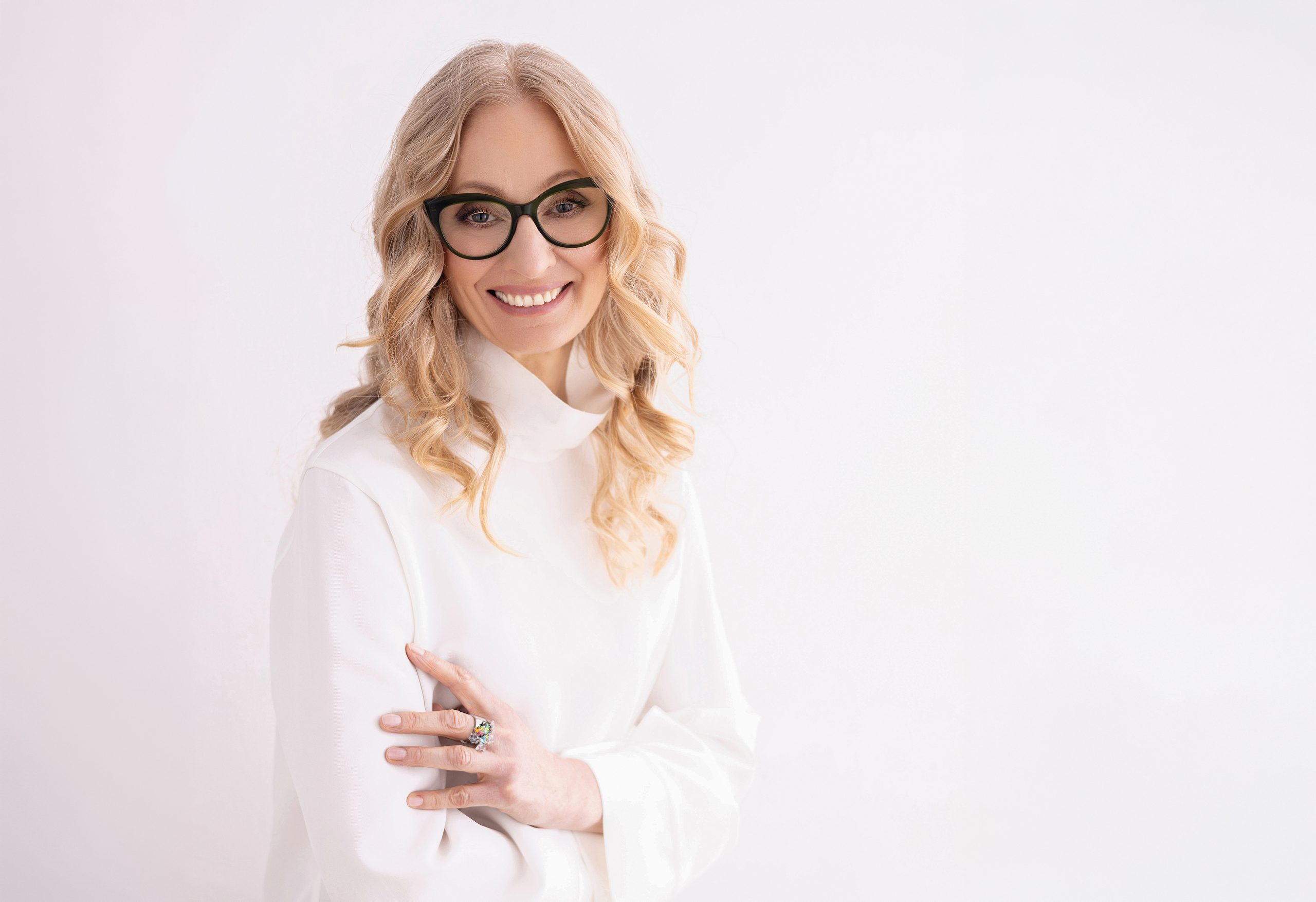
An interview with Anna Stokłosa, architect and co-founder of the Polish Neuroarchitecture Association, discusses her journey around the world, her work at a design studio in Australia, her 25 years of experience in the hotel industry, and the impact of space on health and emotions.
Ann, you are an architect with full design qualifications and the prestigious, international RIBA (Royal Institute of British Architects) accreditation. For a quarter of a century, you and your sisters ran a family hotel, created the Forest Spa, and today you co-found the Polish Neuroarchitecture Association. Where does this passion for discovering new horizons come from, and how has this perspective translated into your current approach to space?
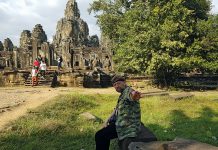
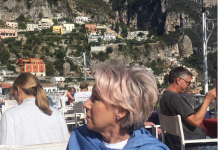
Let me begin by saying that travelling has always been my great passion and the most beautiful way to experience the world. My recent journey around the world, like my earlier steps in Australia and my subsequent expeditions, were, above all, a lesson in deep mindfulness. They taught me to absorb my surroundings with all my senses and to observe how intuitive and universal human responses are to architecture, nature, and the atmosphere of different places.
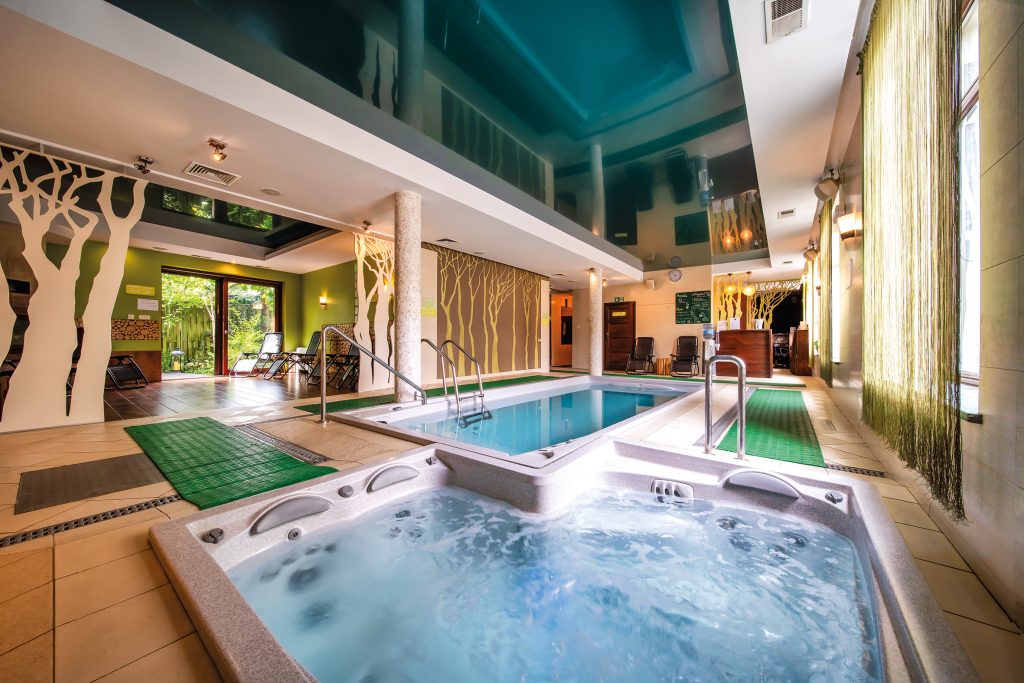
I brought this acute sensitivity to human needs and detail with me to the hospitality industry, where I spent 25 years. Co-managing a family-run hotel and wellness & spa, I observed firsthand the powerful, subconscious influence space has on guests’ emotions, stress levels, and nervous systems. For me, architecture has never been solely a matter of technique or aesthetics. Today, thanks to rigorous scientific research, we know for certain that the built environment actually modifies our biology. We spend over 90% of our time indoors. Every interior, the quality of light, and acoustic parameters directly stimulate our brain’s neuroplasticity. They can push us into chronic stress or, if we design them consciously, support our well-being, protect our health, and facilitate deep regeneration. My involvement with the Association today is simply a natural fusion of these global observations, a passion for design, and business experience. Design creativity requires broad horizons.
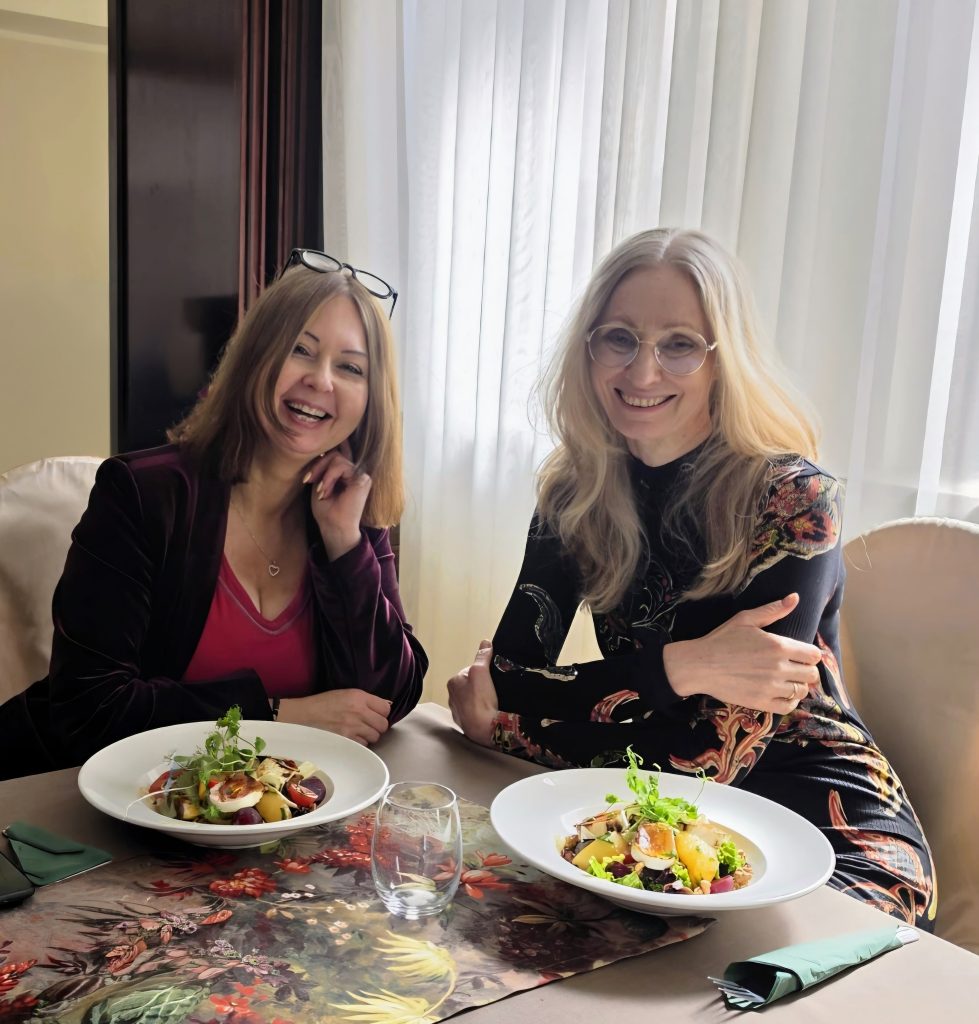
in an inspiring conversation about neuroarchitecture and the new era of hospitality
with Beata Sekuła, editor of „Why Story” magazine
You took your first serious professional steps in Australia. How did your schooling there influence your current approach?
It was an absolutely pivotal moment that shaped my practice. I worked in Canberra at the innovative design studio Strine Environments / Strine Design, alongside the distinguished and highly respected architect Ric Butt. I arrived from Poland, accustomed to intense, overworked work, like most architects here. Once there, I encountered a completely different approach, which completely redefined my habits.
Ric taught me the ironclad importance of creative hygiene. We had a professional rule that after four hours of intense design, you absolutely had to step away from the computer, rest, and clear your mind. The idea was to maintain full creativity and freshness. I understood then that a tired, overstimulated brain simply won’t create a space that’s meant to serve you well.
Interestingly, even back then, the studio employed a dedicated color architect on a permanent basis. For me, someone who has always loved painting and the manipulation of color, it was an incredible experience. Observing his work, I realized the powerful, scientific, and sensory role color psychology plays in shaping interiors and the subconscious emotions of the user.
Australia is a beautiful country. You had excellent career prospects there, a good job, and friends, yet you decided to return to Poland. Why did you make this decision?
Well, yes… It wasn’t really a planned decision, but a sudden twist of fate. I had a wonderful time in Australia, but I’ve always been very close to my family. When I arrived in Poland, not yet entirely sure if I was returning permanently, fate decided for me. On the very day of my arrival, my father had a heart attack. That tipped the scales—I knew I had to stay.
We had a related profession, so to support my father, I quickly stepped into his shoes. Over time, we expanded our family hotel together, where I created my own Forest Spa, and so, naturally, I also became a hotelier. However, I didn’t want to give up on design, and for a long time I ran my own architecture studio in parallel, because this passion has always been the strongest within me.
Your career path is an incredibly rich and multi-layered mosaic. You started in Australia, also gained experience at an architectural office, ran your own design studio, and for the last 25 years, you and your sisters have managed a family-owned wellness hotel & spa. How did all these seemingly disparate worlds lead you to where you are today?
All these dots connected into one coherent whole less than a year ago, and the key moment was a meeting with an extraordinary person. Neuroarchitecture is just around the corner. I was inspired by Sylwia Szcześniak, founder of the Interior to Art studio, a neuroscientist, and mentor at the WTS Academy. It was from her passion, vision, and incredible energy that the Polish Neuroarchitecture Association was born, of which I am honored to be a co-founder.
My path is an evolution from pure technology to humanity. Working in a government office gave me excellent knowledge of legal procedures, my own studio gave me creative freedom, and a quarter of a century in a hotel gave me a deep, business-oriented, and operational understanding of the HoReCa industry from the inside out.
When I met Sylwia, I felt that all my years of architectural and hotel experience were preparation for implementing a completely new quality in the Polish hospitality market. Sylwia made me realize that it was time to stop treating well-being as a luxury item. I understood that by combining our strengths, knowledge, and passion, we can truly transform Polish spaces. Together, we are proving that conscious, neuroarchitectural interior design is not a passing market fad, but a fundamental right for every person to health, peace, and regeneration.
You mentioned a new quality in the hospitality market. Tell me more about this project. I’ve heard you’re developing pioneering standards for hotels.
As the leader of this project on behalf of PSN, I’m proud to be working on the pioneering market introduction of a special quality mark and certification for the hospitality sector. I’m intimately familiar with the hotel landscape, the operational rigors, and the sheer cost of profitability, so our process isn’t about forcing expensive renovations. Quite the opposite. During the verification process, we audit existing hotel spaces using neuroscience. We examine, among other things, circadian lighting parameters that regulate guests’ natural circadian rhythms and sleep patterns, advanced acoustics that eliminate distracting noise, and the careful selection of biomorphic forms, textures, and scents that positively stimulate the senses.
We guide hoteliers through smart, often targeted, and low-cost optimization changes they can implement to truly improve their stay. This gives the facility a powerful, unique selling point and allows it to offer its clients a certified guarantee: „Your nervous system will truly rest with us.” This quality mark brings prestige and a unique competitive advantage to hotels in the market, responding to the needs of today’s hyper-stimulated individual.
However, your plans don’t end with the hotel industry. The Association’s heart beats strongly towards pro-social activities. Can you tell us about your involvement in the medical field?
This is the first large-scale, interdisciplinary social project in Poland on neuroarchitecture for healthcare, developed under the slogan „Interior Design for Hospitals.” Scientific research, including that of Professor Roger Ulrich, unequivocally proves that the right environment accelerates the healing process, reduces the need for painkillers, and significantly reduces the stress of hospitalization. The industry’s response to our initiative has been incredible; over 50 designers from across Poland and abroad have already joined our pro bono network!
We are initially focusing on pediatric oncology wards, designing day care rooms, corridors, common spaces, and parenting areas. Our work is based on well-being design and evidence-based design, meaning design based on solid scientific evidence. We create a sensory environment that will give children a sense of security, parents a moment of respite and breather, and medical staff less stressful working conditions. We want to prove that architecture has the power to support healing where human stress is greatest.
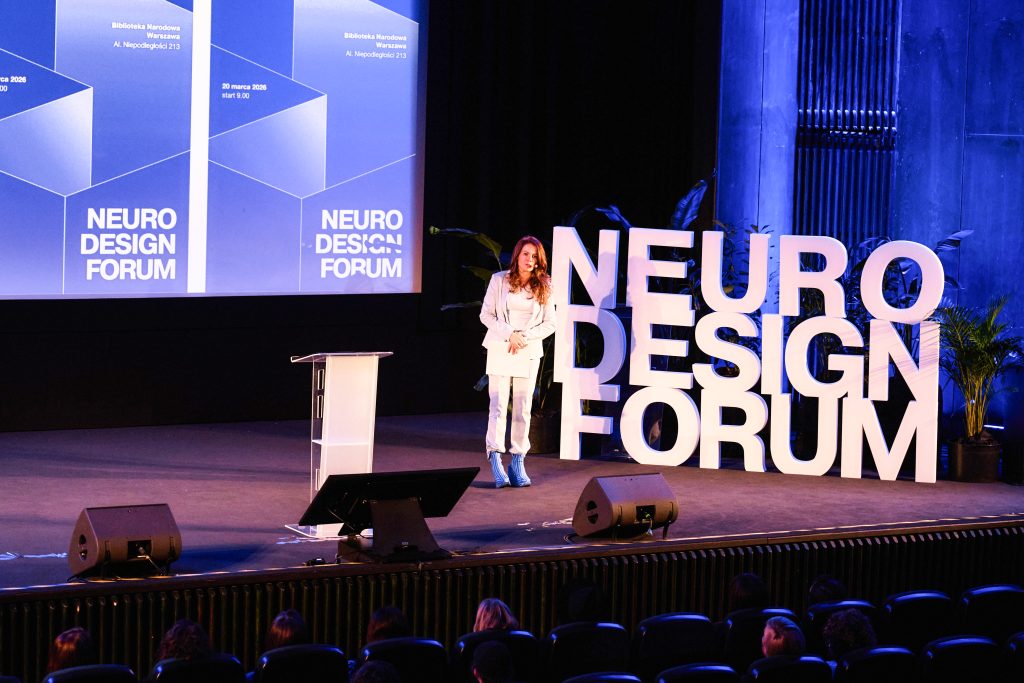
You’ve just hosted your first groundbreaking event: the Neuro Design Forum at the National Library. What was its goal?
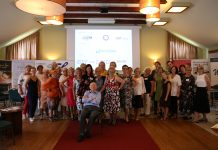
The Neuro Design Forum was the first such event in Poland and throughout Central and Eastern Europe to combine the world of design with hard science. We demonstrated the real-world application of neuroscience in design practice. Participants had access to a lecture area, an exhibition area with selected products, and even a measurement area for interior parameters and a special neurorelaxation installation. It was a clear manifesto: 2026 has been declared the Year of Health Prevention, and a properly designed space is a strategic tool supporting physical and mental health.
You work very intensively, developing new projects. How do you personally maintain this aforementioned mental freshness and your own well-being?
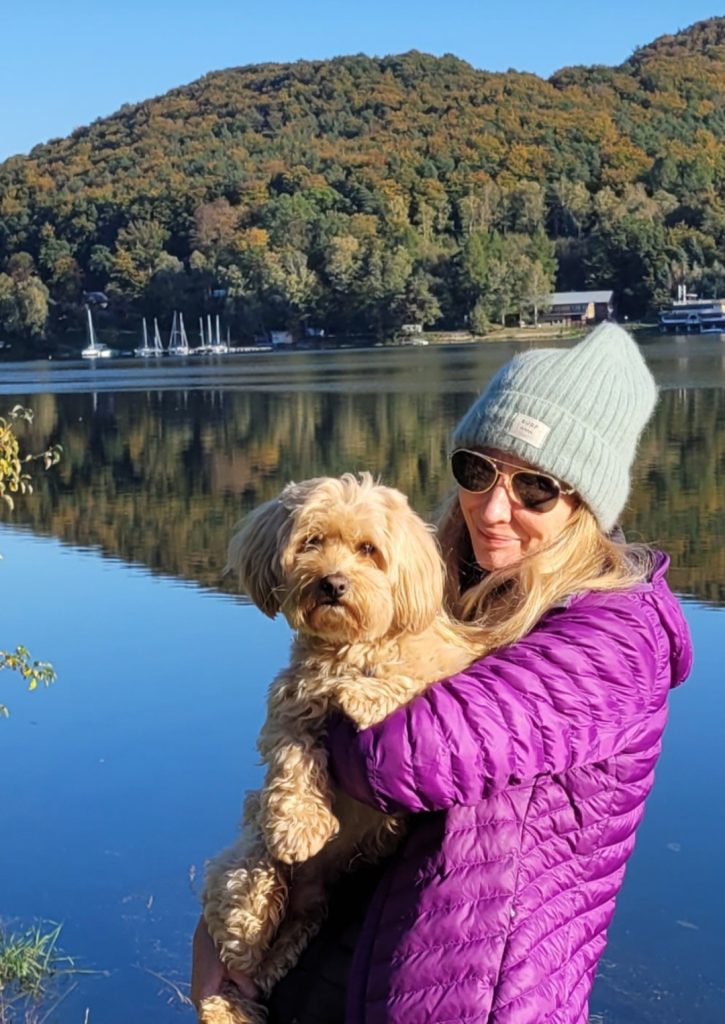
I start each day with a morning walk at 6 a.m. with my beloved dog, Koko. This constant morning ritual, in the silence of the waking day, is the most wonderful, natural reset for my brain and a moment to find balance before I plunge into the whirlwind of daily responsibilities.
My absolute, deepest love and personal source of strength remains the forest. It is there, among the trees, that I find the purest form of biophilia. The scent of the forest floor, the natural silence, and the green fractals immediately soothe my nervous system. I spend my free time in the tranquility of the forest, where I meditate, practice yoga, and spend time together. I paint passionately. My passion for easel painting and playing with color is the most wonderful, sensory form of relaxation for me. Transferring the colors of nature to canvas allows me to enter a state of deep flow, in which my brain completely rests from the daily grind and technology. Painting is not just a creative activity for me, but also a personal self-therapy with color.
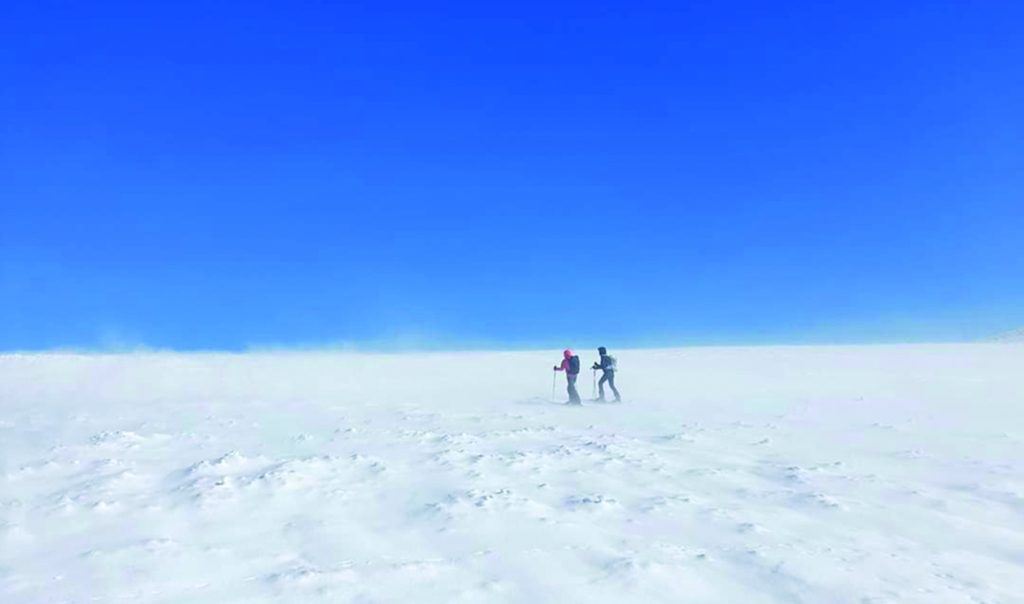
Mountains and water are also my element, so I try to use every free moment actively. In winter, I avidly ski—the speed, crispness of the frosty air, and ice give me incredible energy. I also greatly value ski touring and mountain trips with friends. In summer, I swap my skis for a stand-up paddleboard and escape to the charming Lake Rożnów. Contact with the water, balancing on the board, and the silence of nature are the best form of mindfulness in motion for me, which neuroscience directly links to the brain-soothing Blue Mind effect. This allows me to quiet the world, recharge my internal batteries, and return to action.
Beata Sekuła