




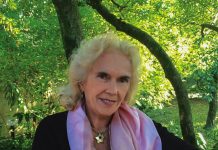
















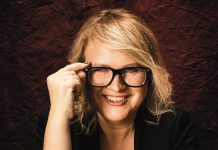











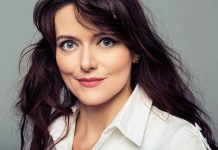


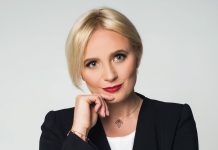


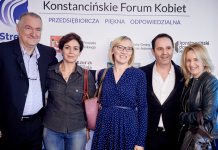


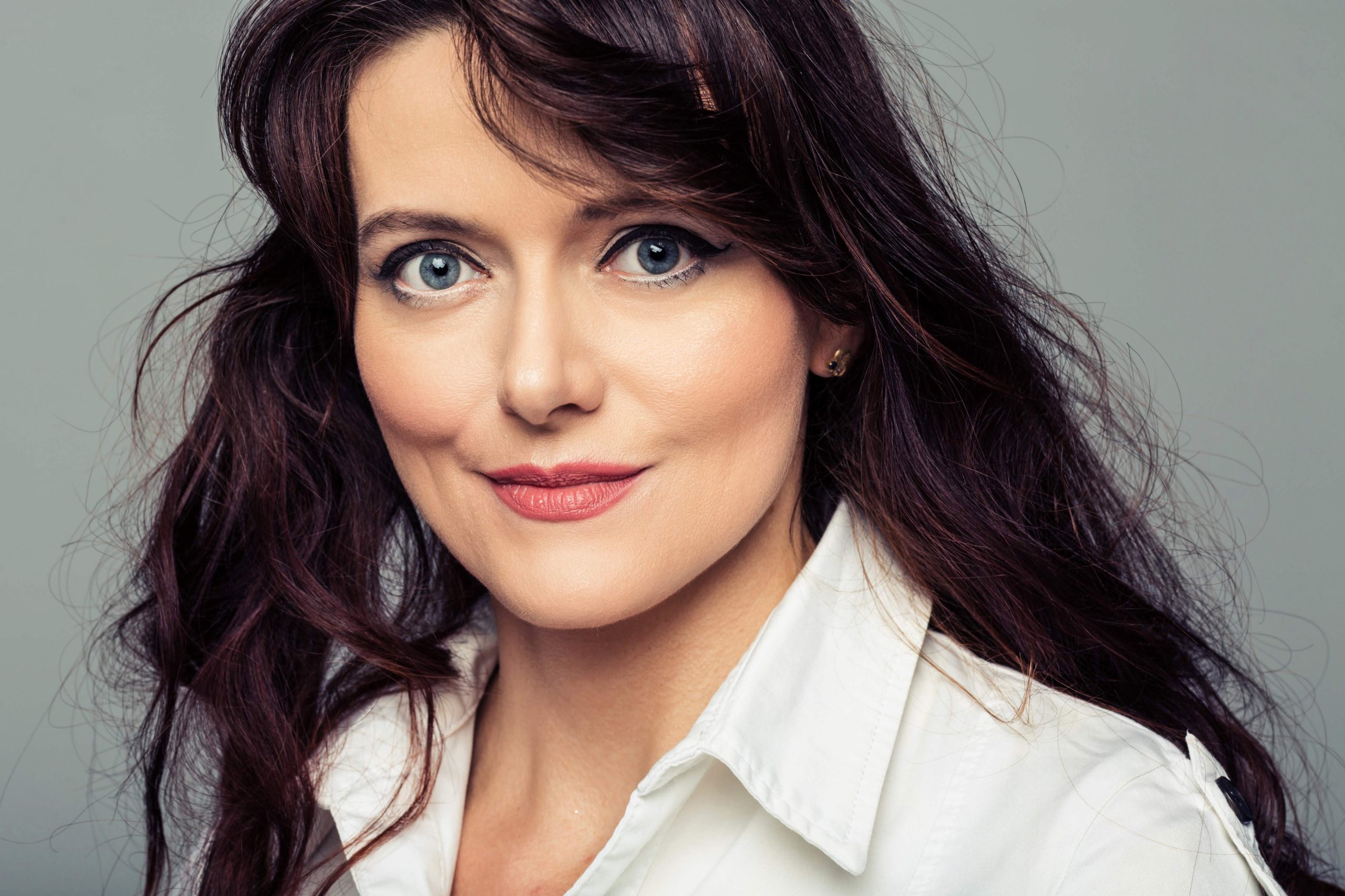
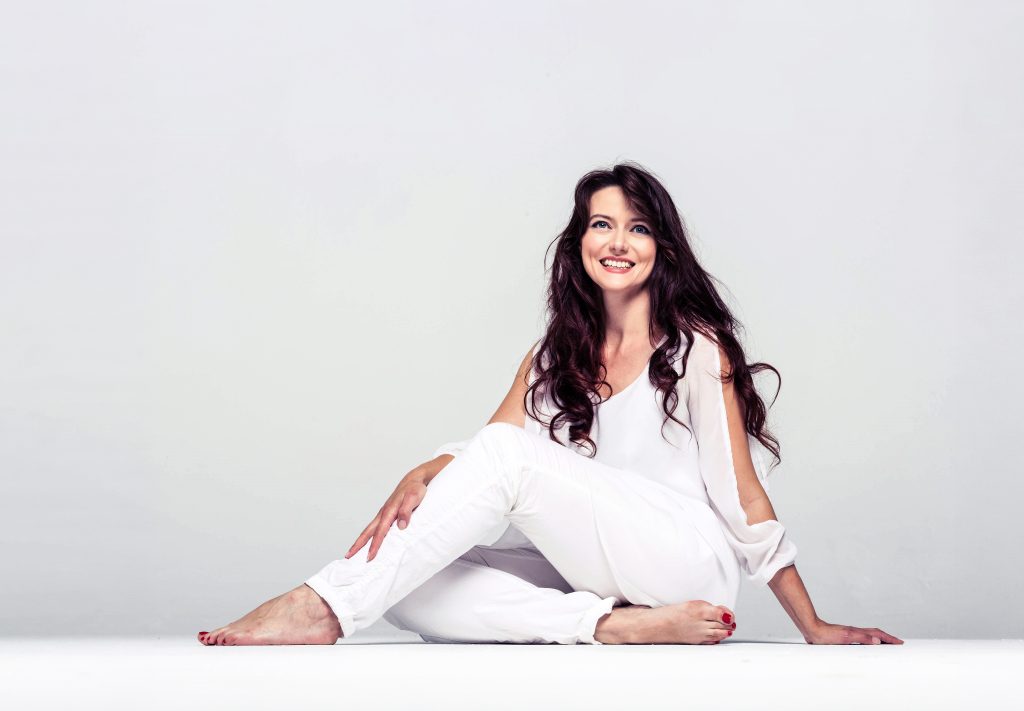
An interview with Dr. Lidia D. Czarkowska – psychologist, sociologist, anthropologist, and founder of the Quality of Life Institute – whose mission is to support people in the harmonious development of their personal potential and effectively overcome life crises. The Institute also serves as a professional training center for experienced coaches and mentors who want to learn advanced methods of holistic work with people using an Integrative-Transpersonal approach.
How was the idea for the Quality of Life Institute created?
It was a journey rather than a single moment. The idea itself had been developing since 2002, and the Institute was formally established a few years later, but before that, I pursued the same mission through LDC Consulting. Throughout this time, one belief has guided me – that quality of life isn’t something that simply happens to us. We can build it consciously.
The concept of quality of life seems very broad. What does it mean in practice?
Quality of life isn’t limited to a single area. Happiness cannot be discussed solely through aspects of career or income. A person functions simultaneously in many dimensions – material, emotional, relational, mental, and spiritual. Only a balance of economic, physical, social, and mental spheres allows us to speak of true well-being. Therefore, in my work, I draw on the model of four intelligences (PhQ, EQ, IQ, and SQ), which each of us possesses and can develop.
Can you explain them to our Readers?
The first is somatic intelligence, or the ability to stay in touch with our own body. It is the ability to read signals from the body, noticing sensations, impressions, tension, or a drop of energy before the body begins to speak to us through illness. The second is emotional and social intelligence, thanks to which we can understand ourselves, regulate emotions, build relationships, and cooperate with others. The third is cognitive intelligence – classic IQ, responsible for logical thinking, analysis, and problem-solving, as well as multiple intelligences, including creative thinking. The fourth is spiritual intelligence. It has nothing to do with any religion. It concerns universal human values of a transpersonal nature, a sense of meaning, goodness, beauty, and everything that allows a person to transcend their own limitations and discover a deeper dimension of life.
There’s been a lot of talk about emotional intelligence lately. Does it really have such a profound impact on our lives?
I believe it allows us to be closer to both ourselves and others. It’s the ability to notice our own emotions, understand them, and respond with greater awareness. It’s also empathy—the ability to perceive the emotions and needs of others. It’s not about being perfect. It’s about a willingness to learn throughout life.
People with high emotional intelligence cope better with difficulties, build more lasting relationships, achieve greater life satisfaction, and are more likely to maintain mental balance. Importantly, its level is not innate, but purely genetically determined. Emotional intelligence can be developed throughout life.
Do people begin to notice this?
Very often, it’s only when they achieve so-called professional success. I work with CEOs, entrepreneurs, and board members. For many years, they have primarily developed analytical, management, and leadership skills. Over time, however, questions arise that haven’t arisen before: What are my relationships with my family like? Can I be close to another person? What gives me a sense of meaning beyond my career and material achievements?
This is the moment when development ceases to be solely about position, power, and prestige.
We live faster and faster. In this rush, can we still hear our own bodies?
The body speaks to us constantly. The problem is that we have learned to listen to everything around us, but not to ourselves.
This short sentence resonates more powerfully than a long lecture. It reminds us that self-care doesn’t begin with fundamental changes, but with noticing the first signs of fatigue, tension, or the need for rest. We have learned to treat the body like a machine, performing subsequent tasks. We function in a hurry, pushing the limits of our own endurance, and we fail to notice fatigue or chronic stress.
Meanwhile, the body communicates with us every day. The problem is that fewer and fewer people can hear them. If we ignore these signals for a long time, the body eventually begins to speak louder – through exhaustion, burnout, a mental breakdown, or physical illness.
Are there any tasks that can be more important than the quality of our life?
Hmm, each of us makes choices every day. We might decide that another task is more important than our health or relationships. The question is, what price will we pay for this decision in a few or a dozen years? This is a natural starting point for a conversation about why quality of life is not about ourselves, but also our relationships with so-called „Significant Others.”
This leads us to relationships with other people. Is that why this extraordinary program for couples was created?
Relationships are one of the most important pillars of quality of life. Even the greatest professional success doesn’t provide a sense of fulfillment if a person experiences loneliness or is unable to build closeness.
This need gave rise to my original program, SPA Love – a Coaching Workshop on the Psychology of Love for Couples; a two-day workshop for couples who want to develop their relationship consciously.
Isn’t this traditional marital therapy?
No. It’s a space for couples who aren’t necessarily in crisis. Often, they’ve been together for several, a dozen, or even decades and simply want to take care of their relationship before more serious problems arise.
During the workshops, participants learn about the psychology of love, the mechanisms of communication, and building closeness. They work exclusively with their partner, thus maintaining complete privacy. The facilitator’s role is to create a safe space and provide tools that can later be used daily in dialogue and building closeness.
Where did the idea for this format come from?
From experience. Over the years, I’ve met people who wanted to improve the quality of their relationships but didn’t feel they needed therapy. Often, one person was ready to work, while the other was afraid of being judged or blamed.
However, relationship development doesn’t have to begin with a crisis. Just as we care for our health or professional development, we can consciously develop our relationships as well.
What else can you offer, for example, to leaders and managers?
Emotional Aikido workshops are very popular – Emotional Intelligence in Managing Yourself and People, where we learn specific tools for constructively dealing with strong emotions such as frustration, helplessness, anger, a sense of injustice, regret, sadness, and guilt. The second program focuses on building mental toughness and resilience within ourselves and within teams in times of great uncertainty and change. I also conduct individual and team development programs to combat burnout and constructively resolve crisis situations (including life, career, family, and health crises) and conflicts.
Are people truly ready to work on themselves today?
Increasingly, yes. Social awareness is changing. Just a dozen or so years ago, psychological support was associated primarily with problems. Today, more and more people see it as a part of development.
However, the most important thing is self-awareness – the ability to notice and understand one’s own motivations, neeřds, values, mental patterns, beliefs, and emotional reactions, as well as the impact these have on our decisions, relationships, and how we communicate with others.
You are a psychologist, sociologist, and anthropologist. This combination of skills doesn’t happen often, but it certainly helps greatly in therapy.
Perhaps that’s why I view people holistically. I’m not interested solely in the mind or the body. Every person functions simultaneously on many levels, and only mutual understanding allows us to support development effectively In my integrative work, I also utilize various coaching methodologies and therapeutic schools, selecting tools tailored to the individual. There is no one method that works for everyone.
After over twenty years of working with people, do you still believe that people can change?
I don’t just believe. I see it every day.
The most profound changes rarely come from grand resolutions or spectacular decisions. More often, they begin with a brief moment of pause. From the moment when the world around us falls silent for a moment, and we dare to listen to ourselves.
It is then that questions arise that can change the direction of our lives: Who am I really? What do I need today? What gives me a sense of meaning? What kind of person do I want to be—for myself and for others? Above all, it’s never too late to look at your life with greater tenderness. It’s never too late to take the first step toward yourself. And it’s often with that single step that true change begins…
Aleksandra Świtalska
Beata Sekuła