




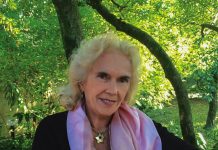




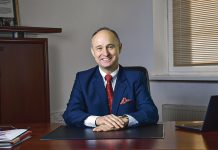







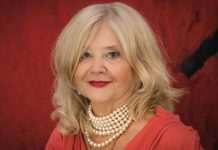
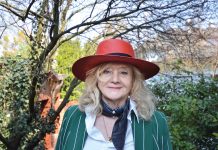











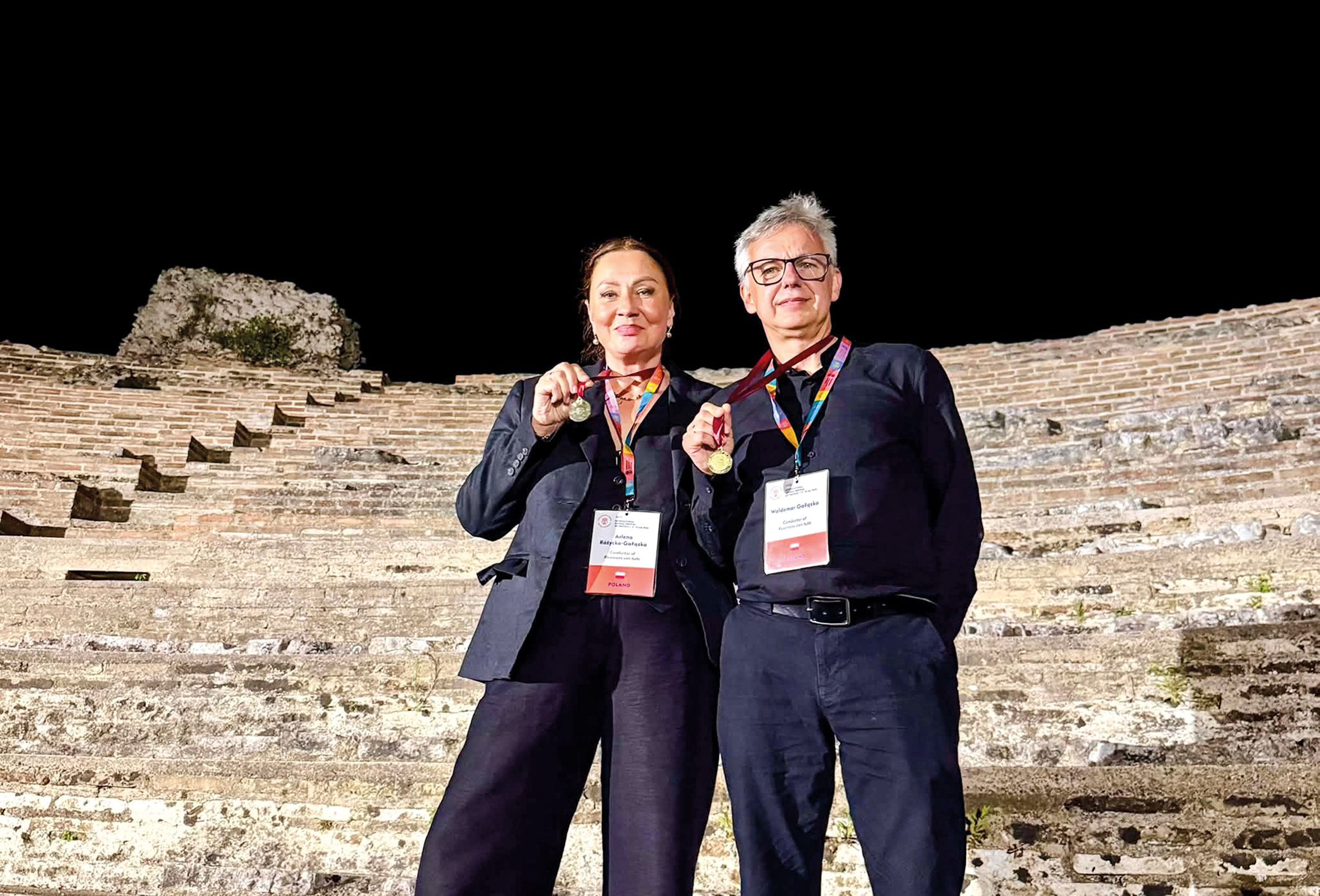
An interview with Arlena Różycka-Gałązka and Waldemar Gałązka, conductors of the Resonans con tutti choir, about the musical path that led from school fascination with cello and rock guitar to co-creating one of the most recognizable youth choirs in Poland. It is also a story about prof. Norbert Kroczek, the sudden takeover of responsibility after his death, working with subsequent generations of young people, international competitions, a family immersed in music. The artists emphasize that art requires not only passion, but also real patronage. Arlena Różycka-Gałązka was awarded the title of Charismatic Woman, and Waldemar Gałązka was awarded the title of Leader by Vocation.
Were you born a Charismatic Woman or did you become one?
Arlena: I admit that I was rather shy and introverted. The choir and conducting prepared me me for this role. Later I started to manage the cultural centre, which meant responsibility not only for the team, but also for the facility, people, activities and documents. Today I know that leadership can be learned, and charisma is something you simply have.
And what about the leader?
Waldemar: I think you can become one. I went through all levels in Resonance: from an ordinary chorister, through singing in tenors, conducting section rehearsals, to conducting the entire choir. However, I had my first leadership experience earlier, in primary school, when I founded a rock band with my friends. I played electric guitar and led the band for a bit.
How did your musical journey together begin?
Arlena: We met at music school. I was seventeen, and Waldek was already involved with the choir. He was the one who actually brought me to Resonans cn tutti. When I came to prof. Norbert Kroczek, I was very impressed with him. I sang with him for four years, I went to competitions and then I thought that I also wanted to work with music this way.
Waldemar: I am from the Mikulczyce – district of Zabrze, so I went to a nearby electrical high school. Music came to me a bit from rock. After the Maanam concert in Zabrze, I decided that I had to play the guitar. Only later did the chorus appear in my life and I decided that being an electrician was not my calling. I got to music school late, so I had to make up for it.
Prof. Was Norbert Kroczek your champion or idol?
A: Definitely, yes. After years of music school, it was only in him that I saw a real enthusiast. Previously, I even thought about medicine, because I liked biology very much – with this goal in mind, I went to the 1st high school to study biology and chemistry, but the choir changed my life. Norbert Kroczek showed me that working on a piece of music can be something deep, lively and very responsible.
W: Professor Kroczek created Resonans as a team with a huge brand. We entered this history first as choristers and instructors. Only a dramatic event made us have to take on much more.
Are you talking about Ireland in 1994?
W: Yes. We went with the choir to a competition. At that time, I was a beginner assistant conductor, I was conducting section rehearsals, but I had never conducted a whole choir before. After the inaugural concert, Professor Kroczek fainted and died. The band decided that their work couldn’t be wasted, and the professor himself used to say that if he ever dies on stage, we must not stop, we must continue singing… It was up to me. I didn’t sleep for two nights, getting ready. We started and won.
A: After returning, it wasn’t any easier. Resonance had a great reputation, and we were young students of the Academy of Music. Many people did not accept that suddenly we were leading such a choir. We had to work very hard to prove that we could maintain it.
How do you divide responsibilities today?
A: Waldek is the main conductor, but I also conduct and lead the band. We have slightly different temperaments. He is better at concerts, where you have to react live, and I like competitions because there you can refine everything. I also deal more with the organizational side: trips, entries to competitions, organization of workshops, documents, festival correspondence. Waldemar determines the details of concerts, logistics, schedule planning and rehearsal strategies. He makes sure that we are on time with all the programs we are working on at the same time. I have no sense of time – when I get lost in the piece, I don’t notice the end of the rehearsal. Waldek disciplines me very well. The audience sees the concert, but before that there are months of rehearsals, work, conversations, consents, letters, etc.
This part is closely related to my work at Youth Cultural Center No. 1. I did not plan to become a director. I took over this function at a difficult time to maintain the continuity of the facility’s operations. It quickly turned out, although of course I could have expected it, that it was a huge responsibility: activities, people, building, procedures, reports, regulations. It had to be learned on the fly.
W: In such a band, music alone is not enough. You have to keep an eye on people, deadlines, level, finances and atmosphere. Arlena took on a large part of this invisible work, without which there would be no rehearsals, trips, or concerts.
What does working with young people mean to you?
A: At the cultural centre, it’s important to me that it’s a living place, not just a building with a schedule of classes. We have dance, sports, music, art, painting, and technical classes, and we collaborate with schools, organizations, and the local community. The idea is for young people to find something for themselves, meet people, and discover their passions. This is very close to what we do at Resonans.
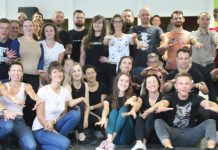
W: We take young people with no musical training. The key is ear fr music. Every year, I audition about 700-800 people, of whom I choose 120-150. Realistically, about forty people come, and after a year, about ten remain. That’s a good result. We teach everything from the ground up: voice projection, music reading, intervals, technique, theory, and working with text.
How wide is the choir’s repertoire?
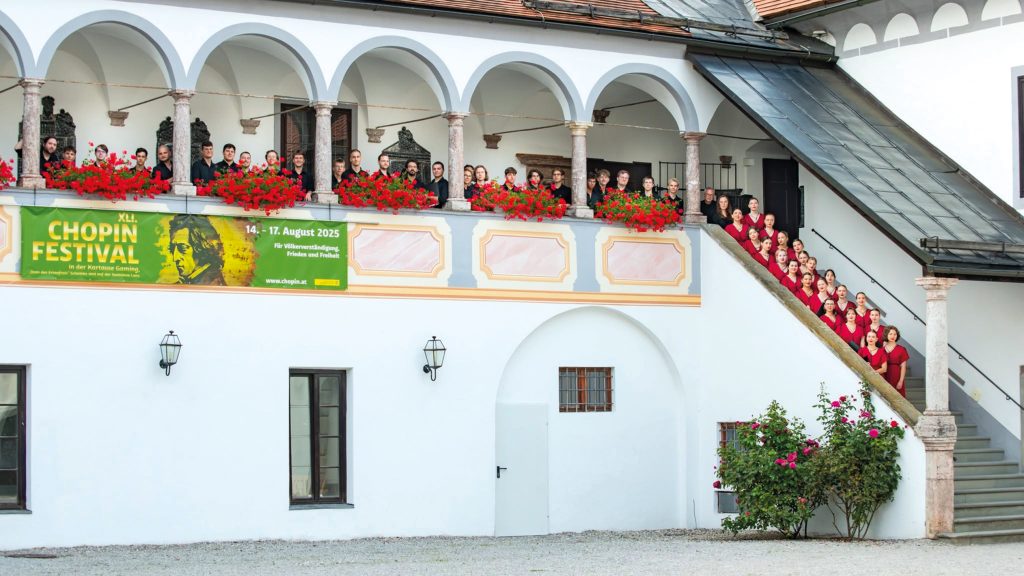
A: Very broad. We sing sacred and secular music, classical music, popular music, oratorios like Mozart’s Requiem, Handel’s Messiah, Brahms’s Ein Deutsches Requiem, and Mahler’s Symphony of a Thousand, as well as film music, opera, and even rap opera. Small and large forms. This is important for young people, as they experience different genres and see that a choir isn’t a museum piece.
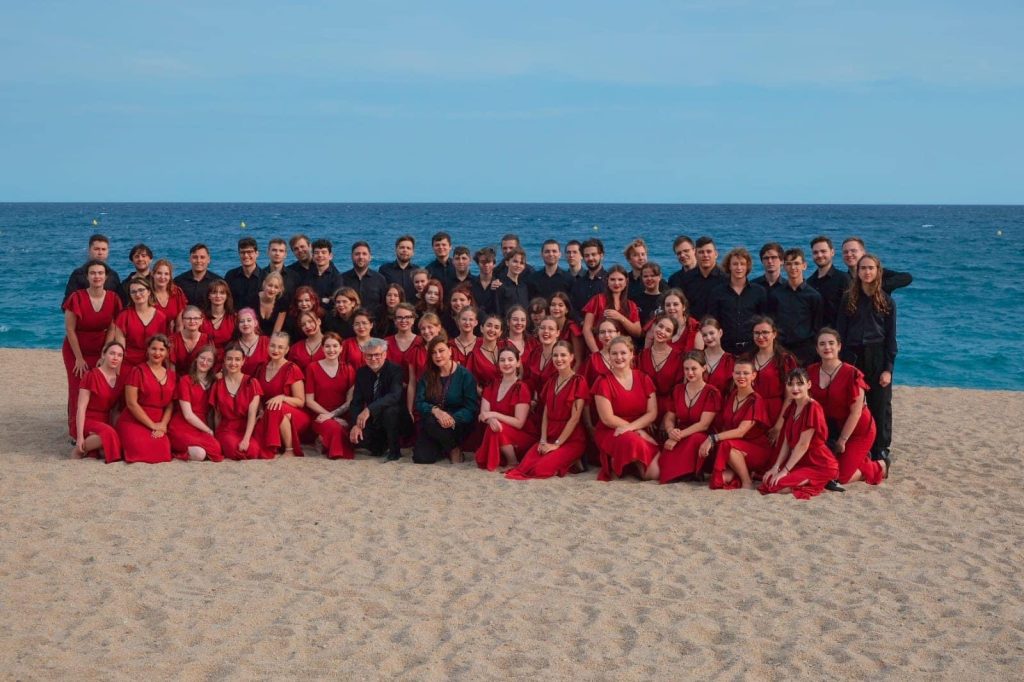
W: We also have many competition successes. I particularly value Palestrina in Rome, Neerpelt – Summa Cum Laude, and the competition in Ohrid, where I received the award for best conductor, even though there were fifty ensembles. The most important thing, however, is that we manage to maintain a high standard over the years.
What is the biggest challenge offstage?
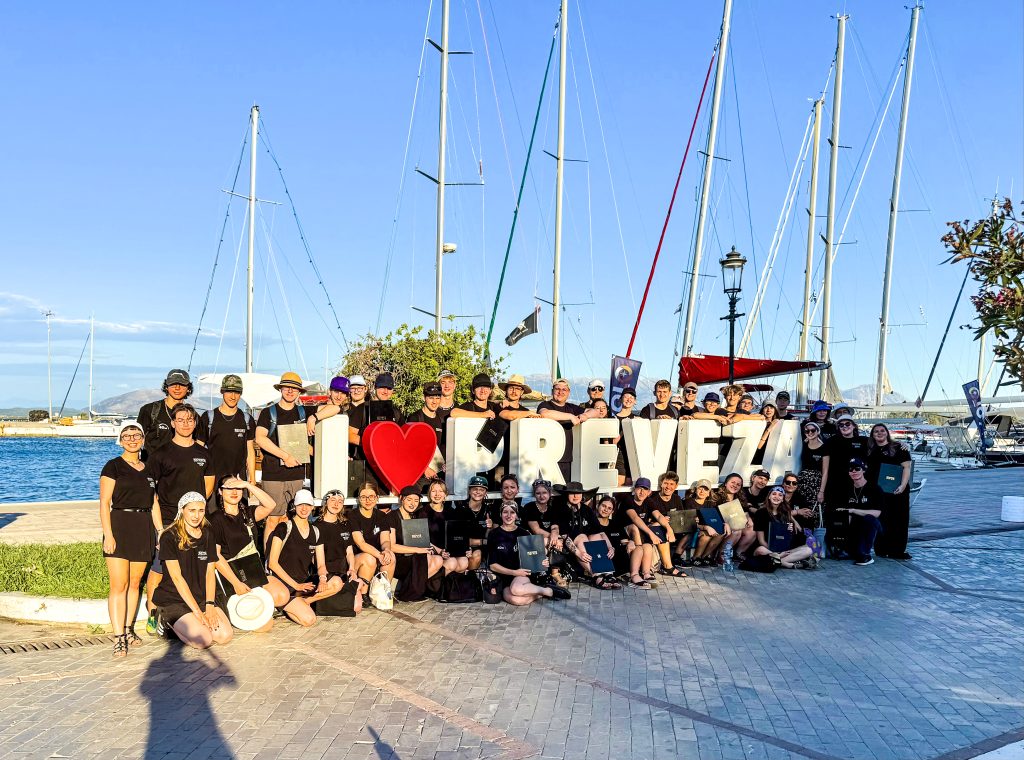
A: Finances. We could attend competitions several times a year, but it’s a huge expense for such a large choir. The bus we once took to Spain with a group of 85 people cost 57,000 złoty. The young people pay around 1,200 PLN per person for the competition trip to Greece, and we have to raise the rest from projects and sponsors.
W: We don’t want money to be a barrier for young people. This is an amateur band, but when it represents the city and the country at competitions, it needs a real support base. Culture also requires patronage, not just passion. It’s a significant challenge and makes planning the band’s future more difficult.
Is music also part of your family life?
A: From birth, our children attended choir camps with us twice a year. Then they rebelled against the music school, started a rock band, and in their senior year, they decided they wanted to apply to the Academy of Music. They both graduated with a degree in choral conducting. Today, my son Szymon studies sound engineering at the Jazz Department of the Academy of Music in Katowice and, of course, works in this field. My daughter Natalia leads the Children’s Choir of the Silesian Opera, pursues numerous musical projects as a conductor and bassist – for example, with Krzysztof Zalewski and Czesław Mozil – studies jazz double bass at the Mieczysław Karłowicz State Music School in Katowice, performs extensively with colleagues, and, of course, helps us run Resonans.
W: It’s beautiful, but also difficult, because the band is constantly present. Someone can call at any time, make arrangements, place orders, ask questions. It’s practically impossible to get out of that kind of work.
What are you most proud of today?
W: That you managed to keep the band going. After Professor Kroczek’s death, many people predicted that Resonans would disband. It didn’t. It survived, developed, and continues to attract young people.
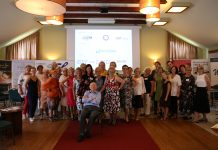
A: I’m proud of my children, but also of the fact that Waldek and I have survived these thirty-something years of leading the choir, that we were nominated for the Fryderyk Award, and that my husband has been a member of the jury that awards this distinction ever since, and that we continue to gather fantastic young people and introduce them to the world of music. The recent anniversary celebration, celebrating our 55th anniversary, when 177 choristers and about 40 orchestra members took the stage, showed that Resonans con tutti is more than just a band. It’s a community spanning several generations.
And your plans for the future?
W: We’ve just had our 55 th anniversary concert, and now we’re going to a competition in Greece and more concerts. You have to choose wisely, because you can’t do everything. The choir needs to develop, but the people also need strength and a sense of purpose.
A: Maintain the continuity of the group, develop, improve our working methods, raise funds for our activities – trips to festivals and competitions, maybe buy a choir bus (laughter). This would solve many of our needs.
And on a personal note, my love is my energizing garden. After a long day of rehearsals, filling out paperwork, making phone calls, working at the MDK, and organizing, it’s good to get out into the trees and just be for a moment. Because to give young people energy, you also have to get it from somewhere.
Szymon Pęczalski
Beata Sekuła