

















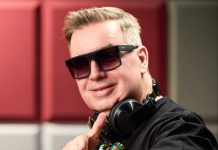



















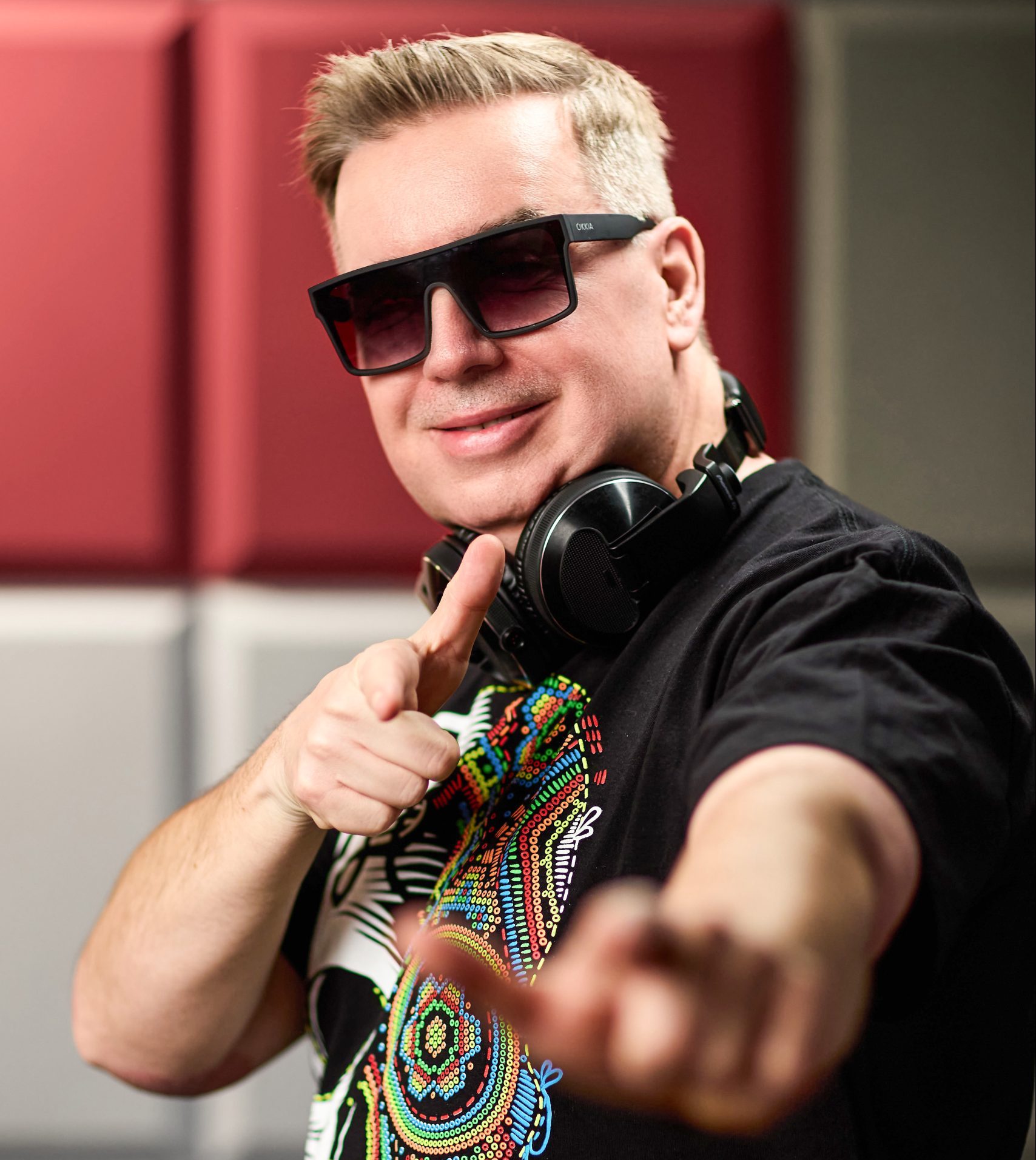
An interview with Adam Gruca – a DJ and presenter at Radio Piekary – tracing his journey from school ceremonies, reel-to-reel tape recorders and his first vinyl records to clubs, radio, international festivals and the Hello Party project. It is also a story of a time when music was discovered through radio broadcasts and cassette tapes, and when entering the profession meant observing more experienced presenters, carrying their record cases and learning humility. In recognition of his body of work, Adam was awarded the title of Leader by Vocation.
Adam, what first drew you to music?
Music had fascinated me since my school days, although the reality was completely different from what it is today. Back then, someone presenting music would have a tape recorder and a handful of vinyl records. They were more of a music presenter than a DJ in the modern sense of the word. I was always intrigued and drawn to that world. I received my first vinyl record for my eleventh birthday. It was Lombard’s album “Śmierć dyskotece!” (“Death to the Disco!”). The title was rather ironic, especially in view of what I do professionally today. The record made a lasting impression on me, and I still have it in my collection.
What were your first experiences of DJing like?
I used to go to discos held in fire stations and community halls. Instead of dancing, I would sit to one side and watch with fascination as the presenter arranged the next tracks – still using cassette tapes at the time – selected the music and built the atmosphere on the dance floor. I was immediately captivated by that world and knew that one day I wanted to do the same.
In those days, you recorded music from the radio. Sometimes you had to get up very early or wait until late in the evening to capture your favourite tracks. I particularly enjoyed “Klub Stereo”, a programme broadcast on Polish Radio 2 on Saturday evenings. I recorded it almost every week and then listened to the songs over and over again. Those recordings were what I used to learn the basics of mixing and take my first steps in music.
What is your educational background?
My education is completely unrelated to what I do today. I studied at the University of Agriculture in Kraków and later studied administration and management at the University of Silesia. Before that, I graduated from the Agricultural Technical School in Nakło Śląskie, near Tarnowskie Góry. My parents ran an ornamental plant nursery, so they felt this would be a suitable path for me.
I, however, had always been more interested in electronics and computers. At the time, though, the choice of schools was far more limited than it is today.
While I was still at technical school, people quickly noticed that I had a natural aptitude for technical matters and for hosting events. I helped run school ceremonies, taking responsibility for the microphones, sound system and announcements. That was where I gained my first practical experience of working on stage.
So you taught yourself the profession you practise today?
Yes. There was no internet, no tutorials and no specialist degree courses to learn from. Most of what we knew came from observation. I watched friends who performed at different events, often sitting to one side for hours and studying how they worked. I also carried record cases for disco presenters. Back then, we still called them “presenters”, not DJs.
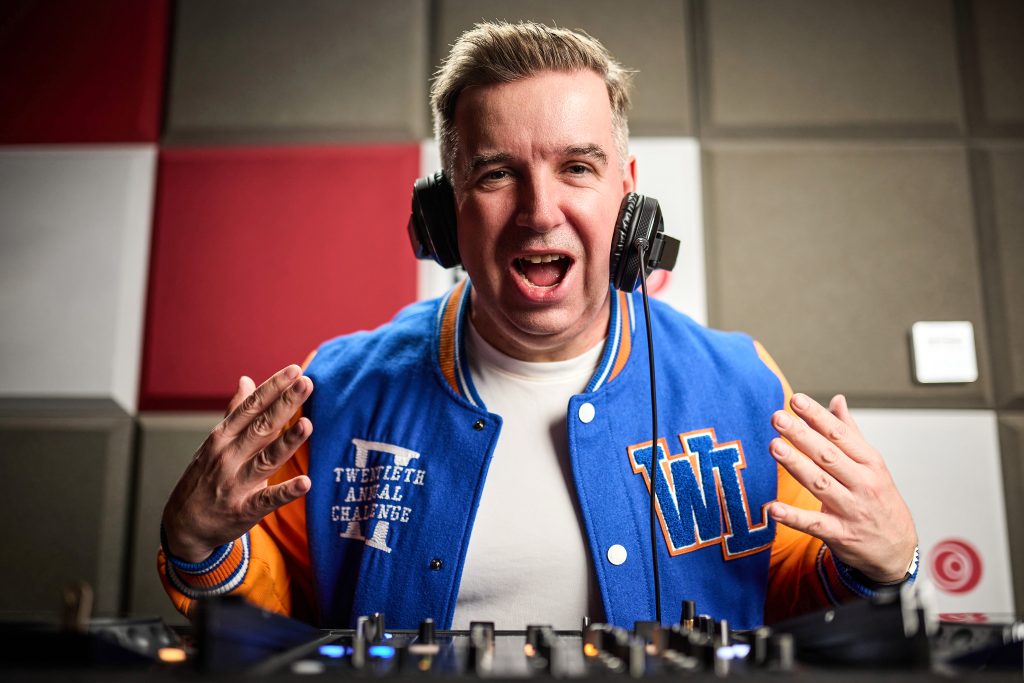
The breakthrough came at a fire station where I regularly attended discos. The events were run by professional firefighters, but one day they were called in for duty. The party had already been advertised on posters, so someone had to step behind the decks. They knew that, despite my young age, I understood both music and equipment, so they left everything in my hands. I played my first disco at the age of fourteen, and that was when I truly caught the bug.
How did you find your way to Radio Piekary?
It happened while I was still a student. A friend heard that a new radio station was being launched in Piekary Śląskie and that they were looking for presenters. He said to me, “Come on, you have a sizeable record collection – let’s give it a try.” We decided to take the chance.
At first, it was an experimental station operating under short-term broadcasting permits. Everything was only just taking shape, and my music collection proved extremely useful. We brought our own records into the studio, and much of the station’s early music output was built around them. That is how I became involved in creating Radio Piekary from its very beginnings.
How do you remember your early days in radio?
It was a period of intense learning. We were all learning the profession as we went along because none of us had studied radio or had any previous broadcasting experience. Above all, the station was created by people with passion and enormous enthusiasm.
During that pioneering period, mistakes did happen on air, but our listeners were very understanding. We felt that we were growing alongside them and that they had been supporting us from the very beginning.
Over time, Radio Piekary became a leading regional voice in Silesia. It had a very broad musical profile: listeners could hear club music as well as regional sounds rooted in Silesian culture. Today, the station has a much more clearly defined format.
Are you still involved with Radio Piekary?
Yes. I have been continuously associated with Radio Piekary for more than thirty years. During that time, I have hosted a wide variety of programmes – from shows featuring Italo disco hits and the latest club music to broadcasts devoted to Silesian culture and dialect.
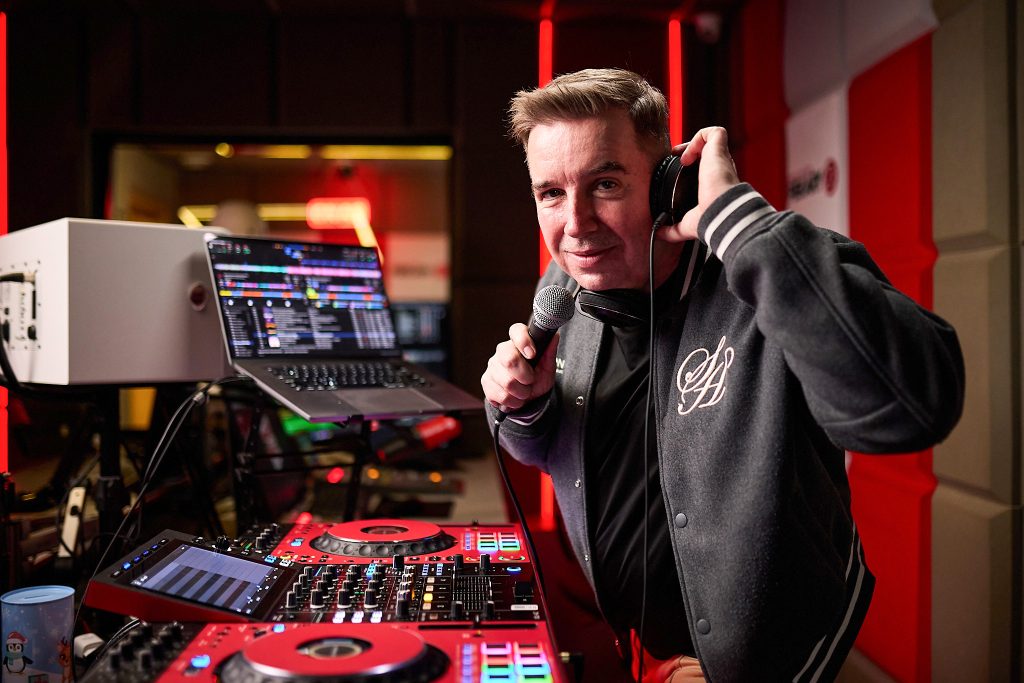
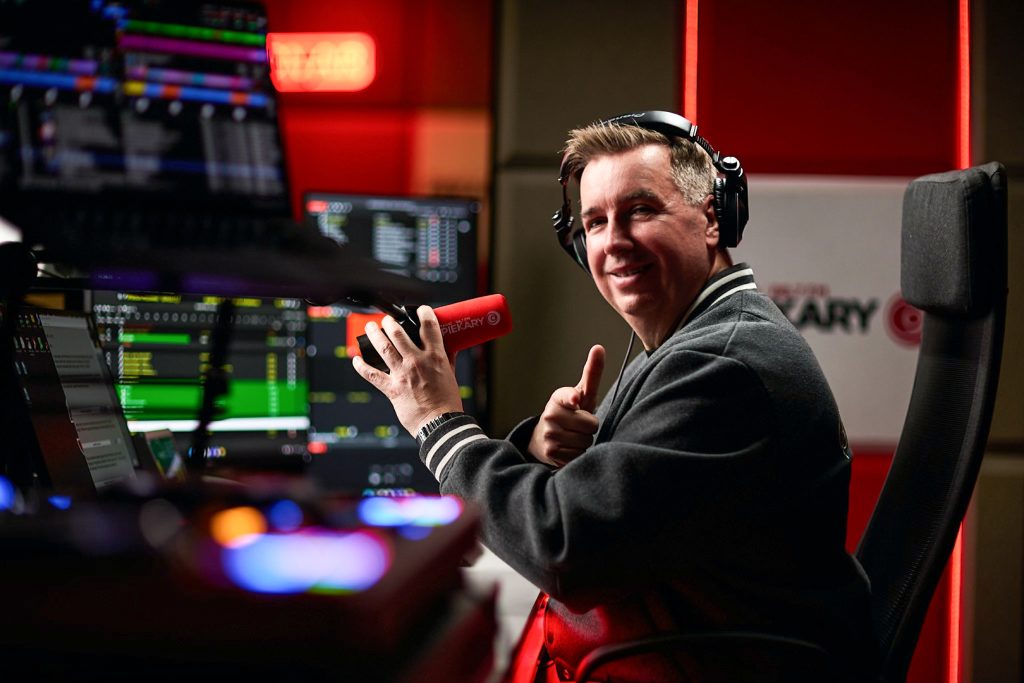
Today, my main focus is my original project, Hello Party. It is a programme built around live mixing and designed to capture the feel of a club set. Radio, of course, has its own rules, with specific structures and restrictions that simply do not exist in a club. Even so, I try to ensure that listeners at home can experience the energy and atmosphere of a real party.
What is the greatest challenge of mixing live on the radio?
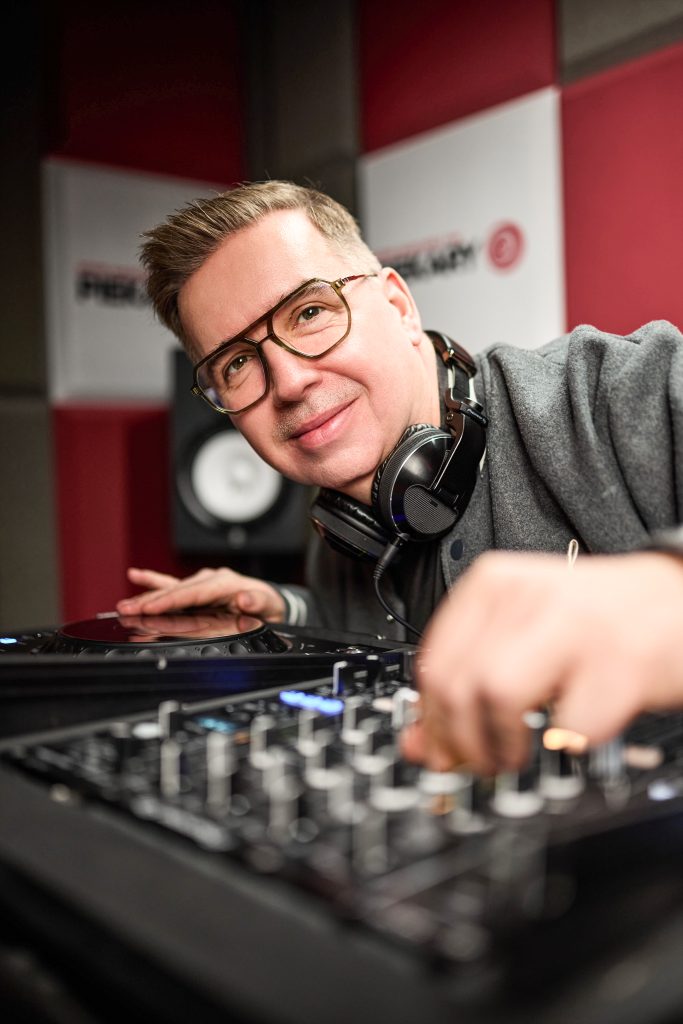
Working live on radio carries a completely different kind of responsibility from playing in a club. Everything has to be timed down to the second, because the broadcast clock is unforgiving and leaves no room for chance.
The greatest challenge is managing many different elements at once: mixing the music, delivering on-air links, accommodating commercial breaks and keeping precise track of time. Advertisements have fixed positions in the schedule, so the set has to be structured in such a way that everything finishes exactly when it should.
The relationship with the audience is different as well. In a club, you can see people, observe their reactions and adjust the musical direction in real time. Radio offers no such feedback. You have to trust your experience and intuition, imagining what listeners expect at that particular moment. It is a completely different way of performing, but it is every bit as rewarding.
What would you like to say to young DJs and artists who dream of pursuing this profession?
Above all, we should treat others as we ourselves would like to be treated – mutual respect is fundamental. When I was starting out, you carried record cases for more experienced performers, observed their skills and patiently worked to earn your own position. Today, online popularity can be gained very quickly, but it is just as easy to become carried away by it. Ultimately, the stage reveals who genuinely has the skills, is prepared to work hard and can cope in real-world conditions. That is why development, humility and consistency matter so much: they are what enable you to build a career that lasts.
You have also performed on major stages.
Yes. I had the opportunity to become the first Polish DJ to perform at the Alpha Rave festival in Schwerin, Germany. It was an enormous honour and, at the same time, a major challenge.
At festivals, I mainly played progressive music – material that was more demanding and not always immediately accessible. Performing for audiences of more than ten thousand people brought tremendous pressure and responsibility. Events of that scale test not only technical ability but also mental resilience. Things do not always go according to plan, and those are precisely the moments that reveal how well you can perform under pressure. Festival audiences can be extremely demanding.
The early 2000s were an era of major festivals and enormous discos that could attract as many as eight thousand people. I performed at numerous clubs and events across Poland, and in Silesia I was a frequent guest at venues where the region’s club culture was taking shape. I also played regularly in Germany, including Hamburg, Lübeck and Rostock.
How do you remember the clubs of that period?
The clubs from the beginning of my career had a completely different atmosphere. This was still the late 1980s. I started at the TZN Czarny Pstrąg club, popularly known as Tip Top, in Tarnowskie Góry, and later moved on to the Hollywood disco in Świętochłowice, which has since become legendary.
It represented a genuine technological leap. The owner imported practically the club’s entire set-up from Germany: professional JBL sound equipment, modern lighting and DJ gear. For us, it was a real window onto the West. At the time, it made an extraordinary impression.
Hollywood quickly became an essential destination for anyone interested in club music in Silesia. People travelled there from many different cities. For a period, we played almost every day, and later from Tuesday through Sunday. We would rotate behind the decks as often as every hour to keep the party’s energy at its peak. It was there that I learned from New York DJ Cisco how to mix using three turntables simultaneously while also sampling from a CD player.
Then came the era of the superclubs, attracting several thousand people at a time. Venues such as Las Vegas in Tarnowskie Góry, Bravo in Gliwice, Piramida in Chorzów and Galeria in Sosnowiec became iconic. It was also a period of major change. Music that had previously required trips abroad gradually became available in Poland.
I remember travelling to Berlin several times a month during the 1990s to buy vinyl records featuring new and interesting tracks. I wanted to have music that had not yet reached Poland. To play a truly good party, you had to stay ahead of musical trends. Audiences expected the latest international hits and wanted to dance to the music they knew from satellite music channels.
What does club culture look like today?
Clubs are going through a more difficult period today, and the situation changed noticeably after the pandemic. Large discos have almost disappeared, while audiences tend to choose smaller venues. At the same time, there are now more themed events and festivals. Young people often prefer to save their money and attend one major event each month, featuring several artists, rather than go clubbing regularly.
There used to be a strong club culture: young people went out every weekend, and the disco was a natural meeting place. Today, there are simply many more ways to spend leisure time. We are also seeing millennials return to the dance floor. Their children are older now, and they can once again afford to go out at weekends. They may not attend parties every week, but once every month or two they are happy to go out with a larger group and reconnect with the club atmosphere.
What are you most proud of?
What makes me most proud is that, after all these years, I have managed to maintain a connection with the audience and continue to understand what listeners want. There are still many people who enjoy my sets and return to my events. That is the best confirmation that the music is still working exactly as it should.
I am also proud that I have found my place both in radio and in club performance. They are two different worlds, but both are built on music and the energy of people.
Performing abroad was another important part of my career. Experiences like those stay with you for a long time and help shape you professionally. Wherever I played – in Poland or abroad – the most important thing was always the reaction of the people on the dance floor.
What plans and dreams do you still have?
I would like to continue doing what I do for as long as it gives me pleasure, joy and energy. I have a loving wife, a home and a stable life, so there is little point in inventing grand ambitions simply for the sake of it. I believe health is the most important thing, because when you have it, many dreams can still be achieved.
Perhaps, somewhere at the back of my mind, there is still a desire to perform at another prestigious festival. Every now and then, that little voice makes itself heard.
DJ GRUCA
Radio Piekary presenter and DJ
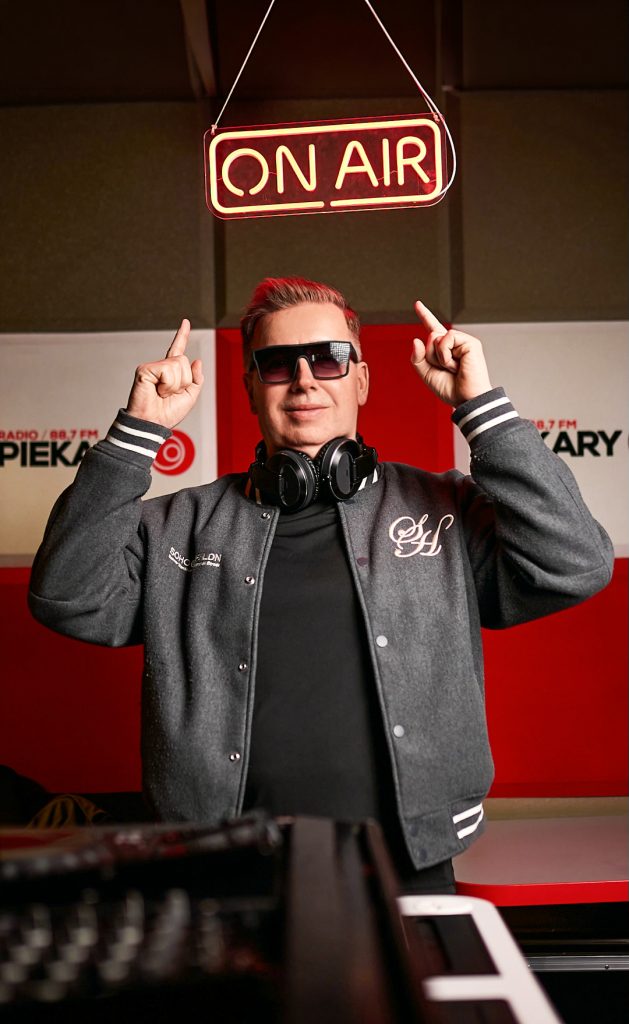
DJ GRUCA – Radio Piekary presenter and DJ. He has been involved in DJ culture since the mid-1980s and has performed at some of the most popular clubs in Silesia.
Over the years, he has performed in Poland and abroad, including Germany, Slovakia and Spain. He has appeared several times at the International Alpha Rave Festival in Schwerin, where, in 2004, he became the first Polish DJ ever to perform. During his career, he has played at renowned clubs across Europe and organised concerts and events featuring international artists. He has been associated with Radio Piekary as a presenter since the station was founded. He is the creator of numerous original radio projects, including the iconic Hello Party programme, which combines live music mixing with the energy of radio and the atmosphere of a club.
Szymon Pęczalski
Beata Sekuła