




















































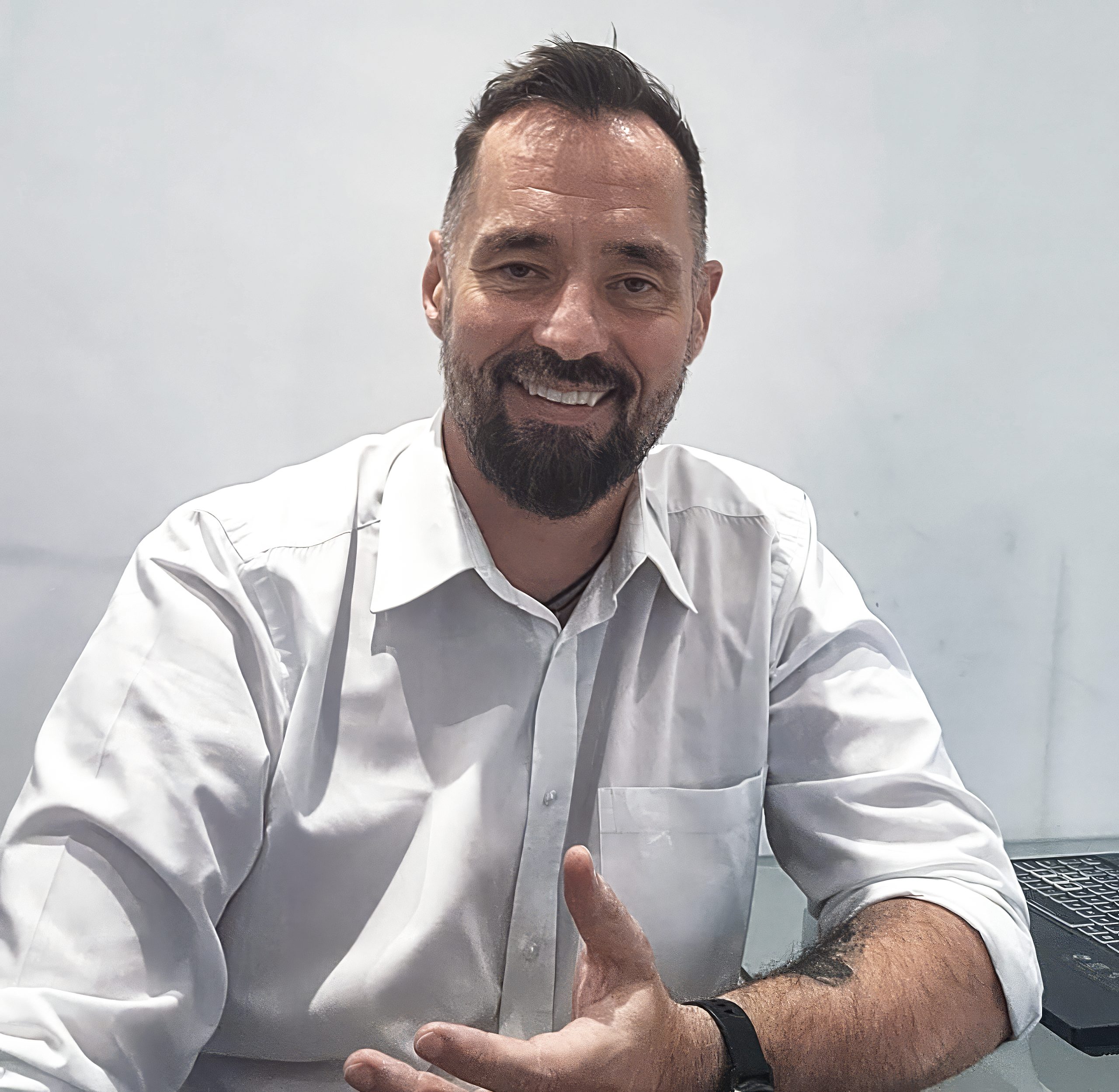
An interview with Adam Trzebinczyk – a Gestalt psychotherapist in training at the Gestalt Institute, a psychology student, a coach, and facilitator. He was the former director of the Railway Hospital in Katowice and the vice-president of Świętochłowice in the past. A few years ago, hebecame awarded with the title of Leader by Vocation in recognition of his management skills and social activities.
I have the impression that you are currently in the process of realizing your dreams, am I right?
Exactly. A dozen or so years ago, I had to choose between studying psychology or choosing another field. But then I think I became afraid of my own desires, and it wasn’t until fifteen years later that I returned to pursuing my dreams. This happened thanks to a calm approach to the subject, but also to self-belief. I have achieved the goal of becoming a psychotherapist in training, and a psychology student. I’m very happy about this, and step by step, I’m creating something I’ve always dreamed of: working directly with people. First, I graduated from the Institute of Psychoeducation and Integral Development in Cracow, earning my coaching certificate. Then, I completed the School for Group Work Facilitators at the Jagiellonian University.
Do you enjoy working with people?
A lot. I emphasize the importance of a mindful look at the other person, a kind of mindfulness without judgment.
Is coaching more of a short-term process of patient support?
I think so, and it’s more often linked to professional goals, but I’d like to combine both with another: a deep approach to the person, competent and holistic work with managers who need to be strengthened. In Zabierzow, near Cracow, we meet once a month for 3-4 days, depending on the conference, and for four years we’ve been intensively learning how to work with others. I’m in my third year, about to take the exam, but I’ve already been approved to conduct my own sessions, i.e., therapy with patients.
Are you satisfied with this school?
I think it prepares me very well for work as a psychotherapist. While gaining coaching skills, I learned tools related to working with clients. I became intrigued. This humanistic approach, which prioritizes the individual, the relationship, partnership, and awareness-expanding, allowed me to enroll, and it truly is one of the best decisions I’ve ever made. Groups have twelve people. These are very deep relationships, often connected to our own therapy. Each of us must undergo at least one hundred hours of individual therapy, one hundred hours of group therapy, and several hundred hours of mandatory supervision.
To understand ourselves first, right?
Yes. The work of a Gestalt psychotherapist is primarily about working with oneself without making transferences, about recognizing one’s resources (strengths). Working on one’s own resources so that the patient is „taken care of” and that our influence is as minimal as possible. In this approach, the most important thing is contact with the patient in a „I-You” relationship and with the patient’s style of contact with the world/environment. I see myself very well in working with anxiety and burnout. I’m interested in working with depression, which is long-term and requires gradual work on its cause, i.e., the underlying cause of the problem. There’s a lot of potential for patient interaction here. I often meet with people who feel lonely, not because they’re alone, but because they’re lonely in a relationship or at work, so this is a space for a shared therapeutic encounter. Sometimes people simply have a different style of communication than the environment in which they live, and therefore feel misunderstood. In such moments, psychotherapy can heal relationships and connections with loved ones and the environment.

Are the people you meet with patients or clients?
My approach is that I consider those working on change, on understanding awareness, to be clients, while those who are already experiencing illness or a more serious mental or emotional crisis, to be patients. A holistic approach is crucial, and that’s why collaboration between the psychotherapist, psychologist, and psychiatrist is crucial.
So, can depression be distinguished from despondency?
Absolutely. It takes several sessions, several meetings, a thorough examination… Someone might be grieving, for example. No emotion can be ignored. Many people, especially men, block their reactions because we’re simply wired that way from birth, or even generationally, that, for example, men don’t cry, men have to be tough.
Are you considering more in-person therapies, online, or camps or retreats?
At this stage, I’m a proponent of in-person therapy, because eye contact, observation through body language, and generally focusing on yourself are very important. Devoting time to this moment is crucial. Of course, online therapy is acceptable from time to time, but I can’t imagine that I could work with a patient online all the time. I also really enjoy working with groups. This process is very close to my heart.
We often deeply hide our emotions, so sometimes it’s a job that lasts from six months to several years, and I know people who are growing and seeing the results. We constantly compare ourselves to how things were now and how they were before, and this daily work shows us how much we’ve accomplished, how we’ve developed, how our lives have improved. It’s simply about being happy.
Have you used coaching methods in management?
Yes, for example, as a hospital director.
Do you change the consciousness of clients?
Most of our lives are automatic. We often don’t live in the present, but rather a past experience triggered in the present. In Gestalt therapy, we examine our communication style and our response to it—for example, we ask, „What’s happening here and now in your body?” And suddenly, our jaw is clenched, our hands are clenched, our breathing becomes shallow, and the patient begins to experience anger, not just talk about it. And this is precisely what expanding a patient’s awareness is all about – what, when fully experienced and realized, allows for change.
What are your plans?
I would like to further develop my qualifications, including therapeutic ones, especially in working with children and adolescents. Personally, I enjoy traveling with my partner and meeting new people.
Wojciech Skowroński
Beata Sekuła