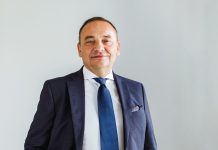


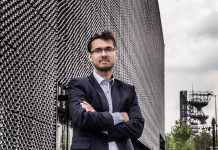





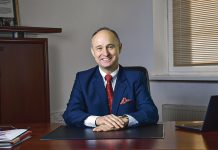




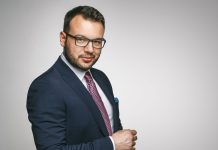


















The hot springs in Poddębice have heated up not only the water, but also the local economy. The thermal baths have become a catalyst for investment, attracting developers, business partners and tourists. Piotr Sęczkowski, the mayor of Poddębice and winner of Leader by Vocation, talks about municipal development on various levels, primarily due to the European Union funds.
When did your leadership skills become visible?
To be perfectly honest, my friends from school reunions frequently remind me of the fact that 30 years ago I said I would become a mayor. I studied at the Veterinary Technical College in Września – I love animals and have always dreamed of becoming a vet. Later on, I graduated in administration and political science in Bydgoszcz, returned to Poddębice and immediately got socially involved. I’ve always been passionate about sport, so I started organising tournaments, which quickly made me recognisable. I worked in the promotion department of the district starosty, and subsequently became the manager of the District Social Welfare Centre.
Did you play sport?
Until my twenties, I played football, always as team captain. Years later, to get back in shape, I took up tennis. It quickly became my passion – today I support Iga Świątek, and I’ve even passed on my love of tennis to my five-year-old grandson, who’s just starting his adventure with the racket.
How did your local government activity begin?
I began as a councillor for the Północ housing estate. Residents often came to me with various issues and encouraged me to run for mayor. I won in the first round and then, step by step, gained trust of my voters. Today, I’ve been serving my fifth term now.
Please, name achievements you take pride in.
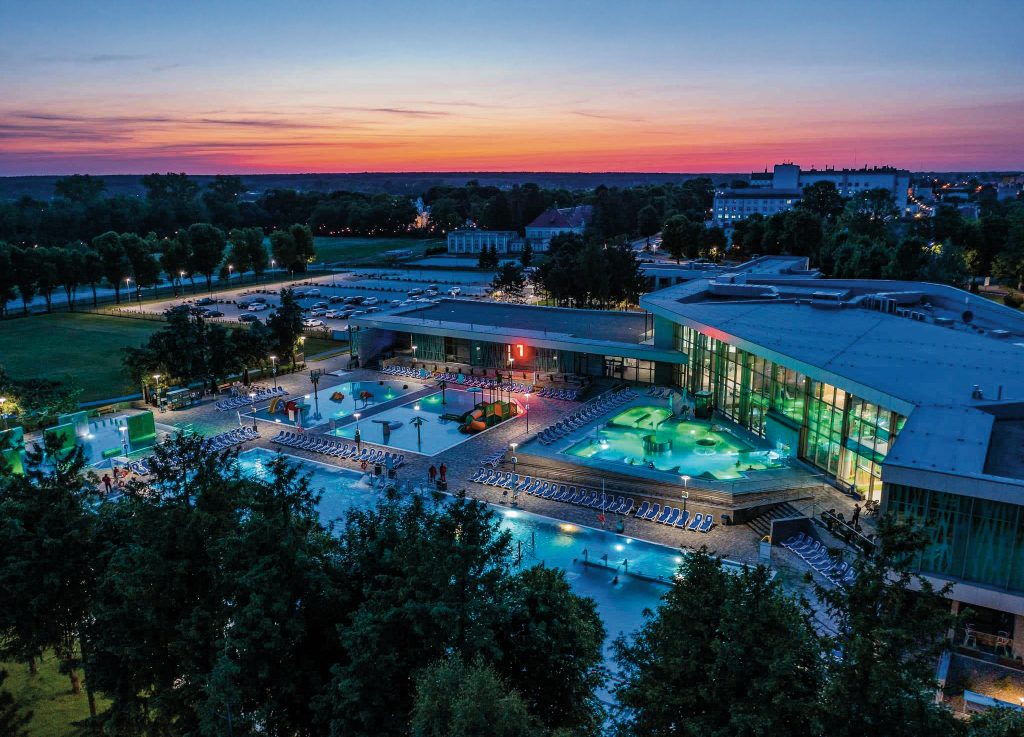
I’m fully satisfied with the effective management of thermal water resources. It’s brought measurable environmental and economic benefits. Following the AGH (University of Science and Technology) research, which indicated the presence of water within Poddębice underground, we managed to obtain funding from the National Fund for Environmental Protection to drill a borehole in 2009. The project cost PLN 12 million. The water extracted from a depth of 2,101 metres is as old as 27,000 years and has excellent parameters: a temperature of 72°C, microbiological purity and is fit for bathing, consumption and heating. Within a decade, we’ve built a heating network that supplies 80% of the city, a boiler room and thermal baths. The water’s supplied to hospitals, schools and other public buildings. I don’t know of any other municipality that’s implemented such a comprehensive project on such short notice. This wouldn’t be achieved without the help of European Union funds and the support of the Marshal’s Office of the Łódź Province.
What do the thermal baths offer?
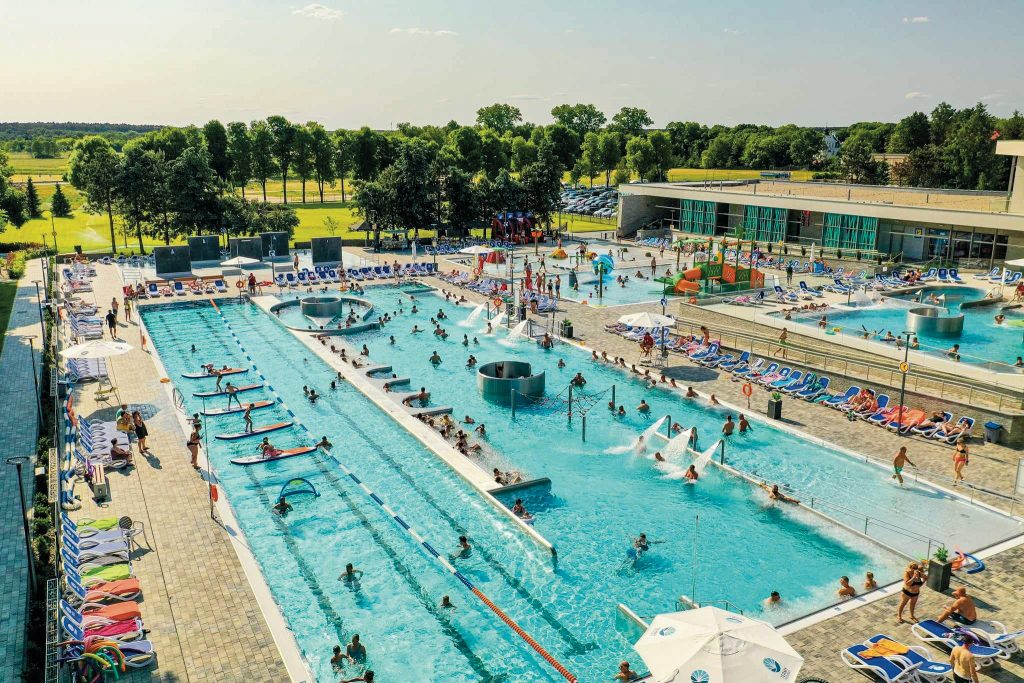
It’s a place for total relax available all year round. Guests have access to as many as seven swimming pools, both outdoor and indoor, and the water attractions are complemented by sauna and spa areas. We pay special attention to the elderly and disabled. Our complex is designed to make everyone feel comfortable – we have pool ramps, hoists, wheelchairs, handrails, grab bars and many other amenities. The baths take place in unique water with a bicarbonate-sodium-silica-calcium composition. It’s hyperthermal and safe for everyone, regardless of age. The compounds it contains have a great effect on the skin: they moisturise and cleanse it. The temperature of the water itself improves circulation, relaxes muscles, relieves joint pain and has a soothing effect on the nervous system.
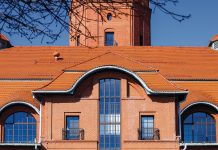
The Thermal Water Pump Room is located in the historic building of the former Evangelical-Augsburg church, now also the seat of the Integration Theatre – an open social space that brings people together and offers publicly accessible cultural, educational and therapeutic events.

Has thermal infrastructure influenced the development of tourism in Poddębice?
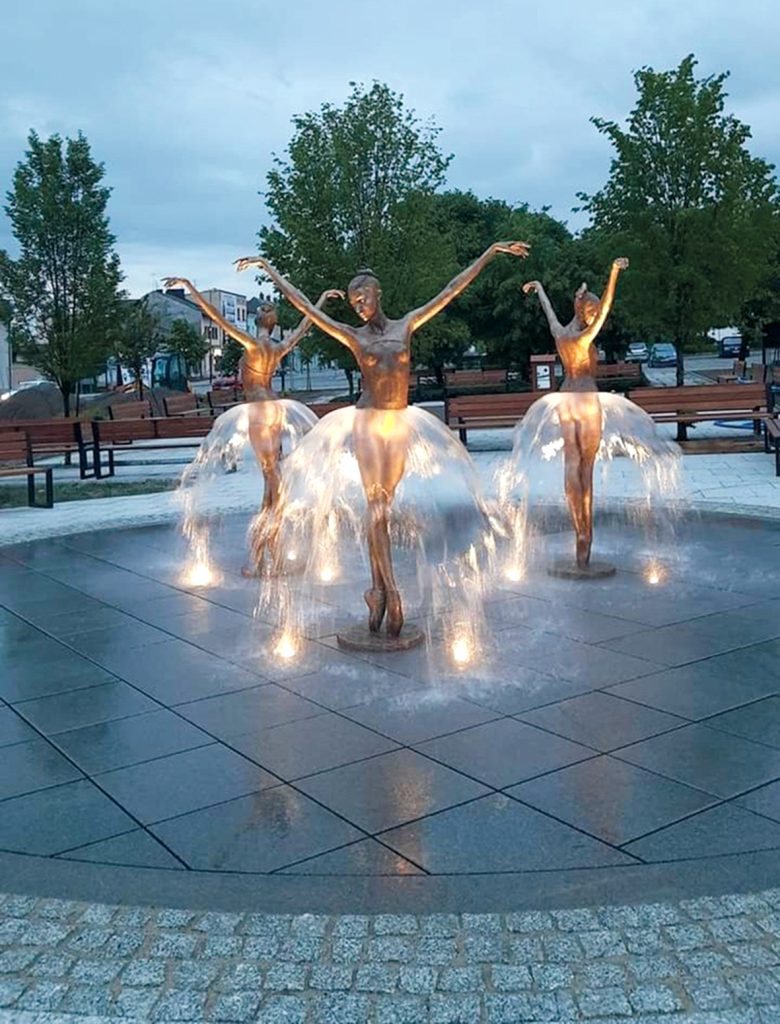
Definitely yes – the thermal baths are the most popular and irresistible attraction, but the town has much more to offer. Poddębice, founded in the 14th century and remaining a private noble town until World War II, boasts a Renaissance palace surrounded by a historic park located by the Ner River. It was built at the beginning of the 17th century, funded by Zygmunt Grudziński, the voivode of Rawa. The Grudziński family also built a church with Renaissance architectural features, the altar of which is decorated with sculptures of saints of high artistic value. As part of the palace and park complex revitalisation, the Sensory Garden was created, divided into five zones with interactive installations. The investment cost PLN 20 million and was supported by European Union funds. The Prima Ballerina Fountain, opened in 2024, with sculptures by Małgorzata Chodakowska, considered one of the most beautiful in Poland, is also impressive. In nearby Borysew, there is a private zoo – serving as popular attraction for 16 years.
How have thermal baths affected municipal investments?
Thermal baths have become the driving force behind the municipality’s development. We cooperate with Dermedic, the Łódź-based company using our water in dermocosmetics and planning to build a research and development centre at the borehole. Developers have already bought plots of land and one of them has almost completed the construction of modern apartments. Further plots are being prepared for investment.


What about culture, sport and education?
The Poddębice Culture and Sports Centre is very active. The Dalia majorette team wins international awards and promotes the town at prestigious events. For several years now, famous artists from the Polish music scene as well as international stars have been performing in Poddębice. We cooperate with Polskie Radio, which organises concerts for us as part of Lato z Radiem tour and Telewizja Polska – this year featuring performers such as Dawid Kwiatkowski, Bovska and Afromental. Termalna Majówka with Radio Eska opens the season. There are several sports clubs: handball, martial arts and the oldest one – LKS Termy Poddębice football club, founded in 1958, currently playing in the IV liga (fourth league). In 2013, we opened the Tourism and Recreation Centre in Byczyna – a complex comprising sports fields, a tennis court, a running track, a water zone, fishing piers and conference facilities. The investment cost PLN 21 million, most of which (PLN 10.5 million) came from EU funds and the Ministry of Sports and Tourism. Children and the young now study in a renovated school, financed with EU funds. Now it’s time for the nursery school – we’re just starting its modernisation.
You’re very effective in obtaining EU funds.
That’s right – for years we’ve been at the top of the ranking of Wspólnota – the Local Government Magazine. We’ve received numerous awards at the International Congress Centre in Katowice, and this year we’ve also been recognised.
How do you spend your free time?
I play tennis, enjoy watching matches. Oftentimes, together with my wife, a Polish language teacher, we visit theatres in Łódź. I travel quite frequently, especially to places with thermal waters, to take a quick peek at new interesting solutions. I recently visited Bad Radkersburg the Austrian spa area where I made contact with the mayor and invited him to Poddębice.
What are your plans and dreams?
We’re planning to implement two road projects and revitalise three city squares. We also plan on building a dozen or so council flats. I’d like to invite hotel industry investors to Poddębice and observe the municipality’s constant development. And privately? I dream of Widzew playing in the Champions League and Iga Świątek staying at the top.
Dorota Kolano