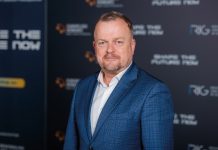


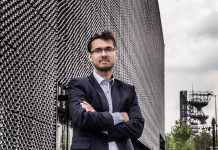


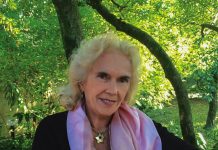


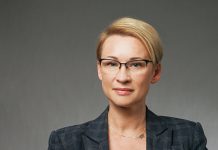


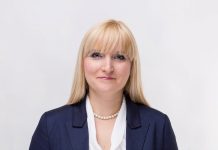


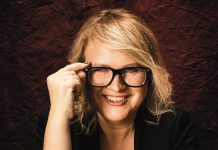
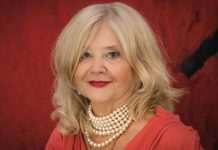
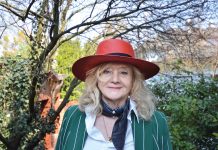





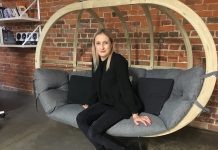
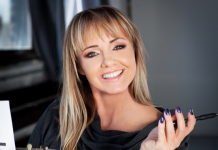
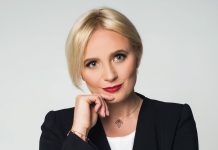

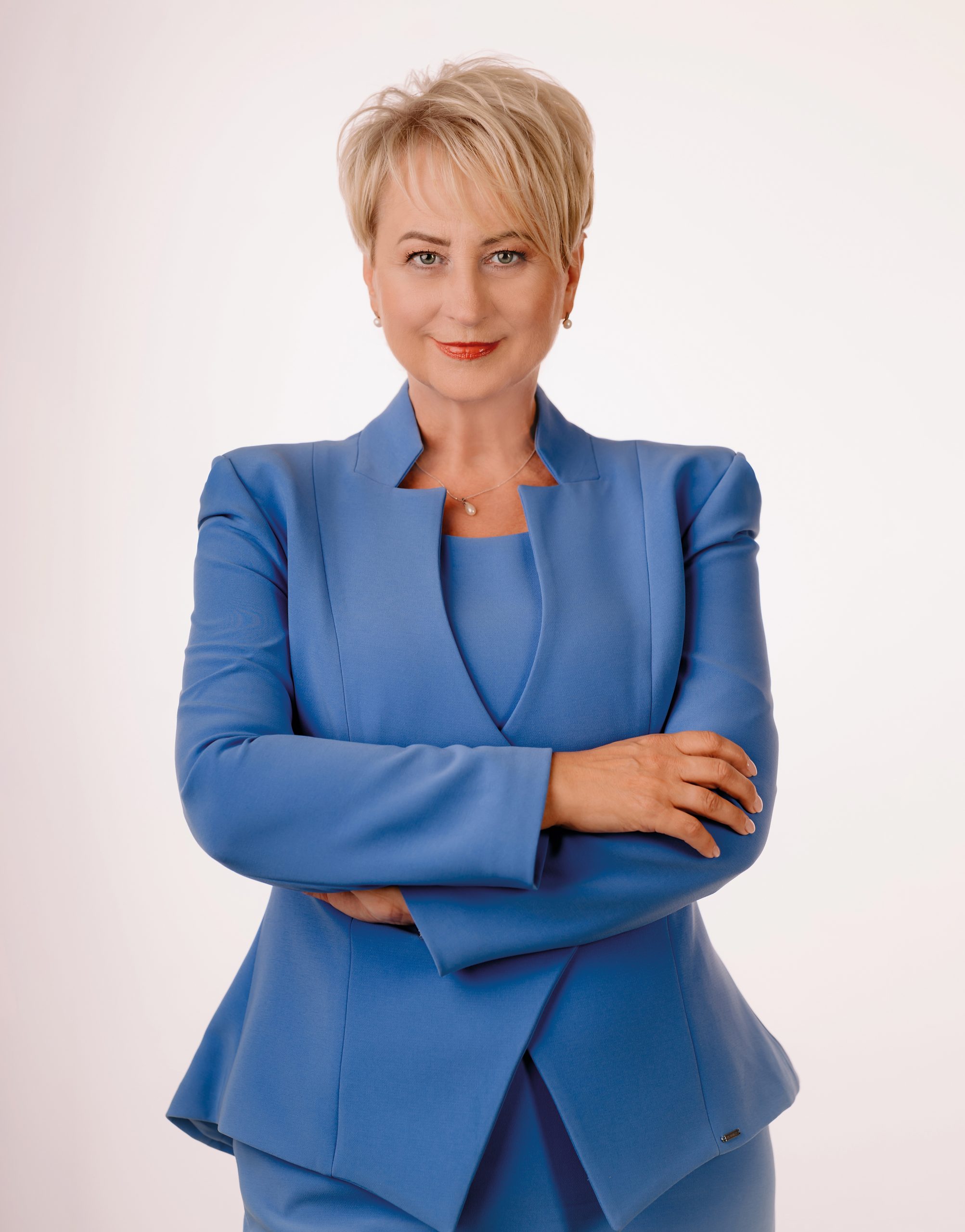
Iwona Gibas, a member of the Management Board of Małopolska Region in her second term now, responsible for the development of culture, tourism, cooperation and labour market policy in the region. Iwona Gibas, a woman who builds bridges between institutions and residents, between heritage and modernity, between local government and civil society. Her work for the development of Małopolska makes an example of local government unafraid of challenges and, at the same time, remaining close to the people. Leaders like her make the region economically strong, but also put a soul into its body. In recognition of her numerous achievements and exceptional social sensitivity, she has just been awarded the title of Charismatic Woman.
Have you always dreamed of a career in local government?
Well, if someone had told me 30 years ago that I would become a local government official, I would probably have laughed out loud. But we cannot predict the scenarios life writes for us. I started my professional career years ago as a medical analyst. Then, a truly charismatic woman, the youngest mayor in Poland at the time, Beata Szydło, came into my life, and I had the honour of managing her parliamentary office for over a dozen years, including the prime minister period. It was an extraordinary school of social work, a practical one, because its theoretical foundations were built during my studies in management and marketing at the AGH University of Science and Technology. Later, I worked as one of the directors of the Ziemowit hotel in Ustroń, and throughout this time, my interest in local government, as a recurring theme in my professional life, grew.
Does being a woman help or hinder you in performing managerial roles in local government?
I’m against linking professional roles with gender. Women have often proven their outstanding skills in professions considered typically masculine. As I mentioned, I know a great example of a female prime minister. We have excellent female ministers, strength athletes, drivers and actresses playing manly roles. Just think of Krystyna Feldman’s fantastic performance as Nikifor Krynicki in the film ‘Mój Nikifor’ from 20 years ago. I could go on and on, arguing that women are better suited to local government than men, but I don’t think gender is the key criterion here. Certain personality traits are of the utmost importance.
What are these traits?
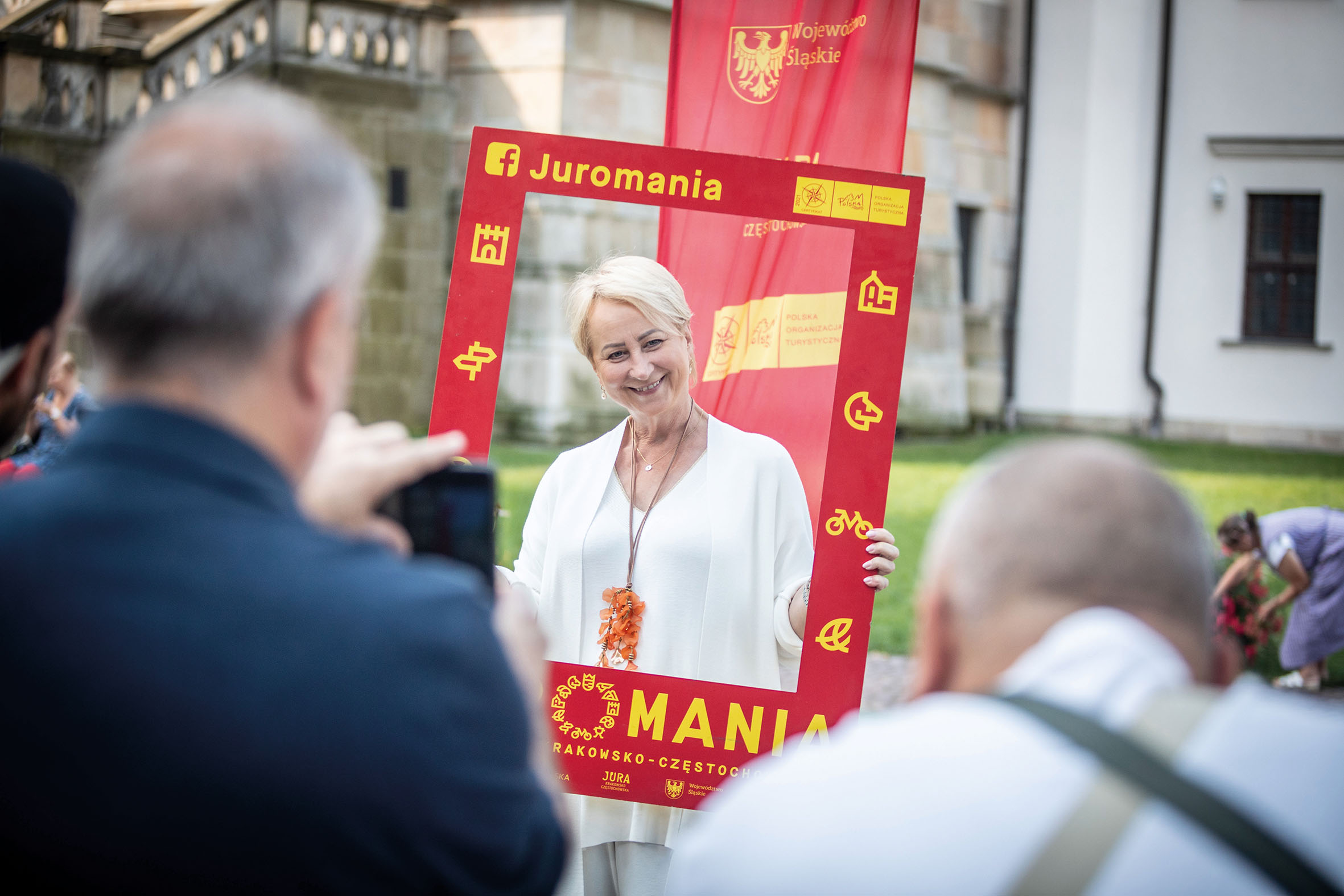
First and foremost empathy and the ability to listen. Indeed, these are probably more feminine than masculine, but without these qualities, there can be no good local government official, because a local government official must listen to the needs of the community and respond to them. This means being close to people and with people. I cannot imagine managing local government affairs from behind a desk. A local government official must get to know their region, visit and insightfully observe it. This is another characteristic. You can’t sit in your office and wait for people to come to you and share their problems. You have to leave Kraków, visit those people and see what the residents are proud of and what they would like to change. Only then you’re capable of strengthening the former and finding remedy for the latter.
Is this your approach?
I do my best. Of course, deliberations of the board, council and its committees are an important part of my work, as well as analysis, edition and signing documents, solving current problems, but whenever I can, I travel around Małopolska and familiarise myself with the issues of the residents on the spot.
You are primarily responsible for culture, tourism and the labour market. Are these difficult areas?
I see this question as a certain, but pleasant trap. Indeed, it’s often believed that culture and tourism are areas where nothing can go wrong, so everyone wants to be involved in. However, please remember that Małopolska is the undisputed national leader in the field of culture and tourism. It’s not without reason that Kraków is called the cultural capital of Poland, and Małopolska leads the tourism rankings ahead of other regions, except for two holiday months, when we sometimes find ourselves on the podium with our friends from the seaside, but for most of the year, Małopolska is the number one destination for tourists. This fills us, the people of Małopolska, with pride, but it’s also a huge challenge, and I’m honoured that the Management Board of Małopolska Region has entrusted me with work in these areas. The same is true as far as the labour market is concerned, as the area requires special attention in today’s unstable times.
What are Małopolska’s achievements within these areas in recent years?
It’s difficult to choose from so many and not to leave anything out. There are many people standing behind these achievements, whom I would love to sincerely thank for commitment and effort. Each of our projects and institutions tells an individual story of passion and values. The strength of these lies in human resources – creators, animators, managers able to materialise beautiful and important things.
So maybe let’s focus on the most important ones.
As I’ve already said, culture is an integral and enormous part of the Małopolska genotype. I have the honour of supervising 25 cultural institutions throughout Małopolska, 12 of which seated in Kraków. These are institutions of various types – museums, theatres, but also the opera and philharmonic. Preparations are currently underway for the construction of a new concert hall in Kraków, which is one of the largest investments in the cultural sphere in the region. It will be an international-level facility, designed in a prestigious architectural competition, with a capacity of nearly 1,800 people. Małopolska is the only Polish region without a representative concert hall in its capital. We will change this, and I hope that in a few years’ time, a true architectural gem will be built in the centre of Kraków, at Rondo Grzegórzeckie, which will also be a space for multimedia education and international cooperation. We’ve allocated approximately PLN 450 million for this long-term purpose.
The new institution we’re planning to establish is the Museum of Mountaineering and Skiing in Zakopane – the winter capital of Poland. The project will cost PLN 12.2 million. Last year, we opened the Firefighting Museum in Alwernia. We’re also preparing to modernise our magnificent facilities in other parts of the region, such as the Castle in Dębno, Lipowiec Castle and the Karwacjan and Gładysz Manor in Gorlice. These activities are not only about protecting our heritage, but also a real opportunity for the development of local communities.
In general, in 2024 alone, the local government of Małopolska Region undertook 60 investments worth almost PLN 25 million. This is not only the province’s money, as cultural institutions also obtain funds themselves. For example, the Juliusz Słowacki Theatre in Kraków and the Archaeological Museum in Kraków have obtained over PLN 60 million from the FEnIKS programme, which they will use for creation of modern cultural spaces and monument revitalisation. There are 14,000 non-governmental organisations in Małopolska. We also try to support their cultural activities. In 2025, as many as 380 organisations received support as part of the ‘Mecenat Małopolski’ competition. These include choirs, jazz bands, folk bands, rural housewives’ clubs, but also modern cultural and educational initiatives. As local government officials, we also want our cultural projects to be visible internationally. Małopolska actively cooperates with foreign partners – Slovakia, Ukraine, Germany, Italy and Romania. Cultural institutions from the region regularly present their achievements on the international stage, building the image of Małopolska as an open, creative and innovative region. Thanks to cooperation with the Consul General of Slovakia in Kraków, we managed to organise the Andy Warhol exhibition – an extraordinary display of art that transcends national and cultural boundaries.
This is a cultural field, but what about investments in tourism?
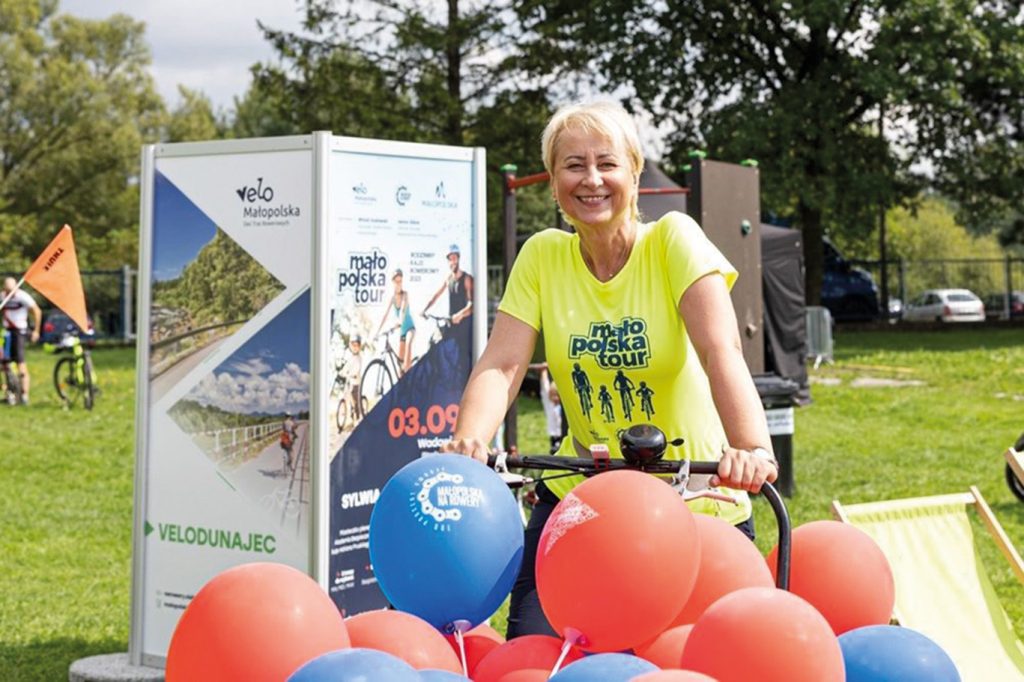
Culture and tourism are interconnected. Culture creates the identity of a place, and tourism allows it to be shown to the world. Some may be surprised by the fact that, from the point of view of local government, tourism is treated as a branch of the economy. This is particularly true in Małopolska. In 2024 alone, we were visited by over 26 million tourists, which is roughly the same as the total population of the Czech Republic, Hungary and Slovakia combined. Last year, 11 million passengers landed at the International Airport in Kraków-Balice. We have the largest number of hotels in Poland – almost 600. As far as mountain guides are concerned, there are over 2,500 people from Małopolska registered. Last year, our guests spent almost PLN 20 billion in the region. This is money kept in the pockets of the people of Małopolska, which we, as local government officials, are happy about, but at the same time, it’s a great commitment for us to maintain this level of tourist traffic and, even better, to develop it further. Małopolska, as a local government, is doing everything it can to increase the region’s tourist appeal. Last year, we supported the tourist activities of non-governmental organisations with over PLN 12 million. We also care about the development of cycling tourism as the first region in Poland to start creating our own network of cycling routes on a large scale. Today, our VeloMałopolska network is an increasingly recognisable brand, which already consists of 700 km of perfectly constructed and maintained routes in the diverse and beautiful landscape of Małopolska. The COVID-19 pandemic, which shook the tourism industry to its core, was a great challenge for us. During the pandemic, the local government allocated PLN 24 million to save jobs in the tourism industry and to fund active promotional campaigns, including in New York and Chicago. Thanks to cooperation with consulates, participation in trade fairs and a wide-ranging information campaign, Małopolska maintained its reputation and attracted tourists from all over the world.
This indeed is a huge undertaking you’re supervising. How do you find time for yourself and your family?
Indeed, there is little time, and certainly less than my loved ones and I would like to share. Fortunately, I somehow manage to find time for my husband, son, daughter-in-law and granddaughters. My great passions are music and fashion. I love the classics in both of these areas. I love going to the opera, which inspires me and calms me down after daily struggles in local government. Culture is a space where you can stop, listen and be moved. It’s also a space for strong, creative women, beautiful on the inside. I’m fond of interior design, so I decorated my office at the Marshal’s Office. Before I demand from others, I set an example myself. I start building space from the interior. I want all guests to feel comfortable in my Kraków office at Basztowa Street. Besides, you can’t do social work if you don’t like it. And I truly like it. For some time now, I’ve been participating in Beata Bojda’s project, which involves supporting women with cancer through art.
What are your dreams?
A little more time for myself and even more for my family. I want to learn how to write icons. I don’t know when the time for it comes, but it’s my dream. We all know that dreams are important in life. And the same goes for the work of a local government official. Without dreams, we wouldn’t be able to create anything inspiring.
Katarzyna Raszka
Izabela Cekiera