
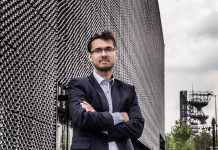








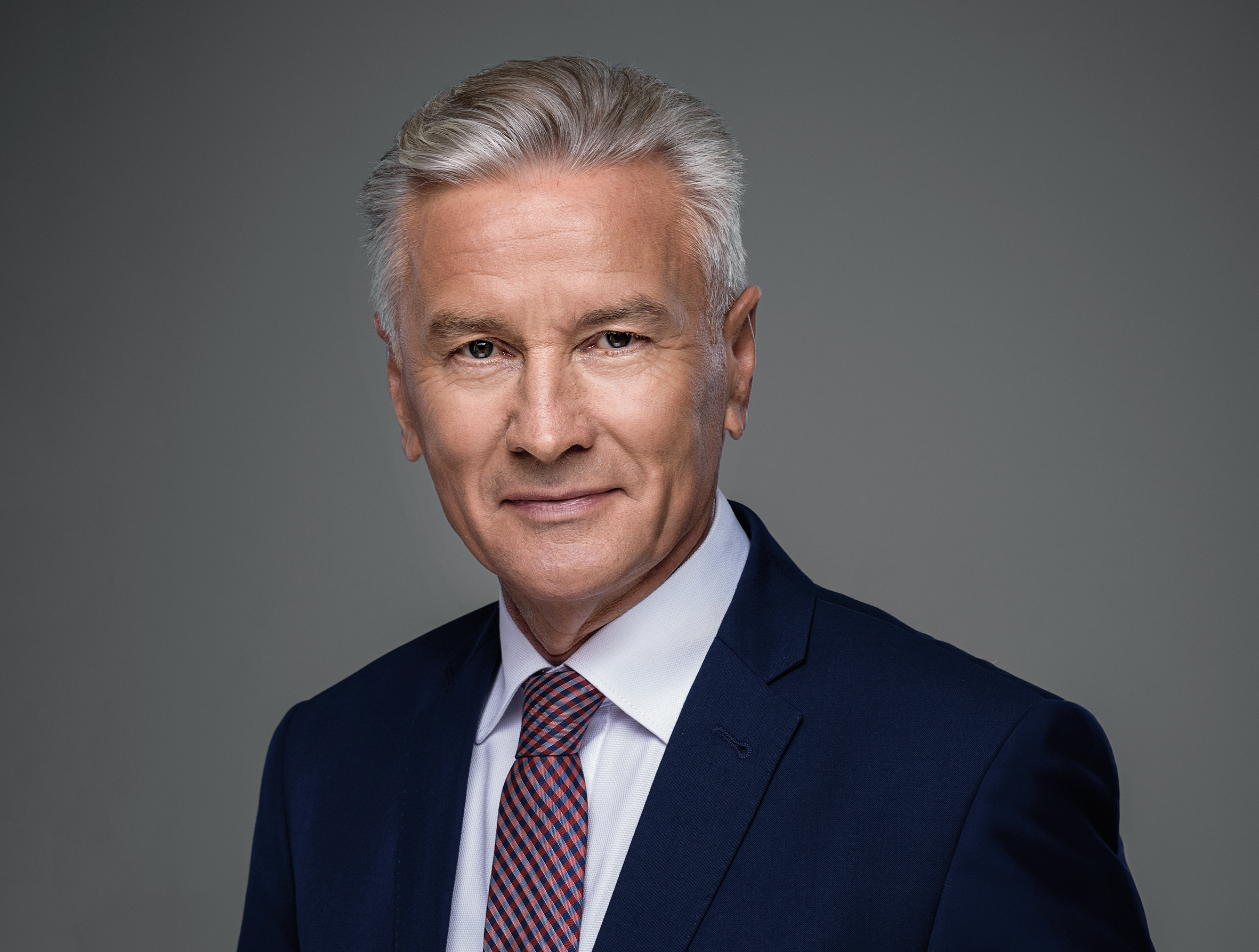
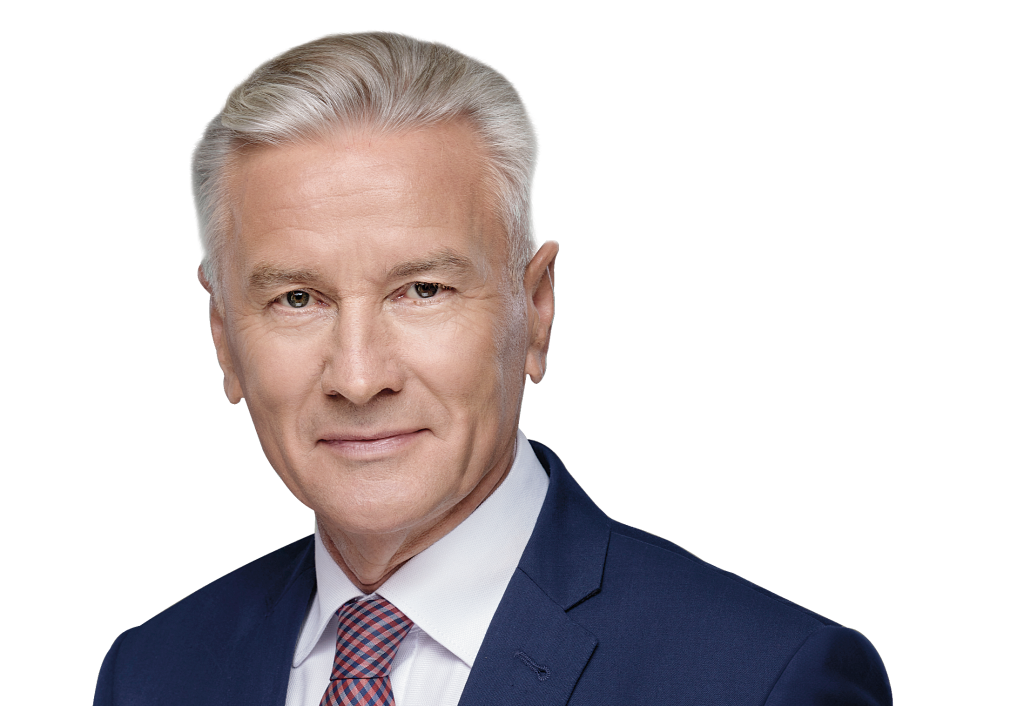
We interview Stanisław Jastrzębski – experienced local government official, head of Długosiodło commune in Puszcza Biała (Mazovia), chairman of the Union of Rural Communes of the Republic of Poland (ca. 600 Polish villages), winner of the title of Leader by vocation – about his so-far achievements and new ideas regarding village development.
Are you a natural born leader?
I must immodestly admit, I am. Flashbacking to kindergarten and later in life, I tried to organise lives of people around me. Leadership is my second skin, as well as the nature of one of my sisters – she also used to head her commune. As I grew up, my leadership qualities led me to form a football team with my friends. I’ve always been an active sportsman, and at the end of primary school, I joined a cycling club in Ostrołęka. Up til now, I still practice cycling and partake races. However, my first love was zoology. My mum taught biology. There were terrariums and aquaria at school, while at home, there were animals and they made me captivated. That is why I finished veterinary science at the University of Warmia and Mazury. I’ve also been involved in artistic activities since childhood. In high school we had a Small Theatre Forms Group and won a scout theatre festival in Kielce. During my student years, I used to be a member of Kortowo – the Song and Dance Ensemble. That’s where I met my wife. We performed abroad and I laugh and joke I have friends all over the world, because some of them never returned from foreign tours.
Are your skills handy in organising artistic events in the commune?
We attempt to fulfil the needs of the residents in this respect as well. The best-known event is Wielkie Grzybobranie (Great Mushroom Festival), a Polish championship with active participation of actors, journalists, politicians and local government officials. The first edition was directed by Jacek Kęcik, who comes from the region. The main idea of this event is ecological education. We’ve been co-organising it with the State Forests for years. Each and every year, we hold open-air events, such as Powitanie Lata (Welcome to Summer) or Dni Długosiodła (Długosiodło Days). We organise many concerts, including classical, operetta and opera music. We’re deeply engaged in artistic activities, and annually we host students of the Academy of Fine Arts, who leave us their works. For example, their artwork is a mural in Skansenpark, which introduces the illusion of presence in a village yard. Długosiodło is a small village, but with a rich history and town rights granted as early as 1556. The eminent historian, late Professor Henryk Samsonowicz, found records indicating that Długosiodło is more than 1,000 years old. Today we don’t have municipal rights, but I leave this to the will of the inhabitants. We meet all the requirements to obtain such rights: urban planning – regular buildings, a market square in the centre and a church, kindergartens and crèches, primary schools, a culture centre, a library, a Non-Public Health Care Institution, a dental surgery and an ambulance service. In the building of the Commune Office, the following are based: Polish Post Office, Bank Spółdzielczy and Police. We are surrounded by the Biała Forest with its beautiful old trees. The entire and rich history of the village is deeply connected with this forest.
You’ve headed the commune since 2002. How your career as a local government official started?
I ran a veterinary clinic in Długosiodło. I was active in the professional corporation and for 10 years I vice-presidented the Warsaw Chamber of Veterinary Medicine. I organised self-government for this profession. The inhabitants of Długosiodło suggested me to get involved in the social affairs and change something, thus they elected me as a District (Powiat) Councillor. Soon I became the Starost of the Wyszków District (Powiat).
Could you name the back then achievements you are most proud of?
When I took up the office of Starost, neither I nor any of my colleagues realised what we were undertaking. We faced a district office where the accountant worked on an abacus. The very creation of the headquarters, the organisation of the district office, required special efforts. We didn’t limit ourselves to eight-hours work, the whole Council (I had four doctors and four heads of communes) hoped we would change this shabby reality. When receiving the first budget draft, our hands literally dropped – the money was only guaranteed for one quarter. We started ‘tossing and turning’ in order to find solutions to this very issue. Finally, we managed to create structures stable enough to function to this day.
What sources provide the Długosiodło commune with additional funding?
The Marshal’s Office, EU funds, but we also have our own income. Marshal Adam Struzik implements the programme of sustainable development of the voivodeship and supports each of our activities. But there’s one condition: you have to be able to ‘diagnose’ your needs and write a proper application for a grant.
What projects have so far been implemented in the commune?
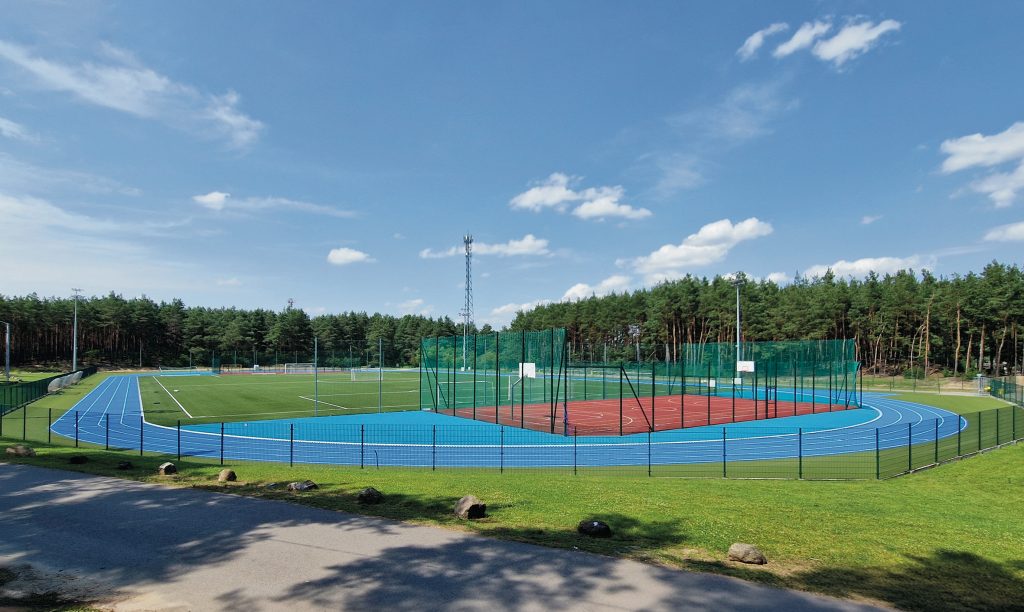
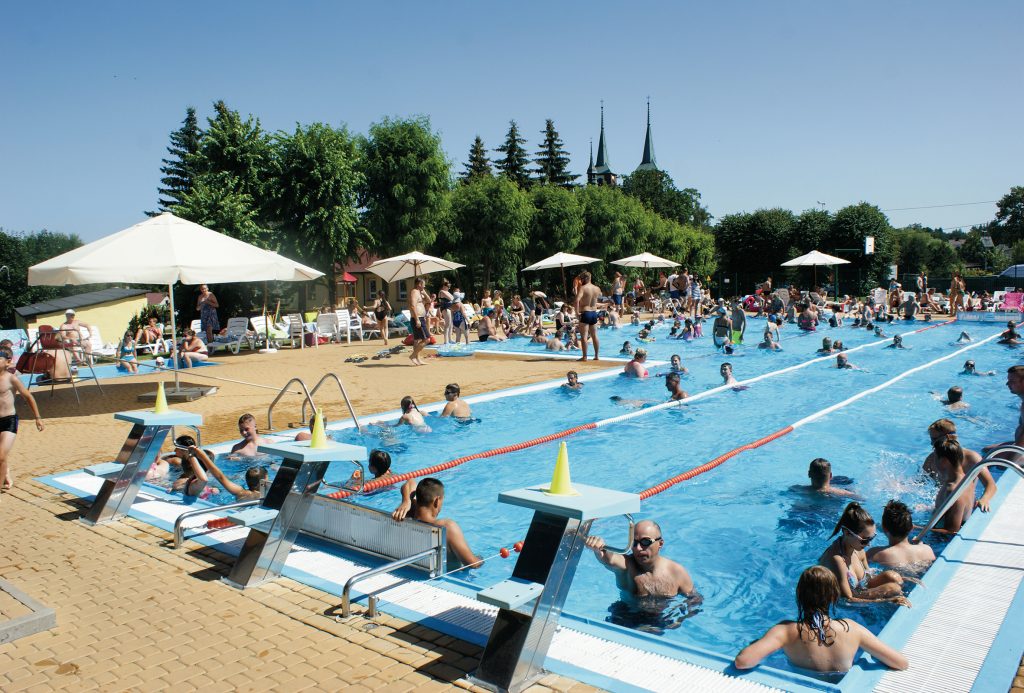
The predominant economic sector in the commune, which has 40 villages and nearly 8,000 inhabitants, despite rather poor soils, is agriculture. The housing stock is dispersed. We’ve embarked on several simultaneous projects: we’ve built water supply infrastructure, roads and renovated all our educational facilities, carried out thermal modernisation. All these made the appearance of the buildings changed and less costly. We’re proud of the park, created by ourselves on a rubbish site inherited by the Office, and which is now a relaxation area with a huge graduation tower. We’ve had an outdoor swimming pool for 10 years now, and children use it free of charge. We’ve also set up a community rehabilitation. The residents have a salt grotto, hyperbaric chamber, cryotherapy and all rehab treatments at their disposal. Years ago, we built a full-size stadium with a turf field, and now we’ll be commissioning a professional polyurethane running track. In addition, there is a tennis court and a multi-purpose court for volleyball and basketball. Each of our schools is equipped with multifunctional pitches. Our entire commune has been modernised, including the sewage treatment plant. Lots have been done in such a small village. We’re located on the outskirts, quite far from the national road, and therefore we don’t want industry here. Agriculture is geared towards organic food production, fostered by the clean, unpolluted environment.
How could you describe housing situation for the young?
Most of the housing here are single-family houses. I believe the commune should make building plots available to young people for a symbolic zloty (1 PLN). The state should enable the young to take out a (mortgage) loan, on condition of building a house and moving in within a certain period of time.
How do you consult the residents?
Both my councillors and I try to do this face-to-face, not always at formal meetings.
What are the plans for the commune development?
I’ve taken on the chairmanship of the Union of Rural Communes, which brings together over 600 communes. My aim is to integrate, to unite, to exchange experiences and to speak out more loudly about our issues. Alone, we mean nothing. The pandemic made us look at the countryside quite differently. The metropolis didn’t solve its problems, which resulted in mass exodus. I will soon be taking part in a panel on rural areas, namely ‘Wsi spokojna, wsi wesoła’ (The sweet, quiet countryside). The countryside needs a new programme, a new idea. Farming is practically non-existent now, the wealthy are the only involved, but in most cases the land isn’t worth cultivating, so the question has to be answered: what next? I would like each and every community to get the most out of the place they live in, so as not to waste the circumstances, such as beautiful nature. This is my credo, and, in Dłogosiodło, I myself am looking for the opportunities offered by the Biała Forest and its location in the floodplain of the Narew River, in the valley of the Wymakracz River. My observations lead me to the conclusion that it’s not the most talented who get the furthest in life, but the most hard-working, persistent, consistent ones. Some people have many talents and do nothing with it, someone else has one and becomes a genius.
Well, we have just learned the recipe for becoming a leader. You have lots to be happy about because you can see the results of your work. And how do you spend your free time?
My wife and I haven’t lost our artistic sensitivity, so in our free time we read, listen to good music and watch movies. I recently persuaded my wife to go cycling. I spend time with my family, with my grandchildren. My sons are IT programmers, the older one is into sailing and the younger one enjoys playing tennis.
Dorota Kolano
Beata Sekuła