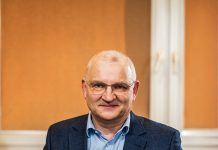


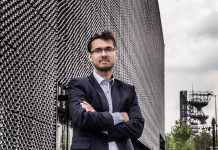









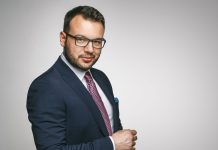




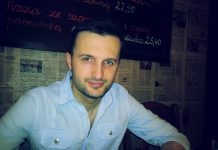
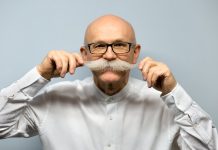








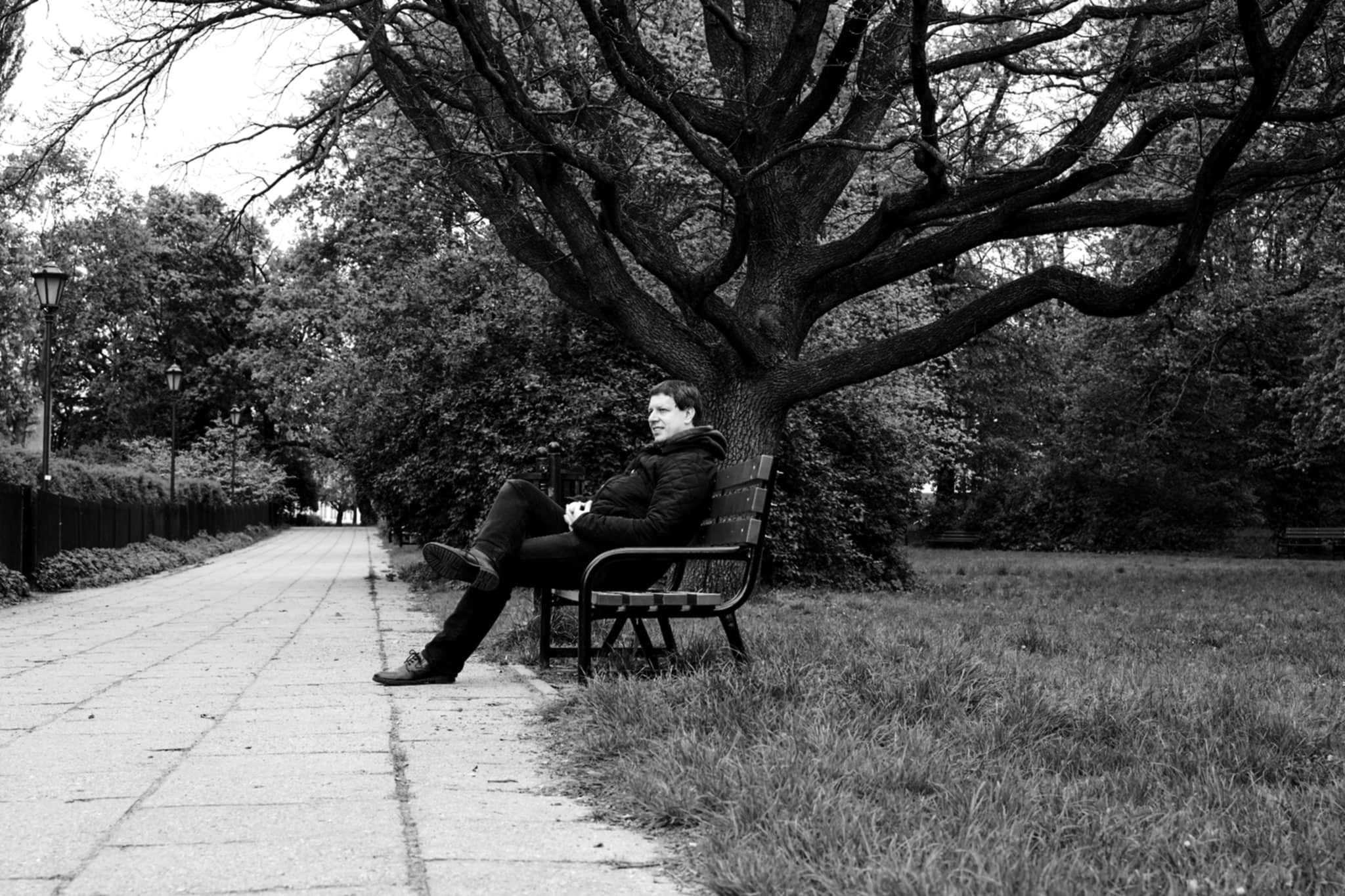
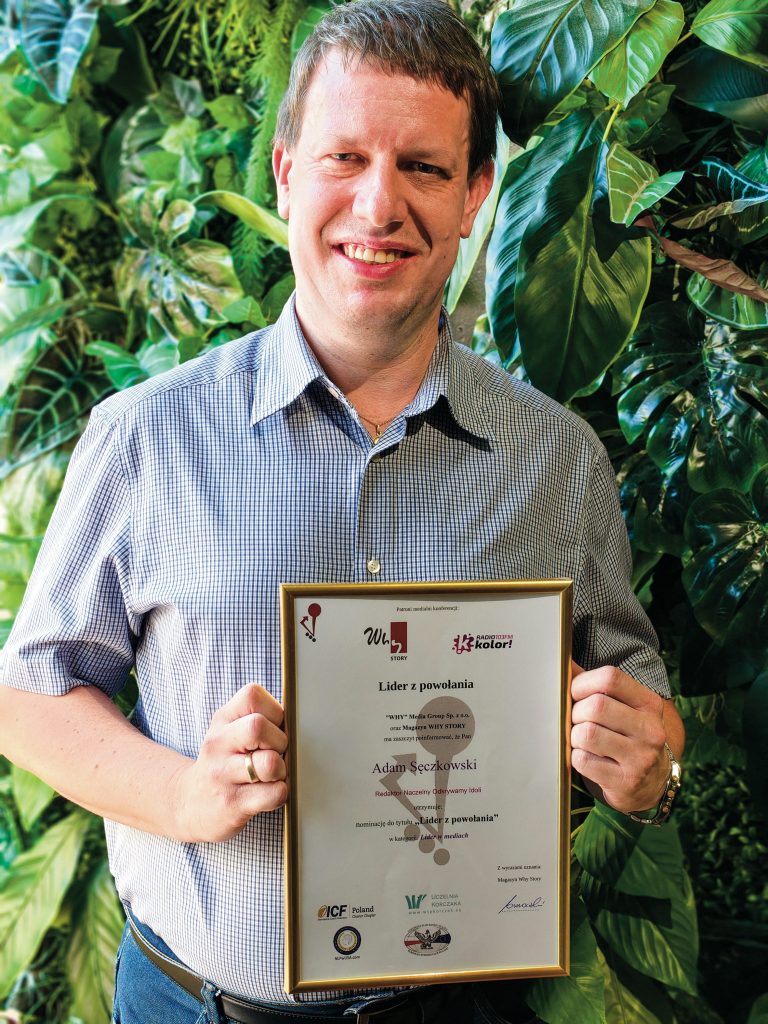
An interview with journalist Adam Sęczkowski, board member of the Warsaw Branch of the Association of Polish Journalists, initiator of the Andrzej “Ibis” Wróblewski Competition for Young Journalists of Warsaw and Mazovia, member of the Society of Friends of Łódź, and cultural consultant for the World Congress of Poles, who publishes unique interviews with Polish and international stars on the Odkryjamyidoli.eu portal. He has just been awarded the title of Leader by Vocation.
You have been nominated for the title of Leader by Vocation. How do you feel about this distinction?
I don’t see myself as a leader in the traditional sense of the word. For me, true leaders are outstanding athletes, musicians, and figures in culture and science who inspire millions. I simply try to consistently do my part – tell stories, ask questions, discover heroes who are important, even though they sometimes remain outside the mainstream. The fact that someone sees value in it is, of course, very gratifying, but I don’t put myself on a pedestal.
Your professional and educational path has been incredibly diverse. How do you sum it up?
It’s been a long and winding path. In my youth, I considered various fields – from law and legal studies, through medicine, computer science, and ultimately graduating with a degree in international relations as a political scientist. I also completed postgraduate studies in banking. I worked in a hypermarket and as a telecommunications consultant. After six months, I was promoted to section leader while still a student. Then banking and accounting, where I spent ten years gaining additional qualifications. Each of these stages taught me something – responsibility, patience, working with people, organization.
So why did you abandon the finance and accounting path?
After ten years of working in accounting, I decided it was time for a change – maybe even something bold. I decided to try my hand at marketing. First, it was a marketing job for a language school, and later, sports marketing, where I had the opportunity to collaborate on projects such as the organization of the Ski Jumping World Cup in Zakopane. It was a unique combination of my professional path and my passion for sport, which has always been close to my heart. I practiced tennis and even managed to finish 18th in the Polish Junior Championships. Unfortunately, financial issues prevented me from further developing my athletic career, but sport remained an important part of my life.
You took your first steps in journalism on the citizen portal Wiadomości24.pl. What was most important to you at that time?
It was a real turning point for me. I was learning the ropes, gaining my first experience, and getting to know the community. It was then that editors Tomasz Kowalski and Paweł Nowacki offered me an internship at the Dziennik Łódzki newspaper. This led me to the editorial office and saw what real journalism was like – with time pressure, accountability, and teamwork. This was the foundation on which I built my future career. I have very fond memories of both Tomasz and Paweł – their support and trust were incredibly important to me. Subsequently, I wrote for publications such as the “Blasting News” portal, the “Panorama Polska” newspaper in Canada, and the “Tygodnik Polski” in Australia, with which I still collaborate today. I also worked as a manager for music bands.
Journalism has undergone a huge transformation. How do you assess it from a practitioner’s perspective?
I believe the good old days of print are over. It’s increasingly difficult to make a living in journalism these days, and many titles are disappearing. Everything is moving online. I also chose this path – since 2019, I’ve been running the “Odkryjamy Idoli” portal. I create it independently, at my own expense, without the support of a team. It’s my own project, my personal adventure, and a dream come true.
What sets your interviews apart?
I try to avoid formulaic patterns. I’m not interested in questions my interviewees have heard dozens of times before. I want to surprise them, uncover lesser-known facts, and uncover stories hidden behind the scenes. For example? During my interview with Drupi, I asked him about the Good Samaritan Award he received, which almost no one knew about. He was surprised, but that’s precisely what made the conversation feel authentic. Readers appreciated it – the interview has already over 80,000 views. This proves to me that it’s worth seeking out unconventional questions.
You’ve met many extraordinary people. Which conversations have been particularly memorable for you?
The interview with Irena Jarocka was exceptional – we planned to talk for half an hour, but we ended up talking for over two. She was an incredibly engaging person, full of fascinating stories and profound reflections. I also have very fond memories of meetings with Dani Klein from the band Vaya Con Dios, Serj Tankian from the band System Of A Down, Krystyna Janda, Barbara Wachowicz, Jadwiga Barańska and Jerzy Antczak, Jerzy Połomski, Stanisław Soyka and Krzysztof Cugowski. Each interview is a new experience and a completely different energy for me.
You were also a sports reporter – you covered, among other events, Euro 2012 in Poland and Ukraine, Euro 2016 in France, the 2014 World Championships in Athletics, the 2009 European Volleyball Women’s Championship, and the 2008 European Basketball Men’s Championship. What did these experiences give you?
It was a time full of emotions. I had the opportunity to travel to cities like Paris, Warsaw, Sopot, and Wrocław to present events through written material to those unable to witness the action from the arenas. Live reporting requires immense concentration and immediate reaction, but at the same time allows you to feel a unique connection with the audience. It’s a great responsibility, but also immense satisfaction. I received a lot of positive feedback after such reports, and that motivated me.
It’s worth noting that you are the originator of the Andrzej Ibis Wróblewski Award. Where did the idea come from?
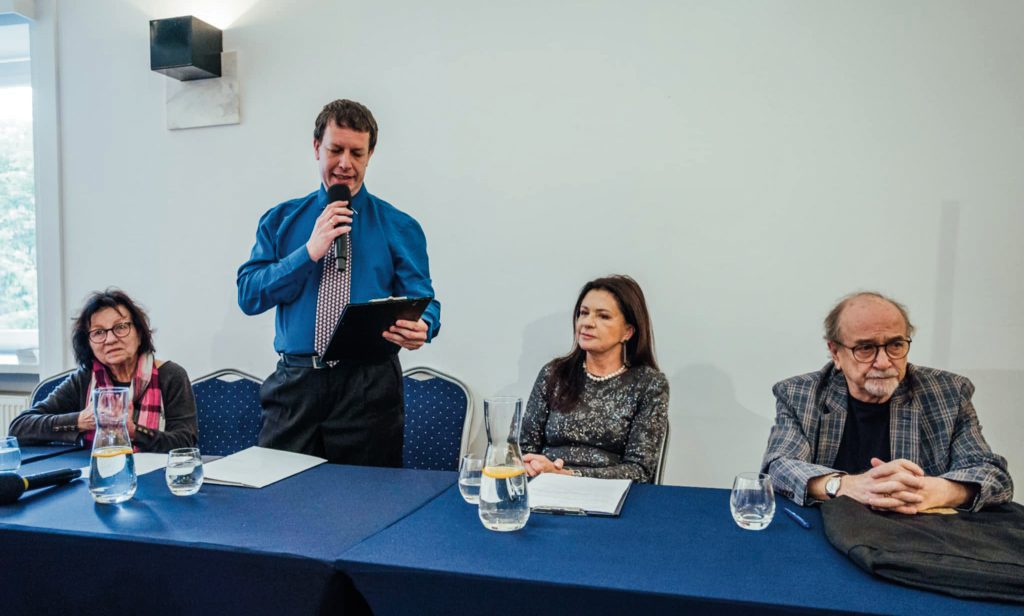
The idea was born out of necessity. I noticed that Warsaw and the Masovia region lacked an award dedicated to young journalists. I decided it was worth creating a distinction that would recognize them, motivate them, and instill confidence in the value of their work. I proposed the creation of such an award to the Presidium of the Association of Polish Journalists, Warsaw Branch. My proposal was well-received. This was also achieved thanks to cooperation with the Faculty of Journalism at the University of Warsaw. The jury is truly exceptional – it includes: Professor Jerzy Bralczyk, singer Elżbieta Wojnowska, the widow of Andrzej “Ibis” Wróblewski, Professor Tadeusz Kononiuk, PhD, DSc, Tomasz Miłkowski, PhD, Chairman of the Association of Polish Journalists, Warsaw Branch, and other distinguished experts. Three editions of the competition have already taken place. Each one attracted numerous participants, and awards went to the best. It gives me great satisfaction to see this initiative growing. This year, the event was enhanced by musical performances. We could count on the support and patronage of Adam Struzik, Marshal of the Mazowieckie Voivodeship. We are on the eve of announcing the fourth edition of the award.
You are a member of the Board of the Association of Journalists of the Republic of Poland, Warsaw Branch – a responsible position.
Yes, it’s a very important role for me. I’m serving my second term on the Board. The Association of Journalists of the Republic of Poland is one of the oldest and most respected journalistic organizations in Poland. Serving on its board gives me real influence over the association’s activities, the opportunity to support young journalists, and develop projects like the Ibis Wróblewski Award. It’s not just a title – it’s a commitment to the community to do more than just my own work.
And on a personal level? What is most important to you?
Personally, my immediate family is the most important thing to me. My daughter, who was born in 2018, is my greatest joy. She gives me strength and motivation every day. Our moments together are priceless. My wife is also a huge support to me, accompanying me through all my challenges and joys. My mother is also very important to me, supporting me and teaching me how to cope with adversity. I also believe that my father, even though he’s no longer with me, is rooting for my achievements from above.
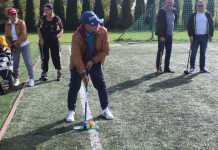
Besides, sport still plays an important role in my life. I recently discovered pickleball, a racquet sport that combines tennis, ping pong, and badminton – I try to play it once a week. It’s a great way to exercise and a chance to break away from my daily responsibilities.
What are your next journalistic goals?
I want to continue developing the “Odkryjamy Idoli” portal – writing increasingly interesting and in-depth articles and acquiring partners for collaboration. I would also like to return to live sports reporting. I also want the Andrzej “Ibis” Wróblewski Award to gain even greater prestige and become an important point of reference for young journalists. I constantly want to ask questions that are not obvious, because only then can you truly discover another person. ■
Katarzyna Raszka