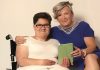



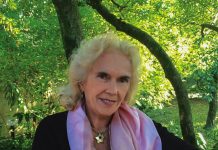

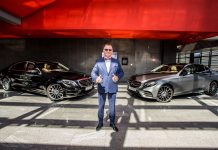
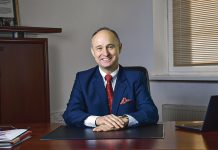
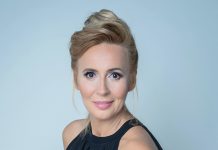

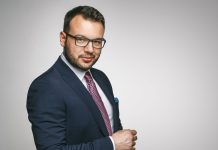


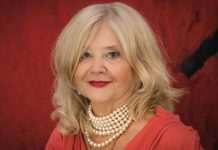
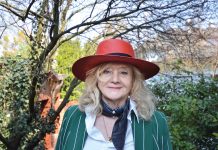
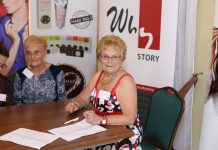
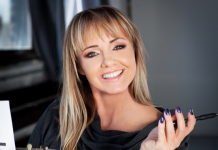
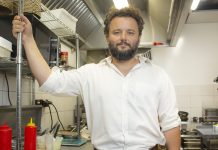

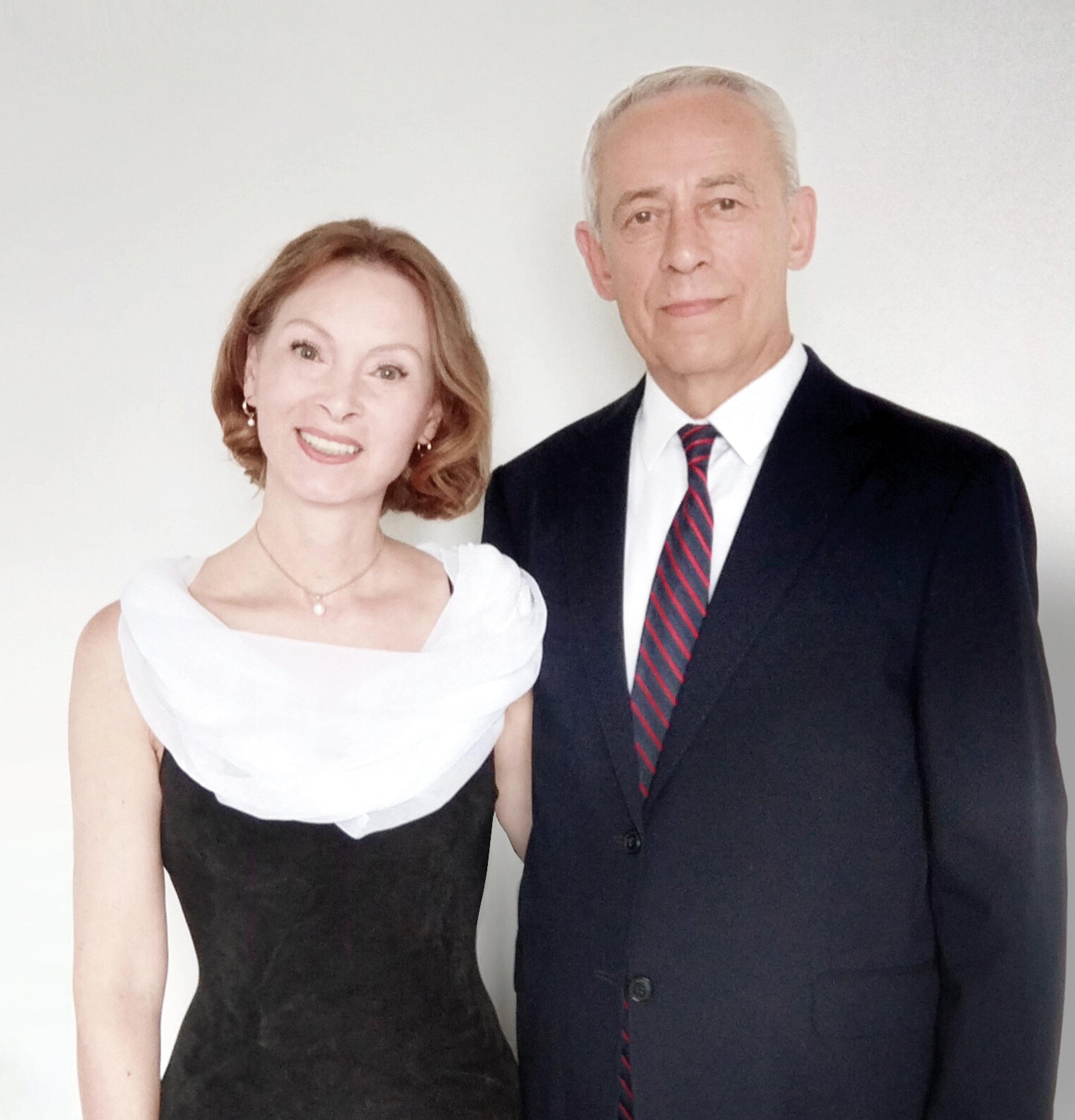
An interview with Aneta Skarżyński, a beautiful and highly talented artist: singer, painter and novelist, winner of Charismatic Woman, and Edgard Skarżyński, economist, entrepreneur, president of the Polonia Union Foundation, winner of Leader by Vocation, on creating exceptional art, on diversity of cultures as a factor that should link and enrich nations rather than divide them, on promotion of artists,
and helping Poles abroad.
You wonderfully make a complementary couple, sharing the borderland background….
Edgard: I was born in Grodno. I studied in Minsk at the Faculty of Radio Physics and Electronics of the Belarusian State University, and then at the Faculty of Finance and Banking of the Belarusian Economic University. Since graduation, I involved myself into industry and trade, including foreign trade, in agri-food products. I worked as an economist and, for several years, headed a state-owned agricultural company. At the turn of the 1980s and 1990s, I served as vice-president of the Office for Production, Supply and Trade of Fruit and Vegetable Products at the State Agro-Industrial Committee of Belarus. From the 1990s, I was active in the democratic opposition. In 2004, I returned to Poland, where I initiated and brought about changes in the Polish citizenship legislation, involving introduction of two institutions for regaining Polish citizenship, hitherto unknown to Polish law: recognition as a Polish citizen and restoration of Polish citizenship to persons of Polish origin living abroad. Faced with the lawlessness, i.e. the lack of provisions regulating the mode of regaining Polish citizenship according to the binding constitutional principle of the right of blood (ius sanguinis) by persons of Polish origin living abroad in Polish law – which discriminated this group of persons – I took the initiative of introducing legal changes concerning the mode of regaining Polish citizenship. The foundation of this action was my family’s fate. My father’s family comes from the Łomża region. My grandparents settled down in the Grodno region of the Second Polish Republic as military settlers, receiving land grants for their participation in the Polish-Bolshevik War. The family history of the time is described in detail in the article entitled Stanisław Skarżyński (1896-1939) – participant in the Polish-Bolshevik War and the defence of Grodno, which I highly recommend reading. It was published in the Niepodległość i Pamięć (Independence and Memory) magazine (issue: 2024, no. 4 (88) by the Museum of Independence in Warsaw.
Aneta: Well, my great-grandfather was born in Vitebsk and my great-grandmother in Novogrudok. As a child, my grandmother lived among Poles, Russians, Byelorussians, Lithuanians, Samogitians and Jews. Such a mixture of nationalities, and thus culture and art, customs, rituals, languages, became my grandmother’s mark. I remember her constantly stressing: we have many differences, but what is different does not have to divide us. I was born and grew up in Szczecin. I studied in Wrocław – the city of my heart, and then I moved to Warsaw where I met my husband.

You are a graduate of two art schools: The Karol Lipiński Academy of Music and The Eugeniusz Geppert Academy of Art and Design in Wrocław. Why such a passion for art?
I think it’s imprinted from birth, because the first words I heard from the midwife showing me to my mother were: you have a daughter, but she’s so ugly…. Apparently, my subconscious had then coded that in order to survive without feeling rejected I had to cultivate beauty. My mother told me this story with a laugh, but the subconscious is devoid of a sense of humour since beauty has sorta become my anointing. For as long as I can remember, I have loved art. I used to attend children’s theatre classes at the Youth Palace in Szczecin. I also played the piano and composed. Then I entered the Faculty of Vocal and Acting at the Academy of Music. In my second year there, I already played Snow White in the Dwarfs, Dwarfs, Dwarfs musical directed by Maria Walcerz, staged at the Wrocław Opera, after which Jan Szurmiej invited me to the Wrocław Operetta, where I performed as a soloist. There was a lot going on at the time, I was guest starring at the Helena Modrzejewska Theatre in Legnica, then again at the Opera.
You sing mezzo-soprano. Your repertoire includes opera hits, songs and the original opera-painting-performance programme. What is important when learning to sing?
It’s about learning a vocal technique, being able to present it artistically and reproduce the piece as intended by the composer. Talent is about 20 per cent and the rest is hard work. I don’t consider myself exceptionally talented, but rather a hard worker. Every singer is an instrument, you have to exercise not only the muscles of the vocal cords, but also the muscles of the whole body, the diaphragm, and legs. It takes a long-term process to become a professional. It’s said that the first fifteen years are the most difficult, but then you get there, and that’s truly true!

Where does your interest in painting stem from?
I come from an artistically talented family. All of my mother’s brothers painted, and they were much more talented than me. My mother also had a talent for visual arts, but she didn’t get scientific foundations and remained at the talent stage. At the age of 23, I met a wonderful man, my Master, who saw certain talents in me and was able to tame my fierce temperament. At that time I was like a crazy young steed. He would say: not this way, maybe that way, try this or that. I owe him a lot. Endowed with a great sense of humour, he often laughed at me: you know, if you become a singer, you’ll only eat when someone invites you to dinner, and if you become an artist, you’ll take the dog out of the bowl, but if you combine one with the other, you’ll be able to support yourself. He convinced me that it’s not worth getting stuck in one type of art. And I’m grateful for that.
So far, you’ve had more than 80 exhibitions, many of your works found their place in private collections of connoisseurs, some in collections of the Museum of Papermaking in Duszniki Zdrój and the Museum of Independence in Warsaw. Which exhibition do you remember in particular?
The one that brought the most joy to children suffering from leukaemia: “From Children’s Dreams”. It took place in Wrocław in 2004. There was an auction organised, with the proceeds going to children’s oncology and haematology. Of course, this was a drop in the ocean of needs. I made the works, with the theme of flowers as seen through the eyes of children, using hand embroidery with thread on paper. I created miniatures in the shape of an ellipse measuring 15 x 10 cm. Over time, the collection grew to more than 300 pieces. In the meantime, I had won the Namyslow Art Competition. These works aroused lots of interest, so I’m currently returning to this technique, but with different motifs.


You’re familiar with oil and acrylic painting: landscapes, birches, meanders, nudes…
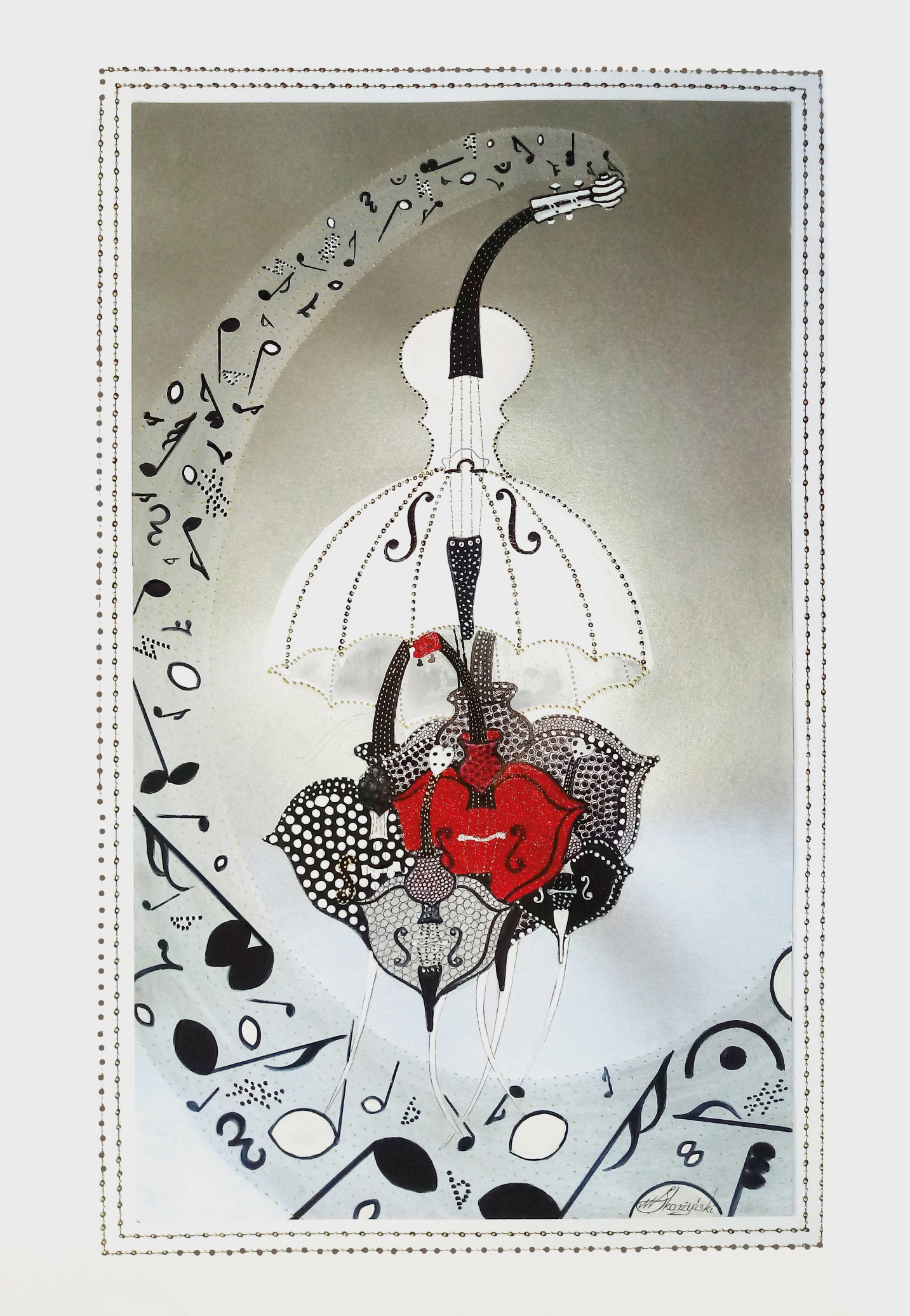
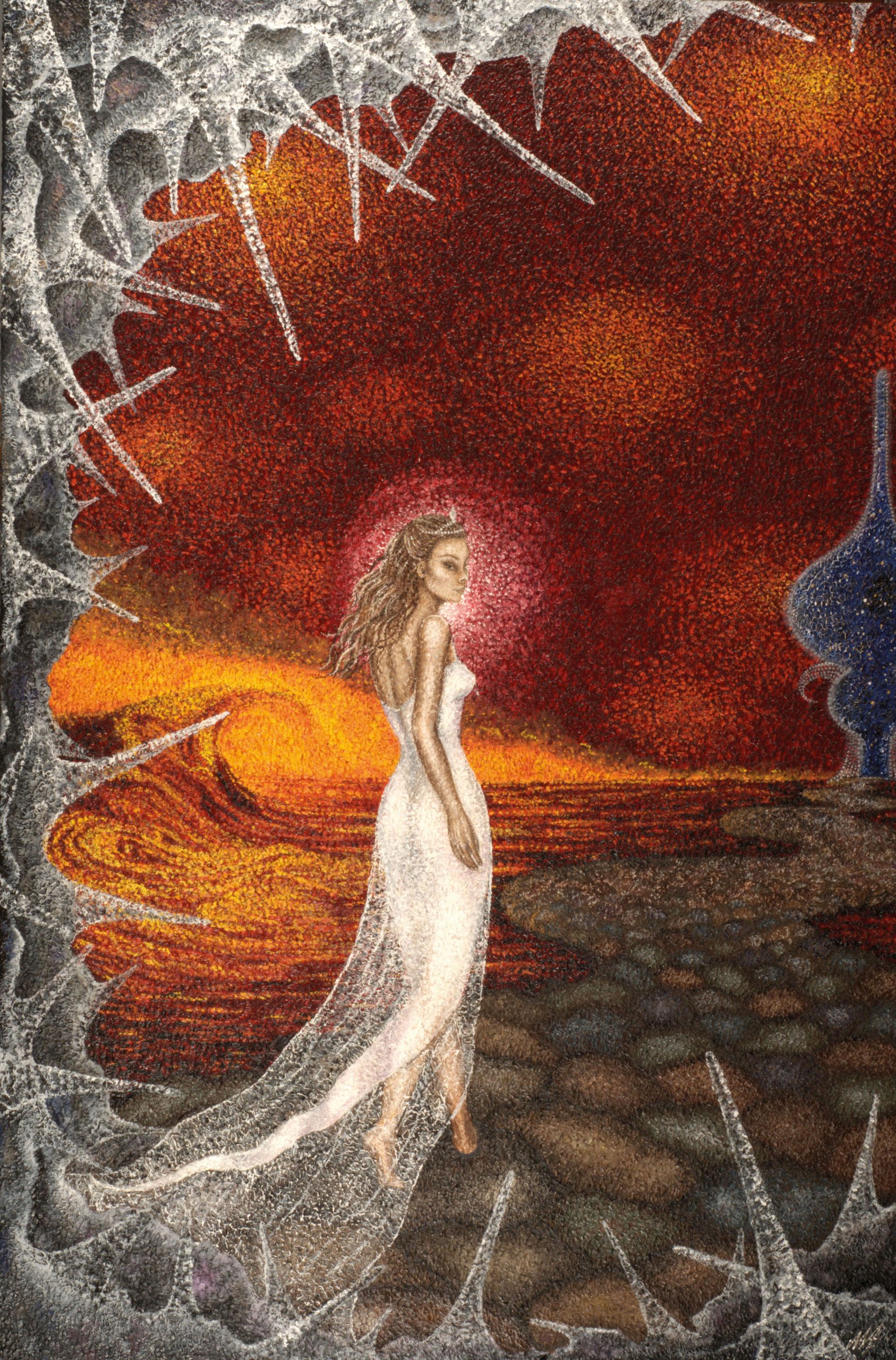
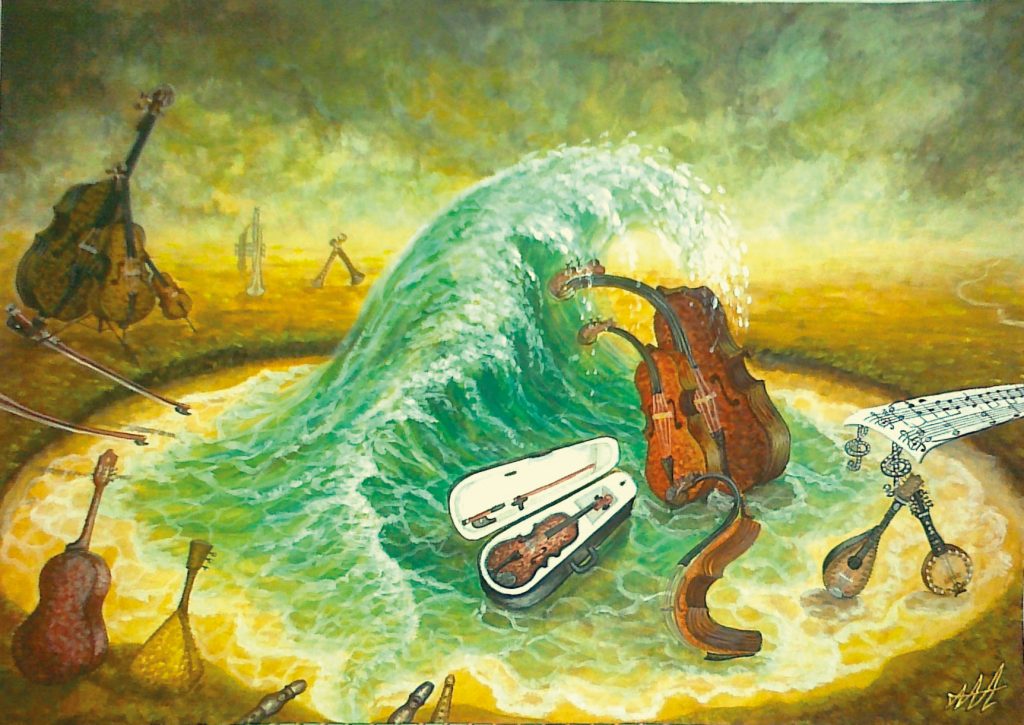
Right. At the Academy of Fine Arts, I wrote my thesis on the work of Gustave Courbet and became enamoured with his erotic paintings. I created a series of paintings inspired by him, some of which made up my thesis. Nudes are the smallest part of my oeuvre, although size-wise they are the largest. However, I’ve painted the largest number of musical images, because the direction of magic realism I consider the dearest to my heart. I paint instruments; they interact with each other, tell stories and symbolise human relationships. Also, I don’t shy away from abstractions or landscapes, or even from copying the works of the old masters.
Do you consider art as a form of therapy?
Yes, I certainly do, because each of us has something to work through. I get up in the morning, prepare breakfast, my husband goes to work and I go to work as well, painting or writing. I’ve published several adventure novels. It all started with Wyspy naftalinowe, for which I won an honourable mention at the Polonian Z. Herbert Literary Competition in London in 2008. This was followed by Wyspy pieprzowe, Wyspy paprykarzowe, Podróż na Operiona and Powrót z Operiona – dedicated to anti-enthusiasts of opera. I’m an illustrator of my books, so musical images started to ‘come out’ of me intensely. I’ve also written a play, not yet published. In art, I’m inspired by the ancient idea of ‘verum, bonum, pulchrum’, that is, the search for truth, goodness and beauty. As a human being and an artist, I care about reaching people’s hearts and minds with these values. I believe the creative energy emitted by the artist at the moment of creating a work of art is eternally retained in it. And even after tens or hundreds of years have passed, many art viewers are able to perceive it and read it correctly.
What are your plans?
I’m preparing another exhibition and three music-and-art events to be held during the summer at the Ado-Art Gallery, which I’ve been constantly collaborating with.
How do you support your wife’s work, Edgard?
We’re active together in the Polonia Union Foundation, a prior aim of which is to promote culture and art. Aneta is the director of culture and art. We organise educational and cultural events, recitals, concerts, exhibitions, and we cooperate with cultural and art institutions. By promoting the arts, and therefore the performers, we reciprocally promote the Foundation.

How long has the Foundation operated and what does it do?
Since 2006, our flagship project has been helping people of Polish origin abroad to regain Polish citizenship. When I returned to the Motherland in 2004, I couldn’t accept the fact that I had to apply for citizenship by way of an application to the President of the Republic of Poland. I’d like to add that my great-grandfather fought against the Tsarist regime and was exiled to Siberia, but survived and returned to Poland. My grandparents, as I have already mentioned, fought in the Polish-Bolshevik War for Poland’s independence. My father, due to family history, was in a gulag in Siberia for 7 years in the 1950s. I have an established knowledge of the situation of the Polish minority in the East, and I know its problems and needs. This awareness strengthens my conviction of the necessity to take concrete action to support our compatriots. I fought for a change in the legislation on regaining Polish citizenship, restoring rights acquired by birth for 8 years. By filing a complaint to the Constitutional Tribunal of the Republic of Poland about incompatibility of the provisions of the then binding act with the provisions of the Constitution of the Republic of Poland, I led to changes in the statutory regulations concerning the procedure for regaining Polish citizenship. Hence, since 2012, Polish law has enabled recognition of persons of Polish origin as Polish citizens and restoring their Polish citizenship by means of an administrative decision, which opens the way for a large group of these persons to regain their Polish citizenship, and thus affects the fate of nearly 21 million of our compatriots scattered around the world. This issue also has another dimension. In a situation demanding workers on the domestic labour market, the most natural solution is to attract them by creating conditions for the return of our compatriots from economic emigration, as well as representatives of the Polish diaspora and their descendants scattered around the world. Integration of these people within civil society is natural, because through shared history, tradition and family ties, they are emotionally connected to the country of their ancestors. Another direction of the Foundation’s activity is the defence of the rights of the Polish minority abroad, and caretaking of children from families of Polish origin, as well as the children whose families have found refuge in Poland as a result of persecution in their countries of previous residence. I’m also a chairman of the Customs Union, Central Asian and Caucasus Countries Section of the Poland-Asia Chamber of Commerce and Industry. One of its areas of activity is supporting Polish entrepreneurs in recruiting workers lacking on the domestic labour market, which in turn is linked to the strategy of encouraging our compatriots from the Polish diaspora abroad to return to their homeland. We aim to bring art and business together by attracting entrepreneurs through organising cultural events.
And how do you spend your free time?
Together. Our ‘iron’ days, when we put everything aside and focus only on our privacy, are birthdays, name days and wedding anniversaries. We love nature and regularly go for walks through our favourite parks in Warsaw.
Dorota Kolano