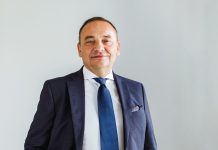






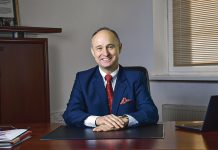














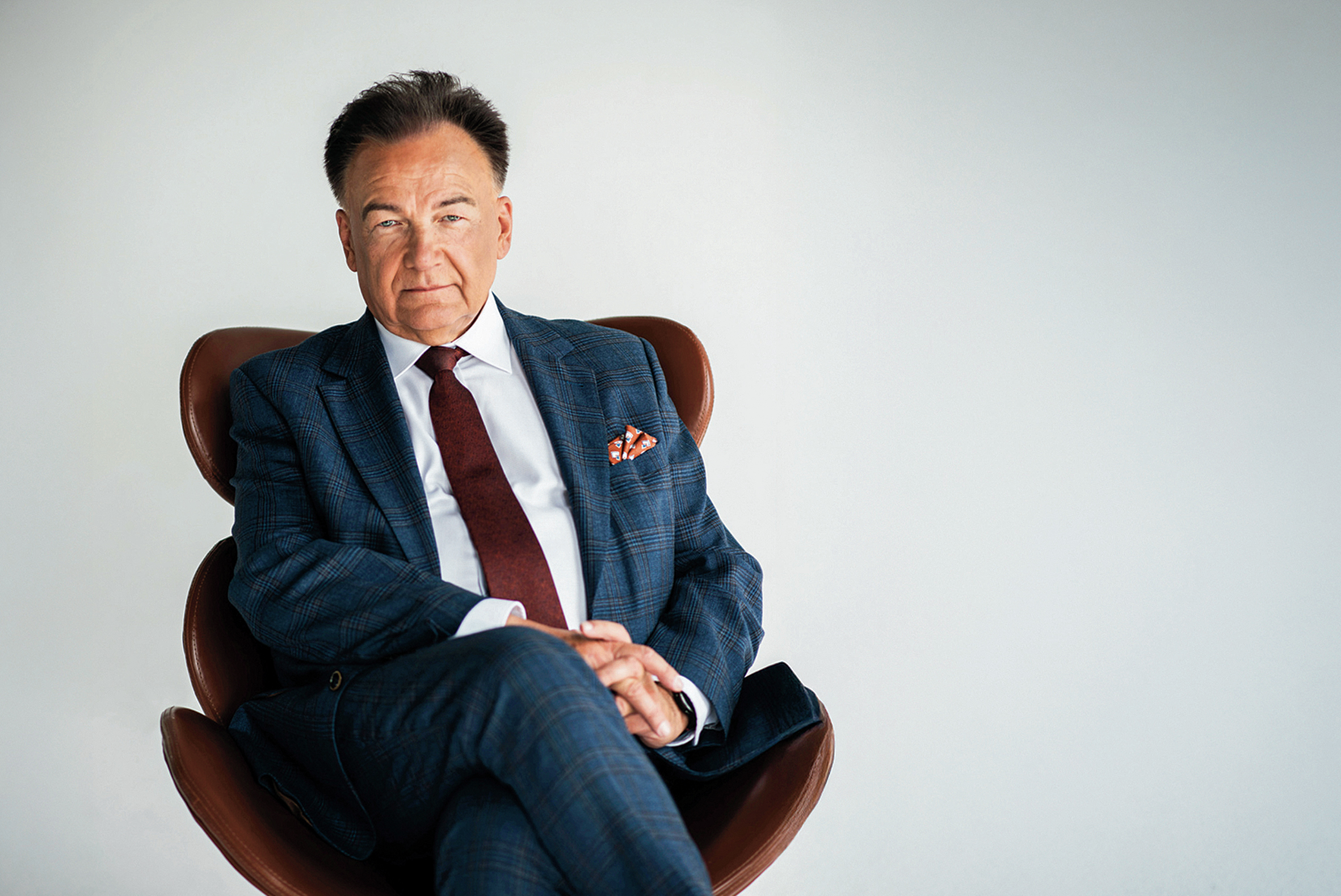
An interview with Adam Struzik, marshal of Mazovia, the longest-serving province marshal in Poland, on socio-economic development of the region, both in urban and rural areas over the past 20 years. In recognition of his commitment and effective management of Mazovia, Mr Adam Struzik has just been awarded the title of Leader by Vocation in the most prestigious category, i.e. Leader of the 21st Century.
Experience or personality – which do you think is more important for a leader? Do your personality traits as determinants in the medical profession and experience in managing medical units help you serve as voivodeship marshal?
Undoubtedly, experience is very important. It’s oftentimes through wide experience and confidence of the group that a leader emerges. Individual personality traits such as communication and skilful cooperation also matter. Today, a good leader should be an open-minded person, attuned towards others, responsive to their needs, but also ready to accept criticism. The ability to cooperate with different partners is extremely important. These qualities are particularly important in local government. Such a government is a huge area for potential cooperation with hundreds of different types of organisations. You have to make time for all of them, give them space to communicate, listen to them and then make a realistic assessment of possible forms of assistance or cooperation. A good leader is able to accurately assess the goals they’re setting – whether and how they could be achieved.
You’ve been incumbent marshal for more than 20 years now. Please, name the achievements responsible for winning successive elections and name those you’re most proud of.
20 years of time is ages and seem to have passed in the blink of an eye. Lots have happened, and Mazovia has significantly changed through those years. These changes are noticeable almost everywhere. We have new roads, pavements, schools, kindergartens, clinics, modern hospitals, theatres and museums. Mazovian villages, towns and cities have changed. All of them make me proud. And I cannot assess their level of importance. To the most recent achievements, I would include the construction of a psychiatric hospital in Drewnica, the Siedlce Oncology Centre, the Radiotherapy Centre in Płock or the Wood Technology School in Garbatka-Letnisko, which was awarded the title of 21st century modernisation last month. Transport has developed dramatically in recent years. Speaking of achievements, we cannot forget about Masovian Railways, responsible for transports of more than 60 million passengers every year, and we’re constantly modernising it and acquiring new rolling stock. The Railways are currently celebrating its 20th anniversary. We’ve also been successively renovating voivodeship roads and investing in new sections, such as the bypasses of Płońsk, Gąbin, Żuromin and Grodzisk Mazowiecki, or the road to the bridge in Solec upon Wisła. In fact, I consider each and every completed investment or initiative, important for our residents, a success. Today we are a strong, competitive region and an important economic partner. We’re not resting on our laurels. We’ll do everything to ensure that Mazovia continues to develop and attract investors, students and tourists. Undoubtedly, the latest CSO research is confirmation of the aforementioned. We usually say that Warsaw is the leader. And indeed, the Warsaw capital region has the largest share of Poland’s GDP per capita. However, CSO data for 2022 shows that it is regional Mazovia, i.e. that part of our region without Warsaw, that’s developing fastest.
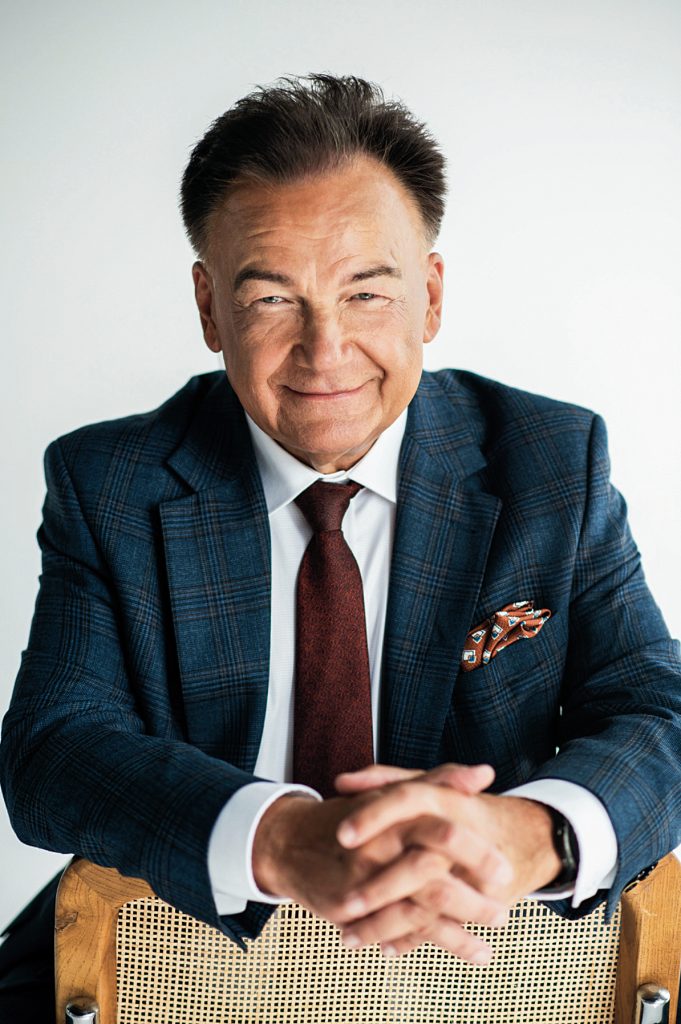
What does sustainable development mean to the Marshal’s Office?
It’s actually a priority in our regional policy. We do everything we can to ensure that the differences between small towns and large conurbations become smaller and smaller. To this end, we’ve introduced our own support programmes. There are already more than 20 of them, and each year we introduce new forms of support for municipalities, districts and organisations. This year alone, we’ve subsidised around 5,000 various investments across the whole of Mazovia. These range from small projects, e.g. for youth councils and municipalities, village councils or allotment holders, to large investments, important for the development of the entire region. Inter alia, we support volunteer fire brigades, rural housewives’ associations, pet shelters, as well as the reconstruction of district and commune roads, schools, kindergartens and sports fields. Thanks to our support, monuments or memorials are also being modernised. In this way, we’re integrating the Mazovian region and providing residents with good living and working conditions.
Can we talk about the most important investments made with EU funds in recent years?
Enormous civilisation advancement, dynamic social and economic development – this is how Poland’s presence in the European Union can be summarised in a few words. Thanks to EU funds, today’s Mazovia is a completely different region than it was 20 years ago. Money from the Union has supported practically all areas of life in our region. The support resulted in thousands of investments, which we’re implementing very consciously, in line with our intra-regional cohesion policy. We know that the capital city and the surrounding districts need different support from the rest of the voivodeship. And this is exactly how we plan our investments.
It’s difficult to have all the important projects enlisted, because they’re almost uncountable. Let me just say that, thanks to European funds, in the Mazovia region we have almost 190 km of new or reconstructed district and communal roads, over 50 trains and low-emission buses purchased, over 1.2 thousand km of bicycle paths constructed, over 200 renovated monuments, or over 700 renovated public buildings. EU funds have also supported the development of the Masovian Railways and Modlin airport. Thanks to EU funds, more than 80 Mazovian health care institutions received modern medical equipment, and many new hospital departments were created.
Let’s not forget about security. This year, EU funds helped to equip OSP (volunteer fire brigade) units. This is as many as 189 fire engines for PLN 254 million. Let me also remind of EU assistance in moments of crisis. We’re conducting Europe’s largest COVID project for almost PLN 580 million. Mazovian medical facilities received everything they needed at that time – ambulances, specialised equipment, as well as personal protective equipment. As you can see, true friends are made in poverty.
But the European Union is not only about investment. It’s also about community, about sharing experiences.
How does the Marshal’s Office cooperate with entrepreneurs?
In Mazovia, we have the highest number of registered companies, i.e. 880 thousand, 97 per cent of which are small and medium entrepreneurs. We also have about a thousand companies employing more than 250 people, but the Mazovian economy is definitely based on small and medium enterprises. And it’s to them in particular that we direct our support. Above all, the region’s development strategy is based on supporting the development of entrepreneurship and innovation. I’m thinking, for example, of our competitions ‘Start up from Mazovia’ and ‘The Innovator of Mazovia’. The first is aimed at start-ups creating new technologies, products and services. The second is organised having brand new, innovative companies and young scientists from the Mazovia region in mind. Its aim is not only to support entrepreneurs, but also to build a bridge between the business, scientific and local government environments. We also offer entrepreneurs assistance in obtaining preferential loans, e.g. from our Mazovian Regional Loan Fund. Since 2004, entrepreneurs have been able to obtain low-interest loans to set up or develop their businesses. We support creation of special economic zones throughout the Mazovian region. Furthermore, we target entrepreneurs with large EU funds under various programmes.
What are plans for further development of Mazovia, including environmental issues and cooperation with foreign countries?
Our plans for the next few years are, of course, to continue the region’s steady development. We’re focusing on investment, innovation and personal development of Mazovians. We put great emphasis on ecological solutions. In the age of changing climate, we need to take care of the environment. An anti-smog resolution regulating the heating of houses and flats is already in force in Mazovia. In autumn, Mazovia’s municipalities also started to have eco-advisers, from whom residents can find out, which heating method would be most beneficial, how to obtain funding, etc. In July, we adopted an environmental noise protection programme. The solutions apply not only to roads, railways and airports, but also to cities with over 100.000 inhabitants, including Warsaw. The programme recommends several hundred corrective measures and monitoring of their implementation.
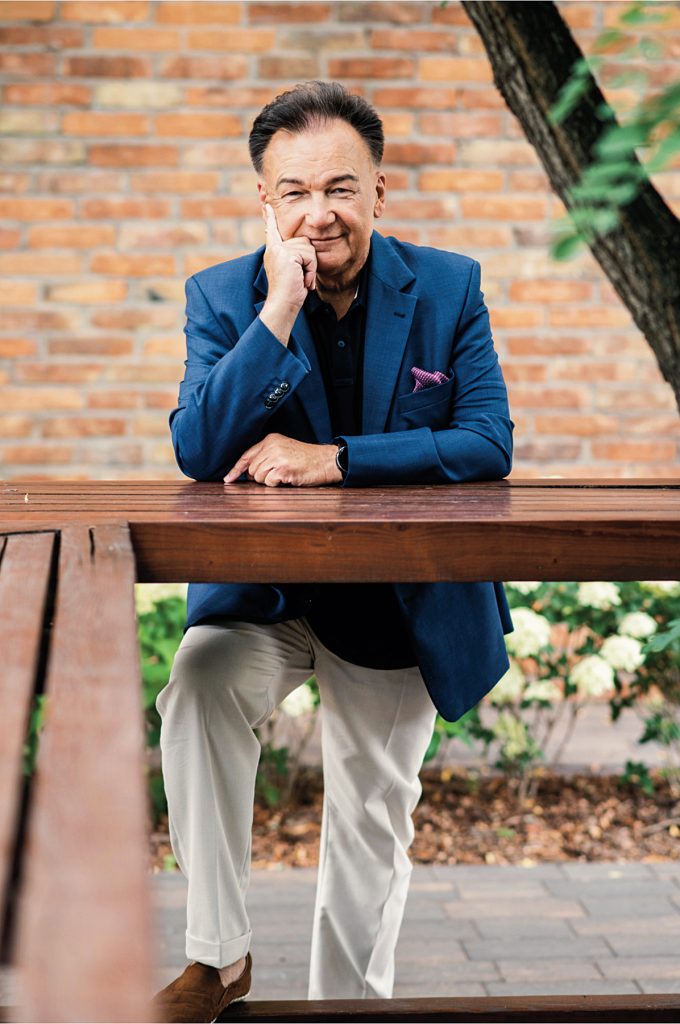
How do you ‘recharge your batteries’ in your free time? Dom you prefer art, e.g. painting, or music, and if so, what’s your favourite genre? Or maybe you prefer sport?
Luckily, I can do what I love. My work still interests me enough to face new challenges. I work a lot and don’t have much time for my passions. I really enjoy concerts and theatre. A real musical feast for me was a concert by ‘Mazowsze’ and Kombi band. I’m also a faithful supporter of our athletes, especially the great tennis player, Iga Świątek. Her matches never bore and provide me with lots of emotions.
Could you share your plans and dreams with the ‘WHY Story’ readers?
I have a very simple dream. I would love all residents to feel safe in Mazovia and to feel that it’s the right place for them to live, work, study and rest. Just that and so much more.
Beata Sekuła